How Many Air Filters Come in a Case: A Practical Guide
Discover typical case sizes for air filters, what drives pack quantities, and how to choose the right case for home, car, and workshop filtration. Insights from Air Filter Zone.


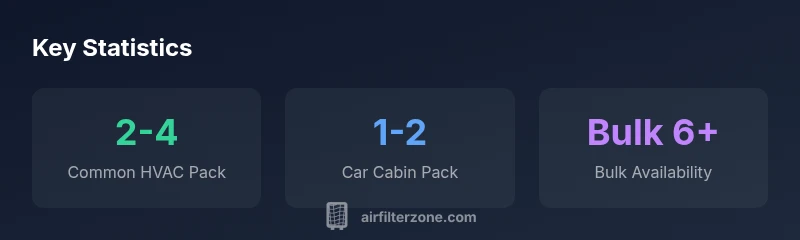
How many air filters come in a case varies by type, but HVAC filters are commonly sold in 2- or 4-pack, car cabin filters in 1- or 2-pack, and specialty or bulk lines in larger packs. Knowing this helps you budget, manage storage, and align replacement schedules. This quick guide summarizes typical pack sizes and what to consider when buying.
Why Case Quantities Matter for Air Filters
Understanding how many air filters come in a case is not mere trivia; it directly shapes how you plan storage, replacement cadence, and budget for ongoing air quality. For homeowners, car owners, and DIY enthusiasts, the number of filters per case determines how often you’ll reorder, how long your stock will last, and what your upfront costs look like. How many air filters come in a case matters because it impacts your monthly or seasonal planning. Knowing this helps you decide when bulk purchases are worthwhile and when smaller, more frequent orders are a better fit. According to Air Filter Zone, most households save when buying in bulk, but the extra storage space and potential expiration of unused filters can offset savings if you misjudge your needs. The Air Filter Zone team found that aligning case size with your replacement schedule typically yields the best balance of price, convenience, and air quality. If you aren’t sure what’s optimal for your situation, start with your current replacement cadence and compare it to two or three common pack sizes. This approach reduces waste and keeps your air clean without tying up cash in excess inventory.
In practice, the question “how many air filters come in a case” translates into a planning exercise: you’re balancing the cost per filter, the space you have for storage, and the time between replacements. For most households, filling a tight storage nook with a 2-pack or 4-pack HVAC line can deliver several months of supply without overloading your cabinet. Car owners often find that one- or two-packs are the most convenient, since cabin filters are more vehicle-specific and replacements tend to happen less frequently than home HVAC changes. The key is to map your intake against your cadence and pick a case size that minimizes trips to the store while keeping air quality high.
Typical Case Counts Across Common Filter Types
When you’re evaluating case counts, it helps to know what to expect for different filter types. These general patterns reflect common practices in North American markets, with some regional variation by brand and model.
- Home HVAC filters (standard sized, pleated, MERV 8–13): The most frequently sold configurations are 2-pack and 4-pack. Some premium lines extend to 6-pack or larger bulk offerings, especially for households with longer replacement intervals or multiple systems. A few distributors will still offer 1-pack options, but these are less common and often targeted at single-room or replacement-specific purchases. The practical takeaway is simple: if you want predictable stock and lower per-filter cost, a 2-pack or 4-pack is usually your best bet.
- Car cabin filters: Car cabin air filters are commonly sold as 1-pack or 2-pack options. Vehicle-specific fit is critical here, so buyers should double-check model compatibility before loading up. Certain brands market 3-pack bundles for busy fleets or households with multiple cars, but these are less standard. In short, for most private vehicles, 1- or 2-packs cover typical replacement needs.
- Specialty or bulk lines: For institutional or industrial environments, higher-volume packs (4-pack to 6-pack and beyond) appear more frequently. These cases reduce the cost per unit and align with scheduled maintenance programs, but they demand more storage space and careful inventory management.
Air Filter Zone Analysis, 2026 confirms that this segmentation by use case helps shoppers quickly estimate how many filters to buy per case, ensuring you don’t overbuy or understock. In practice, your choice should reflect both your current supply and your expected replacement cadence over the next 12–18 months. A simple way to start is to compare your last year’s consumption against the price per filter for 2-pack versus 4-pack HVAC lines, then simulate a six-month to one-year purchase plan. This approach clarifies whether bulk purchases will save money without creating clutter or waste.
To help readers visualize typical patterns, consider using a baseline of your current filters: if you replaced an HVAC filter every three months and used two filters per year, a 4-pack might cover a year with an extra filter to spare. Such a back-of-the-napkin calculation is often enough to guide your first bulk-buy decision and set the stage for future adjustments as you collect real usage data.
How Packaging Strategies Vary by Brand and Region
Packaging strategies for air filters are not universal; manufacturers optimize case sizes based on product line, channel, and regional consumer behavior. In North America, where replacement cadences for home HVAC filters tend to align with seasonal changes, you’ll see more 2-pack and 4-pack configurations in mainstream retail. European and Asia-Pacific markets may feature different packaging norms driven by retail formats and vehicle fleet needs. Brand A, Brand B, and regional distributors each tailor their case counts to fit typical purchasing habits in their networks, which means the same filter model can appear in 1-pack in one country and 3-pack in another. This variation underscores why it’s prudent to check the exact pack size on the product page before adding to cart.
From Air Filter Zone’s perspective, the most reliable way to navigate these differences is to compare price-per-filter across the most common pack sizes and weigh your storage capacity. If you’re stocking multiple filters for a larger home, a multi-pack that lowers the per-filter cost could be appealing, provided you have adequate dry storage space and a predictable replacement schedule. Conversely, if you’re buying for a single car or a small apartment, smaller packs reduce risk of waste from expired filters and simplify inventory management. The takeaway is simple: pack size should fit your usage pattern, storage capabilities, and budget constraints.
Alternatively, regional retailers sometimes run promotions on specific pack sizes, making it worth monitoring seasonal deals. Air Filter Zone recommends tagging a couple of baseline configurations (for HVAC and cabin filters) and staying alert for bundled offers that improve the effective price per filter without forcing you to overstock. This approach keeps your air clean and your wallet balanced across the year.
How to Determine the Right Case Size for Your Home, Car, or Workshop
Selecting the correct case size is a practical exercise that starts with data and ends with a plan. Here’s a straightforward method you can apply to homes, cars, and workshops:
- Identify the exact filter model and size you use or plan to use. The dimensions, MERV rating, and installation quirks will guide you to compatible products and avoid returns.
- Calculate your replacement cadence. Review past replacements to estimate how many filters you’ll need over the next 12–18 months. If you replace HVAC filters every 90 days and use one filter per cycle, you’ll need about four per year; adjust accordingly for your situation.
- Check your storage capacity. Do you have a dry, dark place with stable temperature? If storage space is limited, lean toward smaller packs to prevent overstock and potential expiry.
- Compare price per filter across pack sizes. In general, bulk packs reduce the cost per filter, but you must factor storage, potential expiration, and cash flow. A quick calculation is to divide the case price by the number of filters to see the true per-filter cost, then compare with single-pack pricing.
- Consider vehicle-specific needs. Car cabin filters are highly vehicle-dependent. Check fitment guides or manufacturer lists to ensure a 1-pack or 2-pack aligns with your vehicle’s model and year. If you own multiple vehicles, a multi-pack could save every time you rotate filters.
By following these steps, you’ll choose a case size that minimizes waste and maximizes air quality. Record your assumptions (cadence, storage, cost) and revisit them every six to twelve months as your usage patterns evolve. Air Filter Zone emphasizes balancing practical storage with cost efficiency, ensuring you aren’t paying for more than you need or missing timely replacements.
Beyond the mechanics, think about your space: a compact garage or utility closet benefits from compact packs, while a larger workshop may support bulk packs, provided you can keep them dry and organized.
Cost, Waste, and Storage Considerations
Buying air filters in case quantities often translates into savings on a per-filter basis, but you should weigh several practical factors before committing to bulk purchases. First, consider your replacement cadence: if you replace filters infrequently, larger packs can lock you into longer stocking periods, increasing the risk of expired filters. Second, assess your storage space: bulky cases require more shelf or cabinet room, which can be scarce in smaller living spaces. Third, account for the actual price per filter: bulk packs generally offer a lower unit price, but the total upfront cost rises with the pack size, which may affect monthly cash flow. Finally, think about whether you’ll realistically use all the filters before they lose efficacy; some brands incorporate shelf-life limitations on certain pleated or activated-carbon filters.
Air Filter Zone Analysis, 2026 highlights that a balanced strategy often yields the best outcomes: purchase enough filters to cover your typical replacement window, but avoid overbuying to the point where space becomes a constraint or where you risk disposal of unused stock. If you’re optimizing for long-term air quality and cost control, set a cap on how much you’ll store and schedule routine checks to adjust ordering patterns as needed. A practical tip is to maintain a small inventory log that tracks replacement dates, so you can recalibrate case sizes with real consumption data rather than estimates.
Another factor is sustainability: larger packs reduce packaging waste on a per-filter basis, but you still need to responsibly recycle or dispose of used filters. If you’re unsure about local recycling options, check municipal guidelines or your waste service provider for the correct disposal pathway.
Practical Buying Tips and Red Flags
To help you navigate invitations to buy large cases or fall into bulk-buy temptations, here are practical tips and warning signs:
- Do a quick cadence test: If you replace a filter every three months, a 4-pack HVAC line is likely a good fit. If your cadence is six months, a 2-pack might be safer to avoid overstock.
- Check product compatibility: Vehicle cabin filters and some HVAC models require exact fitment. Even slight size differences can render a pack useless for your purpose.
- Avoid stale stock: Filters have shelf lives. If you expect long gaps between replacements, opting for smaller packs can prevent waste and improve freshness.
- Compare price per filter, not just sticker price: A larger pack might appear cheaper, but the per-filter cost and storage costs determine real savings.
- Watch for regional packaging differences: The same filter model may be sold in different pack sizes depending on the country or retailer. Always confirm the exact pack size before purchase.
- Read the return policy: If you risk buying a case that may not fit your needs, a flexible return policy can reduce your risk.
- Consider multi-use storage space: Label packs and keep them in a dry, stable environment to maximize shelf life and ease of access.
- Use a simple inventory system: Track usage and expiration dates to adjust future purchases. This reduces waste and ensures you’re always prepared.
Air Filter Zone’s practical guidance emphasizes balancing cost savings with storage practicality and replacement cadence. The goal is to create a repeatable process you can follow year after year, so you maintain clean air without clutter or unnecessary spending.
Quick Reference: Common Pack Sizes by Use Case
This concise guide helps you quickly recall typical pack sizes without parsing product pages every time:
- Home HVAC: 2-pack or 4-pack are the standard go-to options; 6-pack is common for households with multiple systems or long replacement intervals.
- Car cabin: Usually 1-pack or 2-pack; 3-pack exists for fleets or multi-car households, but verify fitment first.
- Commercial/industrial: 4-pack to 6-pack or larger; designed for routine maintenance and stock management.
- Specialty or bulk lines: 4-pack to 12-pack could be available for large facilities or professional installers.
If you’re unsure which pack size to choose, start with a base case (2-pack HVAC and 1-pack cabin) and expand to the next size only after you’ve validated your usage with a few replacement cycles. Air Filter Zone recommends tracking your actual consumption over a year to determine the precise break-even point for bulk buys.
Typical case sizes by use case
| Use Case | Typical Case Size | Common Filter Type | Notes |
|---|---|---|---|
| Home HVAC | 2-pack or 4-pack | Pleated MERV-rated filters | Store in dry area; align with replacement cadence |
| Car Cabin | 1-pack or 2-pack | Cabin air filter | Vehicle-specific fit; check model |
| Commercial/Industrial | 4-pack to 6-pack | HEPA/industrial filters | Bulk purchases may reduce cost per unit |
FAQ
What determines the pack size for air filters?
Pack sizes are determined by product line, replacement cadence, and regional packaging practices. Always check the product page for the exact count and fitment.
Pack sizes depend on the product line and how often you replace filters; always verify the exact count before buying.
Is bulk buying always cheaper?
Bulk packs usually offer a lower price per filter, but upfront cost and storage must be considered. If you won’t use all filters promptly, bulk buying may not be cost-effective.
Bulk packs can lower the per-filter price, but think about storage and how quickly you’ll use them.
Do car cabin filters come in multi-packs?
Yes, some brands offer cabin filter multi-packs, but vehicle compatibility remains the priority. Always confirm fitment for your car model.
Some brands sell cabin filters in multi-packs, but always verify your vehicle fit before buying.
How do I choose the right case size?
Start with your replacement cadence, available storage, and the price per filter. Compare 2-pack vs 4-pack options and pick what minimizes waste while meeting your needs.
Choose a case size by matching your replacement schedule and storage, then compare price per filter.
What should I do with leftover filters?
Store them in a dry, cool place and monitor expiry dates. If you’re unsure about shelf life, err on the side of smaller packs to avoid waste.
Keep unused filters in a dry place and watch expiry dates; smaller packs help prevent waste.
Are there regional variations in packaging?
Yes. Packaging sizes vary by brand and region due to retail formats and consumer habits. Always check the exact pack size for your locale.
Packaging varies by region; always check the exact pack size for your location.
“Regularly reassess your filtration needs to avoid waste and overspending; case-size decisions should balance savings with storage and replacement timing.”
Quick Summary
- Match case size to your replacement cadence.
- Bulk packs save per-filter cost but require storage space.
- Always confirm exact fitment before buying.
- Monitor usage to adjust future orders.
- Consider disposal and sustainability of used filters.