Difference Between Air Filter and Pollen Filter
Understand the difference between air filters and pollen filters, including where each is used, typical media and effectiveness, maintenance needs, and practical steps to choose the right filter for home and car filtration.


TL;DR: An air filter generally cleans the broader indoor environment (home HVAC or DIY air handling), while a pollen filter is a cabin-specific filter designed to trap pollen and related allergens in a vehicle. They share filtration basics but differ in use case, media, and replacement needs. This guide explains the difference between air filter and pollen filter and when to choose each.
Difference Between Air Filter and Pollen Filter
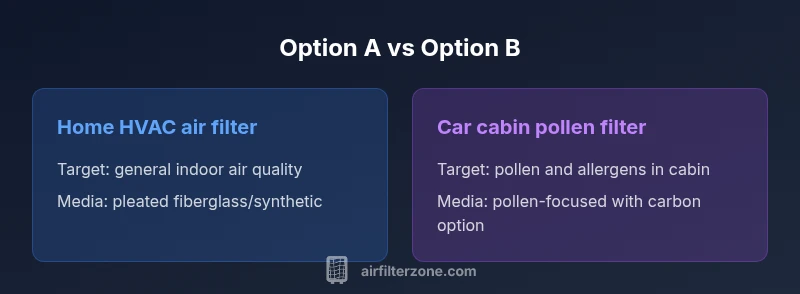
The phrase difference between air filter and pollen filter is common, but understanding it requires context. An air filter is a general filtration device designed to remove dust, dander, and smaller particles from the air that circulates through a space such as a home’s heating and cooling system or a ventilation unit. A pollen filter, by contrast, is typically a cabin filtration component used in vehicles to reduce pollen exposure for occupants. In many markets, the pollen filter is marketed as the cabin air filter specifically aimed at capturing pollens and related allergens before they enter the cabin. This distinction matters for homeowners, car owners, and DIY enthusiasts who want practical, reliable guidance on filtration strategy. Across environments, the core principle is the same: capture particles as air moves through a porous media, but the target pollutants, installation context, and maintenance cadence differ. The practical takeaway is that the keyword phrase difference between air filter and pollen filter should guide your selection based on where the filter will live and what pollutants you care about most.
Comparison
| Feature | Home HVAC air filter | Car cabin pollen filter |
|---|---|---|
| Primary purpose | Filters general indoor air quality for homes | Filters cabin air for pollen and pollutants |
| Filtration media | Pleated media (fiberglass or synthetic) with various MERV ratings | Specialized cabin media with pollen focus; optional activated carbon layer |
| Target pollutants | Dust, pet dander, smoke, mold spores (depending on media) | Pollen, some mold spores, and odor compounds in the cabin |
| Typical replacement interval | Every 3-6 months (varies by environment) | Every 12,000-15,000 miles or about once a year (varies by use) |
| Best for | Home environments and whole-house filtration | Vehicles with high pollen exposure or odor concerns |
What's Good
- Improved indoor air quality for living spaces
- Reduces allergen exposure in vehicles and homes
- Can protect HVAC equipment by reducing debris
- Widely available and easy to replace
What's Bad
- Different use cases require different filters, adding complexity
- Higher-efficiency options can raise upfront cost
- Overly frequent changes can increase ongoing maintenance cost
Use the filter that matches the space: home spaces benefit from general air filters, while vehicles benefit from cabin pollen filters to curb pollen exposure.
Air filters and pollen filters serve distinct roles. For homes, select a general air filter aligned with your HVAC system; for cars, install a cabin pollen filter to reduce pollen ingress and improve cabin comfort.
FAQ
What is the difference between air filter and pollen filter?
Air filters are designed for general indoor air quality in homes or spaces, whereas pollen filters are cabin-specific for vehicles, focusing on pollen and related allergens. The two share filtration principles but differ in application and maintenance.
Air filters clean the air in your home or device, pollen filters clean the car cabin’s air to curb pollen exposure.
Is a pollen filter the same thing as a cabin air filter?
In many markets, a pollen filter is the same as a cabin air filter, but marketed with a emphasis on pollen reduction. Some filters may focus on odors as well. Always verify the product description and your vehicle’s manual.
A pollen filter is often just another name for a cabin air filter, but check your car’s documentation to be sure.
Do home air filters filter pollen?
Home air filters do filter pollen, but their effectiveness depends on media type and MERV rating. Higher-rated home filters capture more pollen, yet may require adequate airflow in your HVAC system.
Yes, many home filters catch pollen, especially higher-MERV options, but performance depends on your system.
How often should air filters be replaced?
Replacement frequency depends on usage and environment. Home filters are commonly changed every 3-6 months; in busy households or mold-prone areas, more frequent changes may be needed.
Most homes change filters every 3-6 months, but check your system’s guidance and indoor air quality.
Can I use one filter for both home and car?
No. Home air filters and cabin pollen filters are designed for different spaces and mounting. Use the correct filter type for each environment to maintain effectiveness and avoid airflow problems.
No—you need separate filters for home spaces and car cabins to keep air clean in each space.
Which filter is better for allergies?
For allergies, a cabin pollen filter helps in vehicles, while a high-quality home filter with an appropriate MERV rating improves indoor air quality. In many cases, using both in their respective spaces yields the best relief.
If allergies are a concern, tackle car pollen exposure with a cabin pollen filter and improve home air quality with a good home filter.
Quick Summary
- Identify where filtration is needed (home vs car)
- Match filter type to pollutants you want to target
- Check system compatibility before purchasing
- Schedule replacements to maintain air quality
- Consider carbon-enhanced variants for odor control