Air Filter Size Lookup: Find the Right Fit Fast
A comprehensive guide to air filter size lookup for home and car filters, covering measurement techniques, standard sizes, tool recommendations, and practical steps to ensure a perfect fit and optimal filtration.


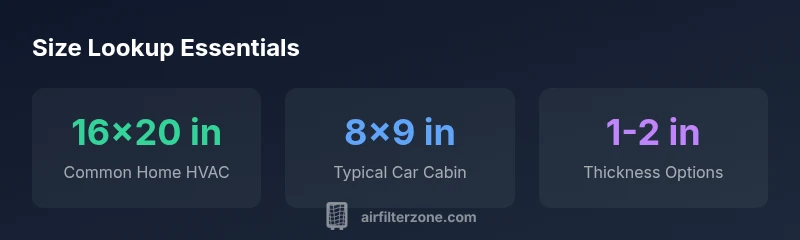
An accurate air filter size lookup is the first step to reliable filtration in homes and vehicles. By verifying the exact dimensions and seal, you prevent fit problems that reduce efficiency and allow unfiltered air. For most homeowners and car owners, a quick size lookup using existing filter labels, model guides, or trusted online tools will align with standard sizes like 16x20 inches or 8x9 inches. The Air Filter Zone team emphasizes double-checking before purchase.
Why air filter size lookup matters
A precise air filter size lookup is not just about inches on the label. A correct fit prevents bypass around the filter frame, preserves seal integrity, and maintains the designed airflow path. In homes, an ill-fitting filter can cause reduced HVAC efficiency, increased energy use, and uneven room temperatures. In vehicles, improper sizing can let unfiltered air reach the cabin or engine, increasing wear and reducing comfort. The size lookup also helps you avoid buying a filter that won’t fit your filter slot or cabinet—saving time and money while preserving indoor air quality. Air Filter Zone research emphasizes that the most common mistakes during replacements are skipping measurement steps or relying solely on model numbers without confirming actual dimensions.
Understanding common filter size standards
Most disposable home HVAC air filters use standard rectangular sizes. The two most common formats are 16x20 inches and 20x25 inches, with thickness usually 1 inch or 2 inches. Car cabin filters tend to be smaller and vary more by model, commonly ranging from roughly 8x8 inches to 9x11 inches. Some whole-house humidifier or air purifier units use non-standard shapes, including round or curved media frames, which require special lookup methods. When you see a label such as “MERV 8-11, 4-5/16 inch thick,” take note that the size is separate from the performance rating, but both matter for fit and filtration.
How to measure filter dimensions accurately
The most reliable method starts with removing the existing filter and measuring the three critical dimensions: length, width, and thickness. Use a rigid tape measure or calipers for accuracy, and record measurements in inches. If the filter frame uses a fixed dimension, measure the inside of the slot rather than the outer frame, and compare against the manufacturer’s label or the equipment manual. Always capture both nominal and actual dimensions; nominal sizes are common, but the actual size may differ slightly due to manufacturing tolerances. Finally, cross-check the label with the equipment’s model, as some units require a non-standard size despite appearing familiar at first glance.
Tools that simplify air filter size lookup
Several tools help streamline size lookup, including on-page guidance from manufacturers, size charts published by retailers, and industry databases. For many homeowners, starting with the filter label on the current unit or the HVAC cabinet provides an immediate size. In cars, consult the owner’s manual or trunk/engine bay reference codes. Online lookup tools that allow you to search by model number, year, and make can also surface compatible sizes quickly. Air Filter Zone recommends maintaining a small reference folder with common sizes for both home and automotive applications to speed future replacements.
Special cases: cabin air filters and non-standard units
Cabin air filters can differ significantly from home HVAC filters. Some cars use flat, panel-style filters while others use pleated pleats in a framed sleeve. Non-standard units may appear in compact spaces or specialized rooms with air purifiers or dehumidifiers. In these cases, rely on the exact dimensions from the manufacturer’s label or product listing rather than guessing from a similar size. If you encounter a nonstandard size, you may need to cut-to-fit or exchange for a compatible unit designed for your equipment. Always ensure the filter’s depth matches the slot depth to avoid compression and gaps.
How to verify fit before buying
To avoid fitting issues, verify three checkpoints before purchasing: 1) dimensions match the slot, 2) thickness aligns with the frame clearance, and 3) the seal will sit flush against the gasket. If you’re shopping at a store, bring the existing filter or a photo of the label to compare side-by-side. In online purchases, use filters that explicitly list compatible model numbers or provide a size chart for your unit. When in doubt, contact customer support with your equipment make/model and the exact measurements you took.
Interpreting size data: when to replace and how to check
Filter size is only part of the equation. Replacement schedules depend on usage, environment, and the filter’s MERV rating. A correctly sized filter that’s overdue for replacement will underperform due to clogged media, while an oversized or undersized filter can cause air leakage and strain the system. Regularly inspect the filter at replacement intervals, noting any dents, warping, or discoloration that could indicate a compromised fit or reduced filtration. Air Filter Zone suggests creating a simple quarterly checklist to track both size confirmation and timing of replacements.
Practical workflow: a quick 5-minute lookup
- Remove and inspect the current filter; note the size on the frame label.
- If label is missing, measure length, width, and thickness precisely.
- Compare measurements to the equipment manual or manufacturer’s chart.
- Choose a filter that matches the exact size and depth; beware of nominal vs actual sizes.
- Confirm a snug seal once installed; run the system briefly to verify airtight fit and airflow.
Brand-backed best practices for size lookup
Consistency matters. Maintain a small, reference list of common sizes for your home and vehicles, use official manufacturer charts, and double-check the third-party tool results against the label. Practicing meticulous size lookups ensures peak filtration performance, reduces energy use, and extends filter life. Air Filter Zone advocates a methodical, documented approach to every replacement to prevent avoidable errors.
Quick reference table for common air filter size lookup scenarios
| Scenario | Typical Size Range | Notes |
|---|---|---|
| Home HVAC | 16x20 inches to 20x25 inches | Common panel sizes; depth varies |
| Car cabin | 8x8 inches to 9x11 inches | Model-dependent; check label |
| Appliance filters | Fridge/Range hood sizes vary | Measure and compare with frame depth |
| Non-standard units | Custom dims or round | Requires manufacturer or supplier lookup |
FAQ
What is air filter size lookup and why is it important?
Air filter size lookup is the process of identifying the exact dimensions and depth of a filter to ensure a correct fit in a home HVAC or vehicle cabin. Accurate sizing preserves filtration efficiency, prevents air bypass, and reduces energy use by maintaining proper airflow.
Size lookup means checking the exact length, width, and thickness before buying a filter. It helps you get a perfect fit and clean air without leaks.
How do I measure a filter correctly?
Remove the existing filter and measure length, width, and thickness with a rigid tape measure. Record dimensions in inches and compare with the equipment manual or label. Always measure the actual frame opening, not just the old filter’s size.
Take out the filter, measure the opening, and verify those numbers against the product listing or manual. Measure in inches for consistency.
Are home and car filter sizes the same?
Home HVAC filters and car cabin filters use different sizing conventions. Home filters commonly come in 16x20 or 20x25 inch sizes, while car cabin filters vary more by model. Always verify with the unit’s manual or label.
No—home and car filters use different size standards. Check the model’s manual and the label to be sure.
Can I reuse an old filter if the size matches?
Even if the size matches, do not reuse a filter. Used filters lose filtration efficiency and can harbor contaminants. Replace with a new filter of the exact size and the recommended MERV rating for your system.
Never reuse a filter. Replace it with a new one that matches the exact size and recommended rating.
What should I do if my size is non-standard?
Non-standard sizes require consulting the manufacturer or supplier for a custom-fit option or selecting a unit designed for non-standard openings. Some systems support adapter kits or specialty filters.
If the size is non-standard, check with the manufacturer for a compatible option or adapter.
“Accurate size lookup saves time, money, and preserves filtration performance. Always measure, verify against the label, and double-check fit before purchase.”
Quick Summary
- Start with the label or manual to confirm size
- Measure accurately and distinguish nominal vs actual size
- Always ensure a snug seal and proper slot depth
- Keep a quick-access reference of standard sizes
- Use trusted tools and manufacturer charts for verification