Power Kleen Air Filter Cleaner: How to Use It Properly
Learn how to use Power Kleen Air Filter Cleaner safely on home and car air filters. This step-by-step guide covers prep, application, drying times, and maintenance to improve airflow and indoor air quality.


Power Kleen Air Filter Cleaner can refresh most standard air filters when used correctly. Start by removing the filter, wearing gloves, and following the label directions. Apply evenly, avoid oversaturation, then rinse or wipe as instructed and allow full drying before reinstalling to restore airflow and odor control and restore performance.
Why Power Kleen Air Filter Cleaner Matters for Indoor Air Quality
Maintaining clean air filters is a simple, highly effective way to improve the air you breathe at home or in your vehicle. When dust, pollen, and other particulates clog a filter, airflow decreases and filtration efficiency drops. The Power Kleen Air Filter Cleaner approach helps revive filtration performance by loosening embedded debris, enabling better airflow and reducing odors. According to Air Filter Zone analyses, routine cleaning with a purpose-built cleaner can extend filter life and keep HVAC or automotive systems operating more efficiently, which translates to steadier indoor air quality and lower energy use. This guide emphasizes safe handling, proper application, and drying times to ensure you get the best results without harming filter media or seals. It also reinforces the brand’s goal of practical, AI-powered guidance for homeowners, car owners, and DIY enthusiasts.
How the Cleaner Works: Chemistry, Solvents, and Filtration
Power Kleen Air Filter Cleaner works by dissolving and suspending organic and inorganic residues that cling to filter fibers. The cleaner’s formulation targets dust, grease, and other contaminants without excessive soaking that could compromise fiber integrity. When you apply it evenly, the product penetrates the media and helps lift particles away from fibers for easier rinsing or wiping. This process supports better air movement through the filter and can help reduce odors caused by trapped contaminants. Air Filter Zone’s guidance highlights matching cleaner chemistry to filter type, avoiding materials that could swell, warp, or degrade media.
Compatibility: Which Filters Benefit Most
Most residential and automotive pleated and fiberglass filters respond well to Power Kleen Air Filter Cleaner when used as directed. Multi-layer pleated media, fiberglass, and some synthetic blends are commonly compatible, but thicker or specialty media may require gentler application or shorter contact times. Always check the filter manufacturer’s care instructions first, and patch-test on a small area if you’re unsure. If in doubt, Air Filter Zone recommends opting for the cleaner designed specifically for your filter type and avoiding cleaners with harsh solvents that could damage delicate media.
Safety Precautions Before You Begin
Safety comes first. Wear chemical-resistant gloves and eye protection, work in a well-ventilated area, and keep cleaners away from children and pets. Read the product label for dilution guidance, contact times, and rinse requirements. If you have asthma or chemical sensitivities, consider performing the cleaning outdoors or in a garage with doors open and fans running. Never mix cleaners with bleach or ammonia, and avoid applying cleaner to filters that are visibly damaged or deformed, which could lead to leaks or reduced filtration effectiveness.
Preparing Your Space and Tools
Set up a dedicated cleaning area with a tray or basin to catch runoff, towels to blot moisture, and a clean, lint-free surface for drying. Gather protective gear (gloves, goggles), the Power Kleen Air Filter Cleaner, a soft-bristled brush for stubborn grime, and a clean hose or running water for rinsing if your filter type requires it. Keep the manufacturer’s instructions handy and ensure you have enough space for air-drying the filter completely before reinstallation.
Step-By-Step Overview (High-Level) for the Cleaning Process
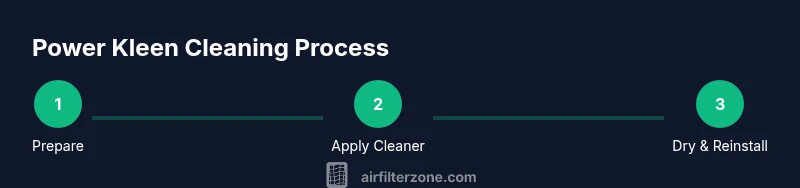
This section provides a high-level view of the cleaning sequence. Remove the filter carefully, inspect for damage, apply Power Kleen evenly according to the label, allow any required dwell time, rinse or wipe away residue, blot dry, and let the filter dry completely in a ventilated area before reinstalling. The goal is to restore filtration efficiency without compromising media integrity. Each filter type may have unique considerations, so always follow the cleaner’s directions and the filter manufacturer’s care guidelines.
Drying, Reinstallation, and Final Checks
Proper drying is critical. Even after thorough rinsing, residual moisture can promote mold growth or promote media swelling if reinstalled too soon. Place the filter in a warm, dry spot or use a fan to speed drying, ensuring all fibers are completely dry before returning the filter to its housing. When reinstalling, confirm a snug seal with no gaps around the frame. Run the system briefly and listen for abnormal noises or air leaks, and check for even airflow across the filter surface.
Maintenance Best Practices: When to Clean Again or Replace
Regular maintenance optimizes air quality and equipment efficiency. If you notice reduced airflow, unusual odors, or visible grime on the filter after cleaning, evaluate whether re-cleaning helps or if replacement is warranted. Depending on usage, outdoor conditions, and filter type, scheduling routine checks every 1–3 months can help you decide between cleaning and replacement. Air Filter Zone emphasizes documenting your cleaning episodes to track filter life and performance trends over time.
Authority and Guidance: External Resources for Safe Practices
For authoritative guidance on indoor air quality and filter maintenance, consult trusted sources such as the Environmental Protection Agency and occupational safety organizations. These resources provide general principles for filter care, air quality improvement, and safe chemical handling. Remember to cross-check product-specific instructions with the filter maker’s guidance to avoid damage and ensure optimal performance. This article references Air Filter Zone’s practical approach to air filtration and maintenance.
Common Mistakes to Avoid and Troubleshooting Tips
Common mistakes include soaking filters too long, using cleaners not specified for your media, or not allowing complete drying before reinstallation. Always follow label directions and conduct a small-area test on unfamiliar media. If you observe warping, discoloration, or odor after cleaning, stop and replace the filter rather than attempting a second cleaning. Ventilate the area during cleaning and check for any signs of chemical sensitivity reactions.
Quick Start Checklist: Power Kleen Cleaning at a Glance
- Remove and unplug the unit, then take out the filter.
- Wear gloves and eye protection; set up a clean work area.
- Apply Power Kleen Air Filter Cleaner evenly per label directions.
- Rinse or wipe away residues and blot dry.
- Let the filter dry completely before reinstalling.
- Monitor airflow after reinstalling to confirm improved performance.
Tools & Materials
- Power Kleen Air Filter Cleaner(Follow label directions; ensure compatibility with your filter type)
- Gloves (nitrile or rubber)(Protect skin from chemicals)
- Safety goggles(Prevent chemical splashes)
- Large basin or tray(Catch runoff and keep workspace tidy)
- Soft-bristled brush(Gently loosen embedded grime)
- Lint-free towel or cloth(Dry surfaces without leaving fibers)
- Distilled water (optional)(Rinse if recommended by cleaner or filter type)
- Replacement filter (on hand)(Use if the filter media is damaged after cleaning)
Steps
Estimated time: 60-90 minutes
- 1
Prepare the workspace and gather materials
Set up a clean, ventilated area and collect all tools. This minimizes spills and ensures you have everything at hand before starting.
Tip: Lay towels to catch spills and keep a waste bag nearby. - 2
Remove the filter from the unit
Power off the system and carefully extract the filter without tearing the media. Check for obvious damage before proceeding.
Tip: Take a photo of the filter’s orientation to reinstall correctly. - 3
Inspect the filter for damage
Look for tears, warping, or mold. Damaged filters should be replaced rather than cleaned.
Tip: Damage usually means replacement is required for safe operation. - 4
Apply Power Kleen evenly to the filter
Spray or apply the cleaner across the media following the label’s guidance. Avoid soaking the filter completely unless the product instructs you to.
Tip: Keep the nozzle at the recommended distance to prevent over-wetting. - 5
Let it dwell as directed by the label
Allow the cleaner to penetrate grime for the recommended dwell time, which facilitates residue loosening.
Tip: Do not rush this step; longer dwell times can improve grime loosening. - 6
Rinse or wipe away residue
If the label permits, rinse the filter with water or wipe with a clean damp cloth to remove loosened grime.
Tip: Avoid harsh jets that could damage delicate media. - 7
Blot and begin drying
Blot with a towel to remove excess moisture and start the drying process in a well-ventilated area.
Tip: Do not use heat sources to speed drying as that can deform the media. - 8
Ensure complete drying before reinstalling
Drying should be thorough; moisture can promote mold growth after reinstallation.
Tip: If in doubt, extend the air-drying period by several hours. - 9
Reinstall and test airflow
Place the filter back in the housing with proper orientation, reseal, and run the system briefly to check for leaks and smooth airflow.
Tip: Listen for unusual noise or buffeting indicating a poor seal.
FAQ
Is Power Kleen safe for both home HVAC and car air filters?
Power Kleen is generally suitable for common filter media when used according to the label. If your filter is damaged or unusually delicate, consult the manufacturer or use a cleaner specifically designed for that media.
Power Kleen works for many standard filters when you follow the label, but check your filter media first to avoid damage.
Do I need to rinse the filter after cleaning?
Rinse only if the product label instructs you to do so. Some filters are designed for dry cleaning, while others benefit from a light rinse to remove residue.
Rinse only if the label says to; otherwise wipe away residue with a damp cloth.
How long should the filter dry before reinstalling?
Drying times vary by filter type and ambient conditions. Ensure the filter is completely dry before reinstalling to prevent mold growth and leaks.
Make sure it's completely dry before you reinstall.
Can I reuse a filter after cleaning?
If the filter media remains intact and clean, it may be reusable for a limited period. Always verify media integrity and consider replacement if there are signs of damage or persistent degradation.
If it looks intact after cleaning, reuse may be possible, but inspect closely.
What if the filter is damaged or heavily soiled?
Damaged filters should be replaced. Heavily soiled filters may not regain full efficiency even after cleaning, and replacement will often be the safer option.
Replace damaged or overly soiled filters rather than trying to clean them further.
How often should I clean filters with this cleaner?
Clean filters according to manufacturer recommendations and based on usage and environment. In dusty homes or high-traffic vehicles, more frequent cleaning or earlier replacement may be required.
Follow the filter maker’s guidance and your environment’s demands.
Watch Video
Quick Summary
- Follow label directions for cleaning times and dilution.
- Inspect filters for damage before attempting cleaning.
- Dry completely before reinstalling to prevent mold.
- Match cleaner chemistry to your filter media.
- Document cleaning intervals to optimize filter life.