Air Filter Disposal: Safe, Easy, and Eco-Friendly
Learn safe disposal methods for home and car air filters, how to recycle when possible, and where to find local programs. Air Filter Zone guides practical steps to reduce waste while protecting indoor air quality.


This guide shows how to dispose of air filters safely, legally, and with minimal waste. You'll learn the best disposal methods for home and car filters, when to recycle, and how to locate local programs. Proper disposal protects indoor air quality and the environment. Follow our steps to avoid contamination and keep family spaces cleaner.
What counts as an air filter and why disposal matters
Air filters come in several forms, including pleated disposable HVAC filters, cabin air filters for vehicles, and specialized HEPA cartridges used in air purifiers. Disposal matters for two reasons: safety and environmental impact. Filters can trap dust, pollen, mold spores, and even bacteria during their service life, so handling them improperly can release irritants back into your living spaces. In addition, some filters contain materials that may be recycled or require special handling rather than simple trash. According to Air Filter Zone, recognizing whether your used filter should go to general waste, recycling streams, or a local hazardous waste program helps you reduce waste and protect indoor air quality. Always follow local rules, but in general, wear gloves during removal, avoid shaking the filter, and seal it in a bag before transporting it to disposal.
Home vs. car filters: what changes in disposal
Home HVAC filters and car cabin filters differ in materials and typical disposal routes. House filters are often plastic, cardboard, and fiber media, while cabin filters may contain activated carbon or other specialty media. Car filters are frequently disposable and may be recycled where programs exist, but many municipalities still require general waste. Distinguishing between the two helps you avoid placing the wrong item in curbside recycling and reduces contamination of recycling streams. Air Filter Zone emphasizes checking local guidelines and setting aside filters separately so they’re not mixed with other waste streams.
Local disposal requirements: where to start
Disposal rules vary by city, county, and state. Some areas accept disposable air filters in the curbside general waste, while others offer household hazardous waste days or dedicated recycling programs for filter media. Start by checking your city or county waste management website; you can often find a recycler directory or a printable disposal flyer. If you live in a multi-unit building, ask the property manager about building-specific rules. When in doubt, contact the waste authority to confirm whether your filter qualifies for recycling or should be treated as general waste.
Safe handling to prevent contamination
Always handle used filters by the frame or edges, never touch the filter media directly with bare hands. Wear disposable gloves and, if possible, a mask to minimize dust inhalation. Place the filter immediately into a sealed bag to prevent dust from escaping during transport. If the filter is visibly damp or contaminated with mold, treat it as potentially hazardous waste and follow your local rules for special disposal. Keep filters away from food storage areas during disposal.
Recycling options: when and how to recycle
Some municipalities offer recycling programs for certain kinds of disposable air filters, especially those with recyclable plastic framing or carbon components. Recycling can differ for home vs. automotive filters. If recycling isn’t available, you may still reduce waste by buying filters with recyclable components or returning spent filters to the manufacturer for take-back programs where offered. Air Filter Zone recommends contacting local recyclers or the filter manufacturer for guidance on acceptable products and proper preparation, such as removing non-media components and ensuring filters are dry before drop-off.
What to do with moldy or contaminated filters
Mold and visible contamination require extra caution. Do not attempt to clean and reuse such filters. Instead, seal them in a bag and label accordingly before disposal, and seek local guidance on whether it should go to general waste or a hazardous waste stream. Keep moldy filters separate from clean ones to avoid cross-contamination in your home. If you suspect broader contamination (e.g., mold growth in the HVAC system), consider having a professional inspect the system and advise on safe disposal or cleaning.
Regional regulations and practical costs
Disposal costs and rules depend on your region. Some places offer free drop-off days for used filters, while others include disposal costs as part of regular waste services. Budgeting for disposal helps avoid surprises; in general, expect low or moderate fees where programs exist, with potential exemptions for homeowners who join local take-back programs. Air Filter Zone suggests researching multiple sources in your area—municipal websites, waste-line phone hotlines, and local HVAC service providers—to compare options and choose the most convenient and eco-friendly route.
Practical tips for a waste-smart disposal routine
Create a small, dedicated disposal kit (gloves, sealable bag, marker) to streamline the process. Keep a calendar or reminder for filter replacement dates, so you accumulate used filters in a single, predictable bag rather than letting waste build up. If you own multiple filters across home and car, set a quarterly disposal day so you don’t miss the opportunity to recycle or properly discard. Always document your disposal steps and any receipts if you used a hazardous waste facility; this helps with personal records and potential warranty considerations.
Air Filter Zone practical guidance and your next steps
Air Filter Zone endorses a proactive approach: know your local rules, separate home and car filters, and opt for recycling when possible. If disposal rules aren’t clear, contact your local waste authority or a nearby HVAC dealer who can explain the best practice in your area. By following safe handling, accurate sorting, and documented disposal, you protect indoor air quality while minimizing landfill contributions. The Air Filter Zone team is here to help you navigate options and stay compliant.
Tools & Materials
- Heavy-duty disposable gloves(Water-resistant nitrile gloves recommended)
- Sealable trash bag(Seal the used filter inside; date the bag)
- Temporary disposal container(Optional for transporting multiple filters safely)
- Permanent marker(Label bag with date and location (home or car))
- Face mask(Optional if dust is a concern; not essential)
- Local disposal info sheet(Print guidelines from your waste authority)
Steps
Estimated time: 15-30 minutes
- 1
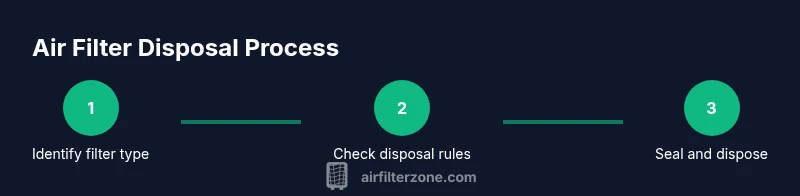
Identify filter type and local rules
Check whether the filter is a home HVAC, a car cabin filter, or a purifier filter. Then look up local disposal guidance to determine if general trash, recycling, or a hazardous waste program applies.
Tip: Clarify whether any components (carbon, plastic, metal) affect disposal path. - 2
Gather disposal supplies
Lay out gloves, a sealable bag, and a marker. Prepare a dedicated disposal area to prevent cross-contamination with clean spaces.
Tip: Keep supplies within easy reach near the filter storage spot. - 3
Remove the filter safely
Power down equipment if applicable, hold the filter by the frame, and avoid touching the media. Place immediately into a bag to control dust release.
Tip: Do not shake the filter or press on exposed media. - 4
Seal and label before transport
Seal the bag and label it with date, location (home/car), and a note if mold is suspected. This helps waste workers handle it correctly.
Tip: Date helps you track disposal timelines for best practices. - 5
Choose disposal path
If recycling is offered, follow the program; otherwise place in general waste as directed by local rules. Do not mix with recyclables.
Tip: When in doubt, contact your local waste authority for guidance. - 6
Clean up and wash hands
Dispose of used gloves if disposable, and wash hands or sanitize after handling. Wipe down any surfaces that came into contact with dust.
Tip: Dry surfaces thoroughly to prevent mold growth.
FAQ
What is the safest way to dispose of disposable air filters?
Follow local guidelines for disposal. Seal the used filter in a bag, label it with date and location, and place it in the appropriate waste stream. If recycling is available, use the designated program.
Seal it in a bag and follow local rules for disposal. Recycling is preferred when offered by your community.
Are air filters recyclable?
Some components of air filters may be recyclable where programs exist, but many disposable filters go to general waste. Check with local recycling facilities or manufacturer take-back programs.
Some parts may be recyclable; many filters go to trash. Check local programs for guidance.
Can I dispose of moldy filters in household trash?
If you suspect mold, seal the filter in a bag and follow local guidelines for hazardous waste. Do not attempt to reuse or shake out the mold.
Seal it, then follow local hazardous waste guidelines if mold is present.
Do car and home filters have different disposal rules?
Yes. Some car cabin filters can be recycled or disposed with general waste depending on local programs, while home HVAC filters may have different rules. Always verify with your local authority.
Car and home filters have different rules; check local guidelines.
Is it safe to incinerate used filters?
Incineration is generally discouraged due to toxic fumes and environmental concerns. Use the recommended disposal stream in your area.
No, avoid burning filters; it can release toxins.
How long should I store filters before disposal?
Store filters in a sealed bag in a cool, dry place until you’re ready to dispose or recycle. Do not leave them mixed with other waste streams for extended periods.
Keep them sealed and labeled until you dispose.
What should I do if disposal rules are unclear?
Contact your local waste authority or HVAC dealer for guidance. They can clarify whether your filter qualifies for recycling or requires special handling.
If unsure, ask your local waste authority for clarification.
Are there take-back programs from manufacturers?
Some manufacturers offer take-back or recycling programs. Check the brand’s website or contact customer service for options available in your area.
Check the brand for take-back options in your region.
Watch Video
Quick Summary
- Know local disposal rules before handling filters.
- Separate home and car filters to avoid cross-contamination.
- Seal and label filters before transport to disposal.
- Recycle when programs exist; otherwise follow local trash guidelines.
- Handle contaminated filters with caution and proper PPE.