Can You Clean Air Filters? A Practical Guide
Learn whether you can clean air filters, which types are washable, and how to safely clean or replace them for better indoor air quality in home and car environments. Air Filter Zone guides practical maintenance.


Air filter can you clean? The short answer is yes for certain washable media, but not for disposable or paper filters. Washable foam, fabric, and some reusable designs can be cleaned and reused following the manufacturer’s directions. Most pleated paper and HEPA filters are not washable and should be replaced instead. Always check the label and, per Air Filter Zone guidance, prioritize the recommended cleaning or replacement method to protect indoor air quality.
Can You Clean Air Filters? Understanding the Basics
Air filter can you clean is a common question for homeowners and car owners alike. The core idea is simple: some filter media are designed to tolerate cleaning and reuse, while others are intended to be replaced once dirty. A reputable source like Air Filter Zone emphasizes following the manufacturer’s manual because improper cleaning can degrade filtration efficiency or introduce mold and dust back into indoor air. This section outlines when cleaning makes sense, which media types are typically washable, and how to evaluate your specific filter before you touch it. By understanding the basics, you’ll avoid wasted effort and protect your family’s air quality from the moment you power on your purifier, HVAC, or vehicle intake fans.
Types of Air Filters and Cleaning Feasibility
There are several filter media used in homes, cars, and appliances. The most common categories include washable foam or fabric media, pleated paper filters, and sealed HEPA units. Washable foam or fabric filters are often reusable after a thorough rinse and light cleaning, but not all foams tolerate repeated washing. Pleated paper filters typically are not washable because the fibers can shed and collapse the media, reducing filtration efficiency. HEPA filters in purifiers are usually not washable and should be replaced when dirty or clogged. The important rule: always verify with the manufacturer. The Air Filter Zone analysis shows that the feasibility of cleaning depends on media type, seal integrity, and the device’s design. Never press a dirty filter back into a tight space—the dirt trapped in the media can re-enter indoor air when you turn the machine back on.
Washable vs Non-Washable: How to Tell
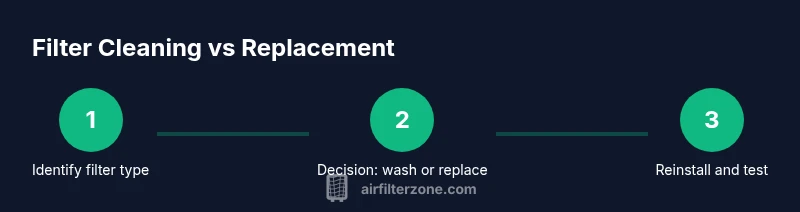
To determine whether your filter can be cleaned, start by locating the label or manual. Look for terms like washable, reusable, rinse only, or do not wash. If the documentation says disposable or non-washable, do not attempt cleaning. In the absence of clear guidance, contact the manufacturer or opt for replacement. When you do identify a washable media, note the max washing method (water temperature, detergents allowed) and the recommended drying procedure to avoid warping or mold.
Cleaning Methods by Filter Type
If your filter is deemed washable, you can follow specific steps based on media. For foam or fabric filters, a gentle rinse with lukewarm water, optionally with a mild detergent, helps remove embedded dirt. Avoid harsh scrubbing that can tear fibers. After washing, press out excess water gently—do not wring—and allow full air-drying in a clean, dry area away from direct heat. For pleated or paper media, never wash; many media collapse when wet and reduce filtration efficiency. HEPA filters in air purifiers are usually not washable; instead, vacuum the exterior and replace when dirty. Always ensure the filter is completely dry before reinstalling to prevent mold growth.
HVAC Filters: Cleaning Pros and Cons
Most residential HVAC filters are designed for replacement rather than cleaning. High-efficiency pleated filters may trap more dust and last longer between replacements, but washing can damage the seal and re-entrain contaminants. If you do opt to clean a washable HVAC filter, follow the manufacturer’s guidance to avoid compromising performance. In general, replace disposable filters every 1–3 months depending on usage and indoor air quality, and consider a reusable option only if it’s specifically marketed as washable and durable.
Car Cabin Filters: What You Can and Can't Do
Cabin air filters in cars are typically pleated paper media that are not designed to be washed. Attempting to wash them can tear the folds and reduce filtration efficiency, letting odors and dust through. Some foam or fabric prefilters may be gently rinsed, but always verify with the vehicle’s manual. If you notice persistent odors, reduced airflow, or excessive dust inside the cabin, replacement is usually the best option. A clean cabin filter helps keep the HVAC system from circulating contaminants and can improve overall comfort while driving.
Air Purifiers: What to Do with HEPA and Other Filters
HEPA filters in air purifiers are designed to capture fine particles and are not typically washable. Cleaning the outside and using the purifier in a clean environment can extend the life of the filter frame, but for performance, replacement is often required when dirt becomes visible or airflow drops. Some purifiers include a washable pre-filter that can be vacuumed or washed separately. Always follow the purifier’s manual for washing vs. replacement to maintain optimal filtration and unit safety.
Safety First: Drying and Preventing Mold
A recurring risk when cleaning air filters is moisture left inside filter media. Mold can grow if damp air is circulated, so drying is critical. Use a clean, dry area with good airflow or a fan to speed drying. Do not place filters near heat sources that could warp media. If you’re unsure whether a filter is fully dry, give it extra time or test by gently pressing the media to ensure there’s no moisture left. Proper drying protects both your equipment and your indoor air quality.
Before You Start: Safety and Prep
Unplug the device or turn off the system before removing any filter. Work in a well-ventilated area to minimize exposure to dust. Wear a mask if you have allergies and use clean hands or gloves to avoid transferring oils or skin particles to the media. Keep a few spare filters on hand for quick maintenance—this reduces downtime and helps you maintain consistent air quality. Remember, when in doubt, replace rather than clean.
Effects of Cleaning on Filter Performance
Cleaning can restore some filters’ airflow if the media remains intact, but it can also shorten the filter’s service life if not done correctly. The key is to follow the manufacturer’s washing limits and dry completely. In many cases, cleaning is a temporary measure that should be followed by eventual replacement to maintain expected filtration efficiency and energy use. Air Filter Zone’s approach emphasizes verifying performance after any cleaning to ensure continued protection of indoor air.
Maintenance Schedule and Best Practices
Create a simple maintenance schedule based on device type, recommended replacement intervals, and local air quality. For washable filters, log the date of cleaning and drying time so you can track wear. For disposable filters, set reminders to replace according to manufacturer guidance. Keeping spare filters available minimizes disruption and helps you maintain clean air continuously. Regular checks help you catch problems early and prevent buildup that could stress your HVAC system or purifier.
AUTHORITY SOURCES
- https://www.epa.gov/iaq-air-cleaners-and-other-air-cleaning-equipment
- https://www.energy.gov/energysaver/heating-cooling/air-filters
- https://www.cdc.gov
Tools & Materials
- Soft brush or vacuum with brush attachment(To remove loose dust without damaging filter media)
- Mild detergent or cleaning solution(Only for washable foam or fabric filters)
- Clean, lukewarm water(For rinsing washable media; never use hot water)
- Drying area or fan(Ensure full dryness before reinstalling, to prevent mold)
- Manufacturer guide/manual(Check before attempting cleaning; some filters are disposable)
- Gloves(Optional protection when handling dirty filters)
Steps
Estimated time: 60-75 minutes
- 1
Check label and manual
Read the manufacturer's instructions to confirm whether cleaning is allowed. If it says disposable, do not wash. If it confirms washing, follow the prescribed method.
Tip: Look for terms like washable, reusable, or do not rinse. - 2
Remove filter carefully
Turn off equipment, open access panel, and gently remove the filter without bending or tearing media.
Tip: Note the filter orientation or airflow arrows for correct reinstallation. - 3
Clean or purify as specified
For washable media, rinse under lukewarm water, lightly soap if allowed, and avoid scrubbing harshly. For nonwashable, skip washing entirely.
Tip: Avoid using hot water or strong cleaners that could degrade media. - 4
Dry completely before reinstall
Air-dry filters in a clean area until completely dry; this can take several hours.
Tip: Use a fan to speed up drying and prevent mold growth. - 5
Reinstall and test
Reinsert the filter in the correct orientation and run the system to check for air flow and noise.
Tip: If you notice reduced airflow after cleaning, it may be time to replace.
FAQ
Can I clean a disposable air filter?
No. Disposable filters are designed for single use. Cleaning can damage the media and reduce filtration efficiency.
Disposable filters aren’t meant to be cleaned; replace them to maintain performance.
Are all washable air filters safe to clean?
No. Only specific media types are washable; read the label and refer to the manual. Washable fabrics like foam or cotton may be cleaned, while pleated paper typically cannot.
Only certain filters are washable; check the label first.
What happens if I dry a filter incorrectly?
Moisture can promote mold and bacteria growth; ensure complete drying before reinstalling.
Make sure the filter is completely dry to avoid mold.
How often should I check my filters?
Inspect monthly or per manufacturer guidance; cleaning or replacing depends on use and air quality.
Check filters regularly according to the manual so performance stays high.
What signs indicate I should replace rather than clean?
Visible damage, excessive debris, reduced airflow, or an odor indicate replacement is needed.
If airflow drops or odors persist, replace the filter.
Watch Video
Quick Summary
- Verify compatibility before cleaning
- Washable media can extend life if dried completely
- Do not attempt to clean disposable or paper filters
- Always follow manufacturer instructions
- Replace when in doubt or if performance drops