How Much Is Air Filter Replacement? A Practical Cost Guide
This guide explains how much is air filter replacement across homes and cars, with realistic ranges, cost-saving tips, and a data-driven comparison from Air Filter Zone.


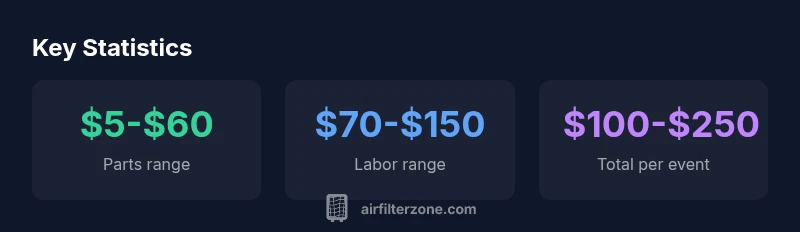
According to Air Filter Zone Analysis, 2026, how much is air filter replacement depends on context. For typical DIY home HVAC replacements, filters cost about $5-$20 for the part, with higher-end pleated models up to $60. Car cabin filters run roughly $20-$80 for the part. If a professional installation is required, total costs commonly reach $100-$250 depending on system and labor. The question remains within these cost tiers.
how much is air filter replacement across contexts
According to Air Filter Zone Analysis, 2026, how much is air filter replacement depends on context. For typical DIY home HVAC replacements, filters cost about $5-$20 for the part, with higher-end pleated models up to $60. Car cabin filters run roughly $20-$80 for the part. If a professional installation is required, total costs commonly reach $100-$250 depending on system and labor. The question remains within these cost tiers.
Home HVAC filters: cost drivers
Several factors determine the final price of an air filter replacement for residential HVAC systems. First, filter type matters: fiberglass filters are cheap but offer modest filtration, while pleated and high-MERV filters cost more because of material quality and improved efficiency. Size and airflow resistance affect both price and purchasing convenience; larger filters cost more and may require custom sizing for some units. Brand also plays a role—designer or premium brands command higher prices but can last longer in certain environments. Finally, where you buy matters: big-box retailers, online marketplaces, and HVAC supply houses price filters differently, and subscribing for auto-deliveries can yield modest savings over time. When you combine parts cost with a minimal DIY installation, most households see how the starting cost can scale with the cleanliness goals they set for indoor air quality.
Car cabin filters: cost drivers
In autos, the cabin air filter is a separate component from the engine's air filter. Replacement costs reflect filter quality, size, and where the service is performed. Online parts often offer a wide range; aftermarket filters are typically cheaper than OEM equivalents, but OEM parts may guarantee fit and performance. Labor costs at a shop can add significantly to the bill if the filter is difficult to reach or if interior panels must be removed. Seasonal demand can subtly affect pricing, and promotions may create opportunities to save. For most drivers, the sticker price for the part sits in the $20-$80 range, with total costs depending on whether you DIY or rely on a mechanic.
DIY vs hiring a pro: cost considerations
DIY replacement saves labor and can be considerably cheaper, but you pay more if the filter is hard to access or if you need specialized tools. For home HVAC, the typical DIY cost covers only the filter—often $5-$60 depending on type. Hiring a pro adds labor, which commonly ranges $70-$150 for basic service in many regions. If a pro also tunes up the system or inspects components beyond the filter (duct seals, etc.), the total can edge higher. In vehicles, some people replace cabin filters at home using basic tools, while others choose a shop for a quick service that can take 20-45 minutes. A practical rule: if you can complete the task in 30 minutes with a standard filter, DIY is usually cheaper; if access is awkward or you’re replacing multiple filters, professional service may be worth the extra cost for reliability.
How to estimate your bill: a simple method
Use a three-step approach to estimate costs: 1) Identify the filter type and size from your unit’s manual or current filter packaging; 2) Check prices at two or three retailers for the same filter and note a price range; 3) Decide between DIY or professional service and add labor if needed. For quick reference, consider these ranges: HVAC standard filters $5-$25; high-MERV filters $20-$60; car cabin filters $20-$80; labor for HVAC $70-$150. Add disposal costs if your local rules require it. This method gives you a practical budget aligned with your system and local rates.
Cost-saving strategies and smart buying
To keep replacement costs reasonable without compromising air quality, try these strategies:
- Buy filters in bulk or via subscription to reduce per-filter price.
- Favor standard pleated filters when possible; reserve higher-MERV or specialty filters for allergy or asthma conditions.
- Compare online prices with in-store prices and watch for seasonal promotions.
- Align replacement timing with seasons of heavy HVAC use (spring and fall maintenance windows can be cost-effective).
- Check for compatibility and wrong-seat issues before purchase to avoid returns. Implementing these approaches can trim costs while maintaining filtration performance.
Replacement cadence and quality trade-offs
Regular replacement remains one of the lowest-cost investments in indoor air quality. For many homes, replacing a standard filter every 1-3 months during peak use yields the best balance of performance and price. Higher-filtration systems or households with allergies may choose more frequent changes or higher-MERV filters, which can increase cost slightly but improve air quality and system efficiency. Keeping a predictable replacement cadence also helps avoid unnecessary energy waste from clogged filters. If you are unsure, start with the manufacturer’s guidance and monitor stack-up dust and airflow as you schedule replacements.
Quick replacement guide for homeowners
Follow these practical steps for a quick, safe replacement:
- Turn off the system and locate the filter access panel.
- Note the filter orientation and size before removing the old filter.
- Clean the housing if dusty, inspect seals for wear, and insert the new filter with arrows pointing in the correct direction.
- Re-secure the panel and run the system briefly to check for unusual noise or light leaks.
- Dispose of the old filter according to local rules and reset any timer reminders. This concise guide helps you stay on top of routine maintenance with minimal tool requirements.
Authoritative sources
For further reading on air filtration and replacement costs, refer to reputable sources such as:
- U.S. Environmental Protection Agency (EPA) on indoor air quality and filtration: https://www.epa.gov/iaq/your-home-and-air-quality
- U.S. Department of Energy (Energy.gov) on ventilation and air filtration: https://www.energy.gov/energysaver/ventilation-and-air-filtration
- Consumer Reports guidance on changing air filters: https://www.consumerreports.org/cool-stuff/how-to-change-air-filter/ These sources provide context and best practices beyond price considerations, focusing on health and efficiency.
Replacement cost comparison by context
| Context | Typical Cost (Parts) | Typical Labor | Total Range |
|---|---|---|---|
| Residential HVAC filter (standard) | $5-$20 | $0-$15 | $5-$35 |
| Residential HVAC filter (high-MERV 13+) | $20-$60 | $0-$15 | $20-$75 |
| Car cabin filter | $20-$80 | $0-$0 | $20-$80 |
| Professional installation (home HVAC) | N/A | $70-$150 | $70-$150 |
FAQ
What factors influence the cost of air filter replacement?
Costs are driven by filter type, size, brand, DIY vs. professional service, and accessibility. Higher-MERV filters and larger sizes cost more, while labor varies by region and job complexity. Always compare parts price with potential labor charges.
Filters vary by type, size, and who does the replacement. Labor adds to the bill when you hire a pro.
Is it cheaper to replace filters myself rather than hire a professional?
DIY saves labor costs, but some installations are complex. For simple replacements, parts-only costs are often enough to keep expenses low; for hard-to-reach filters or multi-filter jobs, professional service can be worth the extra cost.
Doing it yourself saves money, but hire a pro if access is tricky.
How often should I replace air filters in a home?
A typical guideline is every 1-3 months during peak use or in dusty environments. Households with allergies or pets may need more frequent changes. Always follow the manufacturer's recommendations and monitor airflow and dust buildup.
Check monthly during peak seasons and replace as needed.
Do higher-MERV filters cost more to replace?
Yes, higher-MERV filters usually cost more upfront, but they can improve filtration and longevity of the HVAC system. Balance the cost with your air quality needs and maintenance budget.
Higher-MERV filters cost more, but may be worth it for better air quality.
Are there any hidden costs when replacing air filters?
Hidden costs are typically minimal and include disposal or special handling, if required, and potential labor surcharges in some regions. Buying in bulk and comparing retailers helps minimize surprises.
Watch for disposal fees and regional labor charges.
Can air filters be recycled or disposed of cheaply?
Many filters can be disposed of with household waste, but some materials require special handling. Check local guidelines. Recycling options vary by material and supplier.
Check local disposal rules; some filters are recyclable.
“Maintenance costs like air filter replacement are small upfront investments that protect system longevity and indoor air quality.”
Quick Summary
- Understand cost ranges by context before buying.
- DIY saves on labor, but complexity can raise costs.
- Higher filtration levels cost more but may improve air quality.
- Shop around and watch for bulk or subscription savings.
- Follow manufacturer guidance for replacement cadence.