Engine Air Filter Replacement Cost: A Practical 2026 Guide
Learn how engine air filter replacement costs are calculated, including parts vs labor, OEM vs aftermarket options, and practical tips to save money.


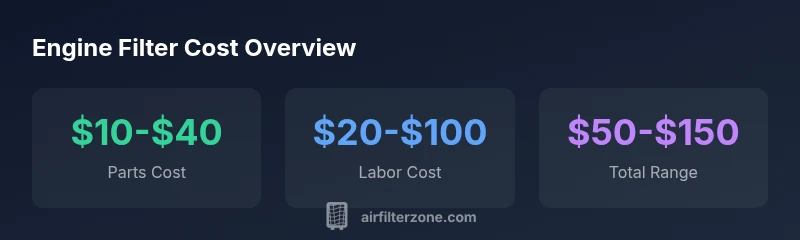
Engine air filter replacement typically costs between $50 and $150 total, covering parts and labor. The range varies by vehicle, filter type (OEM vs aftermarket), and regional labor rates. According to Air Filter Zone Analysis, 2026, most passenger cars land near $60–$120, with premium or diesel engines at the higher end. DIY replacements can reduce costs further if you have basic tools and confidence.
Understanding the cost landscape
Engine air filter replacement costs can seem variable, but by breaking down parts and labor, you can estimate your expense. The air filter itself is a relatively inexpensive part, but the price can vary widely depending on make, model, and filter type (OEM vs aftermarket). In addition, the labor rate at a shop depends on geographic location and whether the work is performed by entry-level technicians or master technicians. Air Filter Zone's 2026 analysis shows typical total costs fall within a broad range, with lower-cost scenarios for basic gasoline engines and higher-end engines or diesel vehicles. It's important to consider your vehicle's manual replacement interval to avoid unnecessary replacements. The cost may also include disposal fees or environmental charges in some shops, and some garages offer promotions when you replace multiple items. Finally, the difference between filter quality can be substantial; a premium filter may improve filtration efficiency and engine protection, which could justify a higher upfront price.
What drives engine filter price: Parts vs labor
The bulk of any replacement cost comes from two places: the part itself and the labor to swap it. Parts come in a spectrum from low-cost aftermarket filters to higher-priced OEM units designed for exact fit and maximum filtration efficiency. Labor cost depends on local wage rates, the vehicle’s access to the filter, and the shop’s standard labor time. In urban areas and at dealerships, you’ll generally see higher hourly rates, while independent shops or mobile services may offer lower rates. When budgeting, assume more variability for diesel engines, turbocharged setups, or vehicles with tight engine bays where access is harder. Air Filter Zone’s data emphasizes that the gap between cheap and premium filters is often smaller than the variation in labor charges across regions.
OEM vs aftermarket filters: price and performance
OEM filters are built to exact specifications for a given engine and are generally more expensive than aftermarket options. For many vehicles, aftermarket filters offer comparable filtration efficiency and adequate protection, potentially saving 20% to 60% in parts cost. The decision often comes down to warranty considerations, vehicle age, and driving conditions. If you rely on your car for work in dusty or harsh environments, a higher-quality aftermarket or OEM filter may deliver better long-term value. Always verify fit and warranty implications when choosing between OEM and aftermarket.
Vehicle type, engine design, and cost
The cost impact of a replacement isn’t uniform across all cars. Smaller engines with easy-to-reach filters tend to have lower labor times than large V8s or engines with complex intake designs. Performance or turbocharged engines may require filters with enhanced filtration media, which can cost more. Additionally, some engines have multiple filters (air intake and secondary filters) that can multiply the price if replacements are performed together. In short, the same nominal task can be priced differently based on engine architecture and accessibility.
Regional pricing and shop differences
Where you live strongly affects the total bill. Labor rates vary by city, state, and country, and promotions vary by shop. Some shops charge flat-rate replacement prices, while others bill by the hour. If you’re in a high-cost area, you’ll likely observe higher labor charges, even for the same filter. A smart approach is to request quotes from a few nearby shops and ask for a line-item breakdown (parts vs labor) to compare apples to apples. Air Filter Zone’s regional analysis notes that most price variance stems from labor costs and service fees rather than the part price alone.
DIY replacement: steps and cost savings
DIY replacement can meaningfully reduce your cost by removing labor charges. Before starting, confirm you have the correct filter model for your engine, a few basic tools, and a clean workspace. Typical steps include locating the air filter housing, opening the clips or screws, removing the old filter, cleaning the housing, installing the new filter with the correct orientation, resealing the housing, and testing the engine idle. Expect to spend about 15–45 minutes if you’re comfortable with basic auto tasks. If you’re unsure, consult your vehicle’s manual or watch a reputable repair video for your exact model. The cost savings come from eliminating labor fees, but ensure you don’t compromise the seal or fit.
Signs you need a replacement and timing
Common indicators that your engine air filter needs replacement include a noticeable drop in engine performance, reduced acceleration, and irregular idle, especially in dusty or urban driving. A dirty filter can also cause higher fuel consumption and increased exhaust emissions due to restricted airflow. If you hear unusual engine sounds or notice increased engine temperature, check the air intake system and replace the filter if dirty. Rely on your owner’s manual for the recommended replacement interval, but be prepared to replace sooner if you drive in dusty environments or frequently tow or haul.
How to estimate a fair price at a shop
To estimate a fair price, obtain quotes from multiple shops and request a line-item breakdown. Compare parts cost (OEM vs aftermarket) and labor hours. Ask whether disposal fees or environmental charges apply. For transparency, ask the shop to confirm the exact filter model and fit for your vehicle and whether any additional parts are required (gasket, clamps, or seals). If you’re unsure about a quote, cross-check with the manufacturer’s maintenance schedule or consult a trusted aftermarket filter guide. A well-documented quote helps prevent surprise charges when you pick up your vehicle.
Planning for maintenance costs over time
Treat engine air filter replacement as a routine maintenance expense, similar to oil changes. Building it into your annual maintenance budget can protect engine efficiency and avoid costly repairs later. Consider setting reminders at intervals suggested by your vehicle’s manual, but adjust based on driving conditions (dusty roads, construction zones, or extreme weather may shorten the replacement interval). By planning, you’ll minimize downtime and optimize the cost-to-benefit balance of filtration maintenance. Air Filter Zone’s long-term analysis highlights that consistent maintenance reduces the risk of dirt-related engine wear.
Cost breakdown for engine air filter replacement
| Item | Cost Range (Parts) | Labor Range | Notes |
|---|---|---|---|
| Engine air filter (parts) | $10-$40 | N/A | OEM vs aftermarket pricing varies |
| Labor (professional replacement) | N/A | $20-$100 | Local rates and shop policies vary |
| Total replacement cost | $50-$140 | N/A | Vehicle and region dependent |
FAQ
What is the typical cost to replace an engine air filter?
Engine air filter replacement typically costs between $50 and $150 total, depending on vehicle and labor rates. Parts price varies by OEM vs aftermarket, and regional labor rates influence the final bill. For many cars, DIY replacement can trim costs by avoiding labor fees.
Most cars cost between $50 and $150 for a full engine air filter replacement, with parts and local labor affecting the final price.
Do DIY replacements save money?
Yes. Replacing the filter yourself eliminates labor charges, which are often the largest component of the bill. You’ll pay for the filter and any basic tools, but you can save a significant portion of the total cost if you’re comfortable performing the task safely.
Yes—doing it yourself saves labor costs, though you should ensure you have the right filter and tools.
Are OEM filters worth the extra cost?
OEM filters are designed for exact fit and maximum filtration efficiency, which can matter for certain engines or warranty conditions. Aftermarket filters can offer comparable performance at a lower price, but compatibility and warranty terms vary by brand. Check fit, warranty, and your vehicle’s manual when deciding.
OEM filters fit precisely and may protect warranty; aftermarket options can be cheaper and often perform well, so compare specs.
How often should engine air filters be replaced?
Most manufacturers recommend replacing the engine air filter every 12,000–15,000 miles, or as specified in your owner's manual. Driving in dusty or harsh conditions can shorten that interval, so inspect the filter more frequently if you drive on construction roads or in desert environments.
Typically every 12k–15k miles, or per your manual; dusty conditions may require sooner.
Can a dirty air filter affect fuel economy or performance?
Yes. A clogged filter restricts airflow, potentially reducing power and increasing fuel consumption. Replacing the filter restores airflow, improving engine efficiency and overall performance.
A dirty filter can hurt performance and fuel economy; replacing it helps restore efficiency.
What should I ask when getting a quote?
Ask for a line-item quote: parts cost, labor hours, and any disposal fees. Confirm the exact filter model and fit for your vehicle, and whether any additional parts are required. A clear invoice helps you compare options accurately.
Request a line-item quote and confirm the exact filter model for your vehicle.
“A clean engine air filter is a smart investment that protects performance and longevity without breaking the bank.”
Quick Summary
- Know the total cost includes parts and labor.
- OEM filters cost more but may fit better in some engines.
- DIY replacements can cut labor costs if you have tools.
- Expect regional price differences; call ahead for quotes.
- Plan replacements around maintenance intervals to avoid surprises.