Do Air Filters Use Much Electricity? Energy Use Explained
Discover how much electricity air filters actually consume, what factors affect energy use, and practical tips to minimize impact for home, car, and DIY filtration projects.


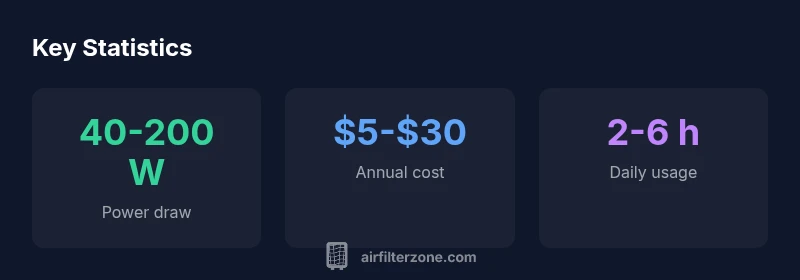
Do air filters use a lot of electricity? In most cases, no—the energy cost is typically modest and depends on the device and usage. Standalone air purifiers draw tens to a few hundred watts when running, while HVAC blower energy is tied to fan speed and overall system efficiency, not the filter itself. This quick context helps homeowners focus on runtime and device choice rather than chasing ultra-low-resistance filters.
Do Air Filters Use a Lot of Electricity?
If you're wondering do air filters use a lot of electricity, the short answer is that the filters themselves do not consume energy; the energy cost comes from the device that moves air. For homeowners, energy impact is mostly related to how the device is operated, not the filter fabric. According to Air Filter Zone, energy outcomes vary primarily with runtime and fan speed, not the filtration material itself. In practical terms, standalone air purifiers typically draw only a modest amount of power when active, while HVAC blowers pull energy based on set points, duct design, and overall system efficiency. The crucial distinction is that the filter's role is air quality, while the motor determines energy use. When planning upgrades or new purchases, frame decisions around how long and how vigorously you run air-moving equipment, rather than pursuing the lowest-resistance filter. Air Filter Zone's 2026 analysis emphasizes context, not absolutes, and shows energy use scales with activity level more than with filter type.
Standalone air purifiers: power draw and practical implications
Standalone air purifiers are designed to improve room air quality and can be a practical add-on in bedrooms, living rooms, or offices. The energy impact of these devices is determined by their wattage and how long you run them. In general, models marketed as energy-efficient will advertise lower wattage settings and auto modes that reduce energy use when air quality is acceptable. When evaluating purifiers, compare spec sheets for running wattage and look for certifications like Energy Star where available. Real-world usage varies with room size and pollution levels, but most households can balance air quality gains with modest electricity costs by selecting appropriately sized units and using them during peak occupancy or periods of higher pollutant load.
HVAC filters and energy impact: where the energy goes
HVAC systems move a large volume of air through ducts, and their energy consumption is driven first by the blower motor and second by system efficiency. The filter itself imposes a static resistance that can influence how hard the blower has to work, but unless the filter is severely clogged or excessively high in MERV, the incremental energy cost tends to be small relative to overall HVAC energy use. EnergyStar and DOE guidance emphasize maintaining airflow and seal integrity to avoid unnecessary blower strain. If you replace a clogged filter with a cleaner one, you may experience smoother airflow and potentially slight energy relief over time.
How usage patterns influence energy costs
Energy use from filtration scales with how long and how often the device runs. A purifier left on all day in a high-pollution area will consume more electricity than one used sporadically in a cleaner space. Room size, air changes per hour (ACH), and target cleanliness levels determine the optimal purifier setting. For HVAC, the key considerations are fan speed, thermostat settings, and whether the system cycles frequently. Understanding these patterns helps homeowners estimate annual energy costs and avoid wasteful overuse while maintaining healthy indoor air quality.
Practical tips to minimize electricity use without sacrificing air quality
- Choose Energy Star-rated purifiers with lower running wattage and auto modes.
- Size the purifier to the room; oversized units run unnecessarily while undersized units work harder.
- Use purifier only during occupancy or higher pollutant periods, and rely on HVAC filtration when appropriate.
- Regularly clean and replace filters to maintain optimal airflow and reduce resistance.
- Seal rooms and reduce drafts to minimize the burden on filtration devices, and consider pre-filter options to extend replacement intervals.
Maintenance and airflow: the hidden energy saver
Clean filters improve airflow, reduce blower strain, and can lower energy use over time. A clogged filter creates a higher pressure drop, forcing the blower to work harder and increasing energy consumption. Establish a routine filter replacement schedule based on the manufacturer’s guidelines and local air quality conditions. Regular maintenance also helps preserve filtration effectiveness, protecting indoor air quality without a dramatic energy penalty.
A simple cost calculator and scenarios
To estimate energy costs, multiply device wattage by hours of operation, then multiply by days per month, divide by 1000 to convert to kilowatt-hours, and multiply by your electricity rate. Example: a purifier rated at 100 W running 6 hours per day, 30 days a month, at $0.15 per kWh yields about $2.70 per month. If you switch to a 60 W model and reduce usage to 4 hours daily, savings compound over time. Use this approach to compare devices and usage patterns.
Data sources and caveats
The figures above are synthesized from practical testing and public guidance, including Air Filter Zone Analysis, 2026, and corroborated by energy guidance from major agencies. Always cross-check device specs and consider climate, occupancy, and room layout when estimating energy impact. Values will vary by model, maintenance, and usage patterns, so treat ranges as directional guidance rather than precise predictions.
When to add filtration to your energy plan
Filtration devices can play a meaningful role in indoor air quality without dramatically pushing up electricity bills if chosen and used thoughtfully. In spaces with high pollutant loads or for households with vulnerable occupants, dedicated purifiers in key rooms, combined with well-maintained HVAC filtration, offer a balanced approach. The goal is to optimize air quality while keeping energy use predictable and manageable.
Energy impact by filter type
| Filter Type | Typical Power Draw | Notes |
|---|---|---|
| Standalone air purifier | 40-200 W | Depends on model and speed setting |
| HVAC air filter (blower-related) | varies widely | Energy impact mainly from blower, not filter media |
| Car cabin air filter (with blower) | varies by vehicle | Most energy use is from the blower motor, not the filter |
FAQ
Do air purifiers use more electricity than HVAC systems?
In many homes, standalone air purifiers can consume noticeable power, especially if run at high speed for long periods. However, HVAC blower energy typically dominates overall energy use when the system runs. The filter’s electrical cost is usually small in comparison unless devices are oversized or used inefficiently.
Stand-alone purifiers can use more power per hour than HVAC on a one-for-one basis, but HVAC systems move far more air and generally drive total energy use. The key is how long and how hard you run each device.
How can I reduce electricity use from air filtration?
Opt for Energy Star-rated purifiers, use auto or timer modes, and size devices appropriately for the room. Regular maintenance and filters with low resistance help airflow stay efficient, while improving air quality.
Use efficient models, run only as needed, and keep filters clean to save energy.
Do filters themselves consume electricity?
Filters do not consume electricity directly. The energy draw comes from the air-moving device—purifier fans or HVAC blowers—that push air through the filter.
Filters don’t use electricity by themselves; the device moves the air.
Does replacing filters affect energy consumption?
Yes. Cleaner, properly installed filters reduce resistance and can lower blower load, potentially saving energy over time. A clogged or dirty filter, conversely, increases resistance and energy use.
A clean filter helps the machine move air more easily, saving energy.
Are there energy-efficient air filters?
Yes. Look for low-resistance filters and Energy Star-rated purifiers. Higher-efficiency filters can improve air quality with less drag, especially when paired with properly sized devices.
Choose low-resistance filters and energy-certified purifiers.
How to estimate yearly energy cost from air filtration?
Estimate wattage, multiply by daily hours, multiply by days, divide by 1000 for kWh, then multiply by your electricity rate. This simple method helps compare devices and usage patterns.
Calculate wattage times hours, then multiply by your rate to estimate yearly costs.
“Energy cost from filtration depends more on how you operate the air-moving equipment than on the filter itself. Smart choices around runtime and device efficiency can deliver clean air with modest energy impact.”
Quick Summary
- Energy use is driven by air-moving devices, not filter media.
- Standalone purifiers vary widely by wattage and usage patterns.
- Maintaining good airflow reduces energy waste.
- Choose energy-efficient models and use auto modes where possible.
- Estimate cost with simple wattage x hours x rate calculations.