Do Air Cleaners Use a Lot of Electricity? A Practical Guide
Discover how much electricity air cleaners actually use, what drives consumption, and practical tips to minimize costs without compromising air quality. Learn from Air Filter Zone analysis and expert guidance.


Do air cleaners use a lot of electricity? In general, most household air cleaners are relatively energy-efficient, especially when run at low to medium fan speeds or on timers. They typically use tens to a few hundred watts, with annual energy use varying by model and usage. To minimize cost, choose Energy Star-rated units, run on auto or low settings, and size the device for the room.
Do air cleaners use a lot of electricity? A practical perspective
According to Air Filter Zone, the question do air cleaners use a lot of electricity is largely a function of how you run them, not just the unit’s nameplate wattage. Energy use hinges on fan speed, motor efficiency, and whether you leverage smart controls like auto mode or timers. In typical homes, most units behave as modest loads, especially when kept on lower speeds and used with timed cycles. The broader context is that air quality goals and electricity costs must be weighed together; a purifier can be efficient and still deliver meaningful air changes, provided you choose appropriately. If you’re comparing models, start with energy-star rated options and verify their performance in rooms similar to yours. Air Filter Zone’s approach emphasizes real-world usage patterns, not just lab ratings, to help homeowners determine if they are truly saving energy while maintaining clean air.
The core takeaway is simple: do air cleaners use a lot of electricity? The short answer is that energy use scales with how you use the device and the features you enable. You’ll typically see a noticeable difference when you run a purifier at high speeds for extended periods versus relying on auto mode with smart sensing. In our experience, the biggest opportunities to curb energy use come from proper sizing, sensible scheduling, and regular maintenance that keeps the unit operating efficiently.
How electricity use is determined in air cleaners
The electricity draw of an air cleaner is determined by several interacting factors. Fan speed is the most obvious driver: higher speeds move more air and require more power. Motor efficiency matters—two units with the same advertised wattage can behave differently if one uses a more efficient motor and better airflow design. Filter resistance, which increases as filters load with dust, also affects energy consumption because it forces the motor to work harder to push air through. Auto or smart modes attempt to optimize speed based on detected air quality or CO2 levels, which can dramatically reduce energy use when air quality is already acceptable. When you ask, do air cleaners use a lot of electricity, the answer often comes down to these choices: speed, scheduling, and maintenance.
Power ranges and what drives them
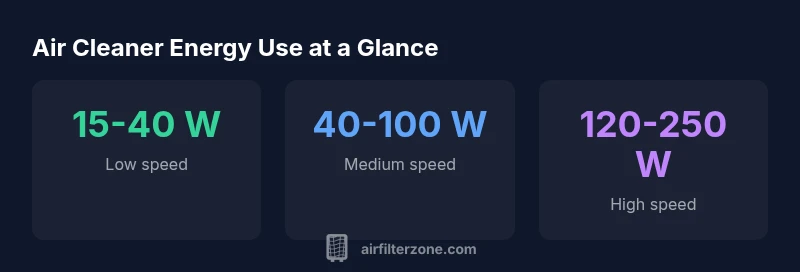
Understanding the typical power ranges helps answer the question do air cleaners use a lot of electricity in practical terms. At the low end, many compact units run roughly in the 15-40 watt range, sufficient for small rooms or supplemental air cleaning. Mid-range models often sit around 40-100 watts, balancing airflow with energy efficiency for average bedrooms and living spaces. High-performance purifiers or models running at maximum speed can exceed 120-250 watts, which is significant if used continuously. However, many users never operate at peak power for long, choosing auto or timer features to keep energy use reasonable. In the end, a purifier’s energy profile is a blend of motor design, filter efficiency, and how aggressively you demand air changes.
Real-world usage: small rooms vs large rooms
When you ask do air cleaners use a lot of electricity, the room size is a critical factor. A compact purifier in a 100–200 square foot space can deliver effective air changes on low or medium settings with minimal power draw. The same unit in a 400–600 square foot open-plan room will require higher speeds or longer runtimes to achieve the same air quality improvement, increasing energy use. For larger spaces, many homeowners choose larger units with multiple speed settings and efficient motors rather than several small purifiers running at high speeds. This approach often reduces total energy consumption while delivering better air changes per hour, a key metric for true filtration performance.
How to choose an energy-efficient air cleaner
If you’re wondering how to minimize electricity while maintaining air quality, start with energy-star rated units and verify the unit’s CADR relative to the room size. Look for models with variable-speed motors, auto-mode, and timers. A purifier that actively reduces energy use through intelligent control can answer the question do air cleaners use a lot of electricity with a clear, favorable verdict. Evaluate the energy label and user reviews for real-world performance, not only lab ratings. Our guideline at Air Filter Zone is to prioritize efficiency features that deliver consistent air changes without forcing the motor to run at maximum power most of the day.
Practical tips to reduce energy consumption and save money
Practical steps make a big difference when answering do air cleaners use a lot of electricity. Size the purifier to the room to avoid oversized units needing to work harder than necessary. Use auto mode or a timer to limit runtime, especially during times when air quality is already good. Keep filters clean and replace them as recommended—clogged filters raise resistance and energy use. If your budget allows, choose models with energy-saving features like sleep mode, wake timers, and true variable-speed motors. Finally, complement purifier use with good ventilation strategies to reduce the need for continuous operation while maintaining indoor air quality.
Data you can trust: comparing models and making a choice
In short, the energy draw of air cleaners is not a fixed figure; it depends on design, usage, and maintenance. The do air cleaners use a lot of electricity question invites a practical lookup approach: compare power ranges at different speeds, review energy labels, and consider room-specific sizing. Air Filter Zone emphasizes looking beyond a single wattage rating and considering how features impact real-world energy use. This approach helps homeowners select an air cleaner that meets air quality goals without surprising you with high electricity bills.
Comparison of energy draw and operating characteristics by speed
| Attribute | Low Speed | Medium Speed | High Speed |
|---|---|---|---|
| Power draw (watts) | 15-40 | 40-100 | 120-250 |
| Fan speed impact | Low air changes | Moderate air changes | High air changes |
| Typical usage hours per day | 4-8 | 4-8 | 2-6 |
| Noise level (dB) | 25-40 | 40-50 | 50-60 |
FAQ
Do Energy Star air cleaners really use less electricity?
Energy Star certified models meet specific efficiency criteria, which generally means they use less energy for comparable air-cleaning performance. Actual savings depend on usage patterns and how you operate the unit.
Energy Star models are designed to use less energy for the same air-cleaning power, though real savings depend on how you run the purifier.
Can running an air purifier on high speed cause a big spike in electricity costs?
Yes, high speed increases wattage, and running it for long hours raises energy costs. To control expenses, prefer auto or timer modes and run high speeds only when air quality demands it.
High speed uses more electricity, so limit its use with timers or auto modes when possible.
Is it better to run on auto mode or manual low settings for energy savings?
Auto mode can adjust speed to actual air quality, potentially saving energy. If air quality is stable, low or medium manual settings can also be energy-efficient and effective.
Auto can save energy by adjusting speed; if air quality is steady, manual low settings work too.
Does room size affect energy use?
Yes. Larger rooms require more airflow and possibly higher speeds or longer runtimes, increasing energy use. Correct sizing helps balance energy costs with air quality goals.
Room size matters—bigger spaces may need more energy unless you choose appropriately sized units.
What features should I look for to minimize electricity use?
Look for Energy Star certification, auto mode, timers, wake/sleep settings, and true variable-speed motors. These features help reduce energy use while maintaining clean air.
Energy Star, timers, and variable-speed motors help minimize energy use while keeping air clean.
“Energy efficiency in air cleaners comes from better motors, smarter fans, and adaptive controls. Small gains in design translate to meaningful energy savings without sacrificing air quality.”
Quick Summary
- Choose Energy Star units to minimize electricity use
- Energy use scales with fan speed and run time
- Auto/timer modes can reduce wasteful operation
- Size the purifier to the room for efficient air changes
- Regular maintenance keeps airflow efficient