How to Wash a K&N Air Filter: Step-by-Step Guide
Learn how to safely wash your K&N air filter with our detailed step-by-step guide, including tools, drying, oiling, reinstalling, and maintenance tips from Air Filter Zone.


You can safely wash a washing k&n air filter by following these steps. This quick guide covers removal, cleaning, drying, oiling, and reinstalling, with safety tips and timing. According to Air Filter Zone, using the official cleaning kit and following the drying step thoroughly reduces the risk of damage. Keep outside the engine bay during cleaning and return the filter to service only after it is completely dry.
Why Regular Maintenance Matters for Your Car’s Air Intake
A clean air intake is essential for engine performance, fuel efficiency, and longevity. If you drive a vehicle that uses a K&N air filter, regular care should include a careful washing routine when the filter shows signs of dust buildup or reduced airflow. The washing k&n air filter practice, when done with the official kit, helps remove trapped dirt and restore airflow. According to Air Filter Zone, staying consistent with cleaning and re-oiling helps maintain filtration efficiency and reduces the risk of engine deposits. In the absence of proper cleaning, dirt can bypass the media and clog intake passages, leading to reduced performance and higher maintenance costs over time. This is not just about performance; it is about protecting your investment and ensuring reliable idle and acceleration. In short, a well-maintained filter supports smoother engine operation, lower emissions, and better fuel economy. As you follow these steps, you’ll notice a gain in consistent air flow and predictable filtration behavior, especially in dusty or urban driving conditions.
Understanding the K&N Washing Process
The K&N washing process is a multi-step routine designed to safely remove dirt, oil residues, and contaminants from the filter media. It begins with removing the filter from the housing, avoiding aggressive scrubbing that could tear the media. The official K&N cleaning kit provides specialized cleaner and air filter oil that are formulated to work with the material. The process continues with soaking and washing, followed by thorough rinsing and careful drying. It is important to rinse from the clean side outward to push dirt out rather than driving it deeper into the media. Finally, re-oiling the filter evenly and reinstalling it ensures a proper seal and filtration performance. Air Filter Zone emphasizes patience during the drying phase: a fully dry filter reduces oil pooling and engine contamination risk. This section sets the stage for the practical steps that follow.
Safety First: Work Area and PPE
Work in a well-ventilated area and wear eye protection. The cleaning solution can irritate skin or eyes, so gloves are recommended, especially if your skin is sensitive. Keep children and pets away from the work zone, and place a drop cloth or tray to catch drips. Avoid cleaning near open flames or in areas with strong heat sources; the solvents are flammable, and heat can damage the filter media. When you are ready, gather your tools and materials, and prepare a clean workspace. A controlled environment helps you stay organized and reduces the chance of misplacing the filter during the wash. If you already have the K&N kit, ensure you read the safety data on the label before use.
Tools and Materials You’ll Need (Overview)
Before you start, gather the essential items. Using the official K&N cleaning kit is strongly recommended to ensure compatibility with your filter material. A tannish or light-colored towel helps you gauge moisture; a soft brush allows gentle agitation without tearing the media; and warm water (not hot) is ideal for rinsing. Avoid household cleaners not designed for air filters, as they can leave residues that affect filtration. Air Filter Zone notes that keeping your workspace organized reduces the chance of misplacing parts and makes the process smoother.
Step-by-Step: Washing a K&N Air Filter (High-Level Overview)
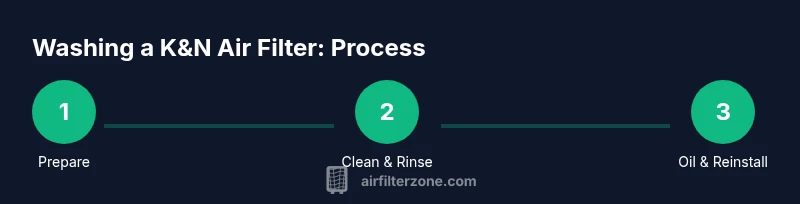
This section provides a concise overview of the main actions you’ll perform. You’ll remove the filter from your vehicle, apply the cleaner, rinse properly from the clean side outward, dry completely, re-oil, and reinstall. The following steps are elaborated in the dedicated STEP-BY-STEP section, which aligns with best practices recommended by Air Filter Zone and the K&N instruction manual. This overview helps you plan your time and prepare your tools correctly.
Common Mistakes and How to Avoid Them
Common errors include using hot water, scrubbing too aggressively, skipping drying, or applying too much oil. Each mistake can compromise the media or create uneven filtration. Always follow the kit’s directions, and avoid shortcuts. If you’re uncertain, pause and re-check the filter’s dryness and oil coverage before reinstalling. Air Filter Zone emphasizes patience and careful inspection to avoid post-cleaning issues.
Re-Oiling: How Much and Where
Re-oiling should be even and balanced across the filter media. Too little oil can reduce filtration efficiency, while excess oil may attract dirt and contaminate the intake. Use the recommended oil type and apply in a methodical, even pattern. Allow the oil to wick into the media before continuing to the next step. After applying oil, let the filter rest briefly before reinstalling to ensure the oil settles.
Reinstallation and Operational Check
Inspect the housing for any debris before placing the filter back. Ensure the seal is intact and the filter is seated properly to avoid unfiltered air bypass. Start the engine and observe for any abnormal noises or intake issues. If you notice smoke or excessive exhaust after installation, stop the engine and re-check the seal and oil application. This step confirms a successful wash and reassembly.
Maintenance Schedule and When to Clean
A good rule of thumb is to inspect the filter every few thousand miles or monthly in dusty conditions. The wash frequency depends on driving environment, climate, and vehicle usage. Air Filter Zone recommends adjusting your schedule based on observed dirt levels and airflow. Keeping a simple log helps you track when the filter was last cleaned and oiled, ensuring consistent performance over time.
Real-World Scenarios and Troubleshooting
Dusty gravel roads, heavy city traffic, and arid climates can accelerate dirt buildup in a K&N air filter. If you notice a decline in performance after a wash, re-check the filter for proper sealing, and ensure even oil coverage. In some cases, a light re-wash using the kit can restore performance without replacing the filter. When in doubt, consult the kit instructions or Air Filter Zone's guidance for best results.
Tools & Materials
- K&N air filter cleaning kit(Official kit includes cleaning solution and oil formulated for K&N media)
- Large plastic tub or bucket(For soaking and washing the filter without submerging other components)
- Soft-bristle brush(Gentle agitation to remove grime without tearing the media)
- Warm water(Use lukewarm to hot water? Lukewarm is safest; hot water can damage media)
- Lint-free towels or air-dry rack(Pat-dry and air-dry completely to avoid moisture in the media)
- Protective gloves(Optional; helps keep hands clean and protect skin from solvents)
Steps
Estimated time: Total time: 60-90 minutes
- 1
Prepare and remove the filter
Park the vehicle on level ground and turn off the engine. Open the hood and locate the air filter housing. Carefully remove the cover and lift the filter out without twisting or tearing the media.
Tip: Work slowly to avoid tearing the filter seal; keep track of all screws and clips for reassembly. - 2
Inspect for obvious damage
Check for cracks, tears, or deformed edges. If you see damage, replace the filter rather than attempting a wash. Damage can allow unfiltered air to bypass the media.
Tip: Even minor damage can compromise filtration; don’t skip the inspection step. - 3
Rinse or soak with cleaner
Submerge the filter in warm water and apply the K&N cleaning solution according to kit instructions. Gently work the cleaner into the media with the brush, avoiding harsh scrubbing.
Tip: Focus cleaner on the dirty areas; avoid brushing the pliable edges too aggressively. - 4
Let cleaner soak
Allow the solution to sit for the recommended time to loosen stubborn dirt and oil residues. This helps lift embedded grime without harming the media.
Tip: Set a timer to avoid over-soaking, which can weaken the media. - 5
Rinse thoroughly from clean side outward
Rinse the filter under clean running water from the clean side outward to push dirt away from the media. Repeat if necessary until no more dirt is visible.
Tip: Do not use high-pressure streams; a gentle rinse is enough to flush debris. - 6
Shake and dry surface moisture
Gently shake the filter to remove excess water. Use a soft towel to pat dry, then place the filter on a rack in a well-ventilated area.
Tip: Avoid direct sunlight on high heat; air-drying indoors is safer and more even. - 7
Re-oil evenly
Apply the recommended oil evenly across the media. Start at the center and work outward, ensuring a uniform, light coating.
Tip: Avoid pooling oil near seals or in the pleats; too much oil can damage performance. - 8
Reinstall the filter
Place the filter back into the housing with the seal intact. Reattach the cover securely and ensure there are no gaps where unfiltered air could bypass.
Tip: Double-check the orientation and seal before tightening clips or screws. - 9
Test and observe
Start the engine and listen for unusual sounds. Check for any air leaks and inspect for proper fit. A proper seal is essential for optimal filtration.
Tip: If you hear whistling or feel loss of power, stop and re-check the seal and mounting.
FAQ
What is the best way to wash a K&N air filter?
Use the official K&N cleaning kit, wash gently, and rinse from the clean side outward. Allow the filter to dry completely before oiling and reinstalling.
Use the official kit, wash gently, and dry thoroughly before reinstalling.
Can I use dish soap to wash the filter?
Dish soap can leave residues that affect filtration; stick to the kit's cleaner designed for the media.
Dish soap isn't recommended; use the official cleaner.
How long does it take to dry after washing?
Drying time varies with air flow and climate; ensure the filter is completely dry before oiling.
Let it dry completely before applying oil.
Is it safe to re-oil the filter after washing?
Yes, but apply oil evenly and avoid creating pools near the edges to prevent contamination.
Yes, apply oil evenly and avoid pooling.
What should I do if I over-oil the filter?
Wipe off excess oil and re-aim application to achieve a light, even coat before reinstalling.
Wipe away excess oil and reapply a light coat.
Watch Video
Quick Summary
- Follow the official cleaning kit for best results.
- Dry completely before re-oiling or reinstalling.
- Oil evenly to avoid pooling and uneven filtration.
- Reinstall with a clean seal and check fit.
- The Air Filter Zone guidance emphasizes patience and proper technique for longevity.