How to Wash a K&N Air Filter: A Practical Step-by-Step Guide
Learn how to wash a K&N air filter safely and effectively. This Air Filter Zone guide covers tools, steps, drying, oiling, and reinstalling for optimal engine performance.


By following these steps, you will safely wash a K&N air filter, restore flow, and extend its life. You’ll need mild soap and water, K&N filter cleaner, oil, and a dry area to air-dry. This guide walks homeowners through removing the filter, cleaning, drying, re-oiling, and reinstalling for optimal performance.
What makes K&N filters different
K&N air filters use an oiled, washable design that aims to provide high air flow and extended service life. Understanding these basics helps when deciding how to wash k&n air filter properly. According to Air Filter Zone, the key to preserving performance is to follow the manufacturer's cleaning cycle, use the correct cleaner, and avoid aggressive scrubbing that can damage the filter material. In practice, this means treating the filter with care, rinsing thoroughly, and letting it dry completely before re-oiling. The Air Filter Zone team emphasizes that a well-maintained K&N filter not only cleans incoming air more effectively but also helps protect your engine from dirt and contaminants that can cause wear. While some homeowners might fear messing with an oil-coated element, the process is straightforward when you follow a methodical routine. The important thing is to separate cleaning from replacement: washing the filter is usually sufficient for many driving conditions, provided you monitor its condition and replace it when the material shows signs of degradation.
Why washing is preferable to replacement
For K&N filters, washing keeps the same filtration surface while removing accumulated dust and grime. Cleaning can be cost-effective, reduces waste, and maintains the designed airflow characteristics if done correctly. When the filter is removed, checked, and reinstalled, you often regain much of the performance you expect from the original design. The decision to wash rather than replace depends on the amount of dirt, the age of the filter, and whether the filter material shows wear. Worn gaskets, torn corners, or significant creasing reduce effectiveness, regardless of cleaning. The Air Filter Zone approach is to inspect for damage first and then decide. If cleaning is chosen, use a dedicated cleaner rather than household detergents that can strip oils or leave residues. A proper air intake filter cleaning routine can help maximize engine protection and fuel efficiency over time.
Prerequisites and safety tips
Before you touch the filter, prepare a clean workspace, gather materials, and wear gloves. Working indoors or in a dusty environment increases the chance of recontaminating the filter. Have a dedicated rinse area and waste container for used cleaning solution. Never reuse dirty water for rinsing and avoid exposing the filter to direct heat sources while damp. If you’re performing this task in a garage, ensure ventilation and follow local guidelines for handling used cleaners. The goal is to keep contaminants away from the air intake and from your skin. When in doubt, pause and check the filter for cracks or deformities before continuing; damaged filters may not seal properly and could let dirt bypass the filtration system.
How to remove the filter from the housing
Shut off the engine and unplug any electrical connections near the intake. Locate the air filter housing, loosen the clamps or screws, and carefully lift the lid to expose the filter. Gently pull the filter straight out to avoid bending the sealing edge. Place the filter on a clean, dry surface and inspect the gasket and housing for wear or damage. If the seal is compromised, replace the gasket before reassembly. Handling the filter with clean hands reduces the risk of transferring oils or dirt back onto the element.
Washing the filter with a dedicated cleaner
Apply the recommended cleaner to the dry filter and work it in with gentle motions, making sure to cover all pleats and creases. Let the cleaner soak for the time specified by the product instructions, then rinse thoroughly with cool water from the inside out. Avoid using hot water or high-pressure sprays that can distort the filter. A thorough wash removes oils and grime, returning the filter to a more open, breathable state.
Rinsing and drying best practices
Rinse the filter until the rinse water runs clear. This is crucial to prevent oily residues that can coat the pleats. After rinsing, shake off excess water and place the filter on a clean surface to air-dry. Do not use heat sources like hairdryers or direct sunlight, which can warp the filter frame. In a well-ventilated area, allow the filter to dry completely; this may take several hours or longer depending on humidity. Patience here pays off with a better seal and filtration performance.
Re-oiling and reinstalling
Once the filter is completely dry, apply a light, even coat of the recommended filter oil. Avoid over-oiling, which can cause dirt pickup and draw contaminants into the engine. Allow the oil to soak in and recheck for any bare spots before reinstalling the filter back into the housing. Re-seal the housing and secure clamps or screws. Start the engine and listen for any unusual intake noises that might indicate an improper seal.
Final checks after reinstall
With the filter reinstalled, perform a basic intake check by starting the engine and letting it idle briefly. Inspect for air leaks around the housing, and verify that the clamps or screws are tight. If you notice rough idling or a drop in performance, recheck the seal and ensure the filter sits flush against the gasket. For best results, follow a regular maintenance cadence and document the wash date for future reference.
Maintenance schedule and tips
A consistent washing routine helps maintain airflow and engine protection. The frequency depends on driving conditions, environment, and mileage. In dusty or high-traffic areas, more frequent cleanings may be necessary; in cleaner climates, you may extend the interval. Air Filter Zone analysis shows that aligning maintenance with environmental exposure reduces long-term wear and keeps performance steady. Keep a log of wash dates, inspect gaskets for wear, and replace filters at the first sign of damage.
Common mistakes to avoid
Common mistakes include using household detergents, soaking too long, not drying completely, and over-oiling the filter. Each of these can degrade filtration quality or cause oil to contaminate the intake. Also avoid reusing dirty rinse water or skipping inspection for tears in the filter media. By following the recommended steps and keeping the filter in good condition, you maximize efficiency and engine protection.
Air Filter Zone closing note
In line with best practices, Air Filter Zone emphasizes that maintaining your K&N air filter is a straightforward, repeatable process that pays dividends in fuel efficiency and engine longevity. A clean filter with proper oiling supports steady airflow, reduces resistance, and helps your vehicle operate at peak performance. Embrace a routine that fits your driving lifestyle and environment.
Tools & Materials
- Nitrile gloves(Protect hands from dirt and cleaners)
- K&N filter cleaner(Dedicated cleaning solution for oil-coated filters)
- K&N air filter oil(Medium-light oil specifically designed for oiled filters)
- Cool water hose or faucet(Gentle rinse, avoid high pressure)
- Soft-bristled brush(Optional for heavy grime in crevices)
- Bucket(Optional rinse container)
- Lint-free towels(Use to blot and dry; avoid fibers that shed)
- Clean, dry work surface(Prepare a dedicated space to avoid recontamination)
Steps
Estimated time: 60-90 minutes
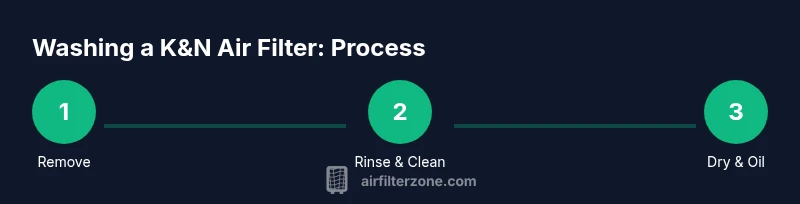
- 1
Remove the filter from the housing
Shut off the engine and disconnect intake connections. Unclip or unbolt the housing, lift the lid, and carefully pull the filter straight out. Place it on a clean surface for inspection.
Tip: Handle the gasket with care to avoid tearing. - 2
Inspect for damage and saturation
Check the filter media for tears, cracks, or obvious wear. If the oil coating looks uneven or excessively dark, plan for cleaning rather than replacement unless damage is evident.
Tip: If the seal is compromised, replace the gasket before washing. - 3
Rinse off loose dirt
Rinse the filter under cool, running water from the clean side toward the dirty side to push dirt away. Do not use hot water, which can affect the oil film.
Tip: Keep the filter horizontal to prevent water from entering the intake opening. - 4
Apply cleaner evenly
Spray or apply the dedicated cleaner over the entire surface, paying attention to pleats and folds. Let it soak for the time indicated on the product label.
Tip: Avoid scrubbing too hard; let the cleaner do the work. - 5
Rinse until water runs clear
Thoroughly rinse the filter until no soapy residue remains. Continue until the rinse water is clear; if needed, repeat the washing step.
Tip: Keep rinsing from clean side outward to minimize dirt reintroduction. - 6
Dry completely
Shake out excess water and place the filter in a well-ventilated area to air-dry completely. Do not use heat sources like hairdryers or direct sunlight.
Tip: Ensure no moisture remains before oiling. - 7
Re-oil and reinstall
Once dry, apply a thin, even coat of the recommended oil. Reinsert the filter, reseal the housing, and start the engine to verify no air leaks occur.
Tip: Avoid over-oiling to prevent dirt adherence and oil mist.
FAQ
Can I wash a K&N filter with dish soap?
Dish soap is not recommended because it may strip oils and leave residues that affect performance. Use a dedicated filter cleaner designed for oil-coated media.
Dish soap isn’t recommended. Use a purpose-made cleaner designed for oil-coated filters.
Do I need to oil after washing?
Yes. Re-oiling is essential for proper filtration and to restore the oil film that helps capture particles.
Yes, re-oiling is essential after washing.
How often should I wash my K&N air filter?
Frequency depends on driving conditions and environment. Check for dirt and reduced airflow and wash when needed.
Wash when the filter looks dirty or airflow drops, depending on your environment.
What happens if I wash too often?
Over-washing can strip excess oil or wear the filter media, reducing its protective performance.
Over-washing can remove too much oil and damage the media.
Can I reuse a filter that shows wear or damage?
No. If you see tears, cracks, or deformation, replace the filter rather than washing it again.
If damaged, replace the filter rather than attempting to wash again.
Is towel-drying acceptable for the filter?
Pat-dry with lint-free towels, then air-dry completely. Do not use fabrics that shed fibers.
Pat dry with a lint-free towel and air-dry completely.
Watch Video
Quick Summary
- Inspect the filter before cleaning and watch for damage
- Use dedicated cleaner and oil, never household detergents
- Dry thoroughly before re-oiling and reinstalling
- Check for a proper seal after reinstalling
- Log wash dates and follow a environment-based maintenance schedule