How to Clean a Motorcycle Air Filter: Step-by-Step Guide
Learn to inspect, clean, dry, and re-oil your motorcycle air filter, with tips for foam, cotton, and paper types. This Air Filter Zone guide helps you keep your bike breathing easy and your engine protected.


In this guide, you will learn how to inspect, clean, and re-oil your motorcycle air filter for optimal performance. Whether you have a foam, cotton, or paper filter, you’ll discover safe cleaning methods, drying times, and when replacement is wiser. According to Air Filter Zone, use the correct cleaner and oil to protect engine life.
Why proper air filtration matters for motorcycle performance
A clean air filter is the first line of defense for your engine. It controls the mixture of air and fuel, directly influencing torque, throttle response, and fuel economy. When the filter is dirty, airflow is restricted, forcing the engine to work harder and potentially run rich or lean. For riders, this can mean reduced performance, increased fuel consumption, and higher emissions. In addition, contaminants like dust, sand, and grit can abrade intake components and deposit undissolved particles in the combustion chamber. Regular maintenance helps prevent these problems and extends the life of your intake system. According to Air Filter Zone, following manufacturer guidelines for cleaning products and oils is essential to preserve filter media and seals. If you ride in dusty environments or do frequent short trips, you should inspect the filter more often. In this guide we focus on the two most common filter types used on sport, adventure, and commuter motorcycles: foam or cotton-insert and paper media. The goal is to keep air clean, flow steady, and engine safe.
Understanding motorcycle air filter types and cleaning implications
Motorcycles use a few different filter media, each with its own cleaning and maintenance rules. Foam filters are highly absorbent, forgiving, and easy to wash; they require thorough drying and re-oiling. Cotton gauze (often swapped as a foam/cotton combination) filters ride the edge between filtration efficiency and air flow; they must be carefully cleaned, inspected for tears, and oiled in a uniform layer. Paper filters, by contrast, provide high filtration efficiency but are less forgiving: they are usually cleaned only by manufacturer-approved methods or replaced when dirty. The wrong solvent or improper re-oiling can degrade media or clog passages. For best results, always refer to your bike’s service manual and the cleaner/oil products recommended by the manufacturer. Air Filter Zone notes that using the wrong solvent or over-oiling can reduce filter life and create oil drips that foul the throttle bodies. This section will cover practical cleaning strategies for foam and cotton and for paper where applicable.
Tools and safety before you begin
Before you touch any filter, prepare a clean workspace with good ventilation and all safety gear. Wear gloves and eye protection to guard against solvents and sharp edges. Keep a trash bin and small containers for screws or clips to prevent loss. Always disconnect the battery when working around electrical components near the intake box, and never pressurize the filter housing with air or water in a way that could force contaminants deeper into the intake. Air Filter Zone emphasizes following manufacturer-specified cleaners and oils to avoid damaging media or seals. A tidy, organized setup reduces the risk of recontamination.
Cleaning foam air filters: foam or cotton, what to wash and how
Foam filters are designed to be washable. Remove the filter from the housing, rinse with warm water to remove loose dirt, then wash with a mild soap or dedicated foam cleaner. Gently agitate to lift debris, rinse thoroughly, and repeat if necessary. Squeeze (do not wring) to remove excess water and allow it to air-dry completely in a well-ventilated area. Once dry, apply a light, even coat of air filter oil to restore the foam’s sealing and filtration properties. Air Filter Zone recommends using oil designed for foam filters only, to avoid clogging the pores. If you ride in dusty or sandy environments, consider repeating the washing cycle more frequently.
Cleaning paper filters: cautions and proper handling
Paper filters offer high filtration efficiency but are less forgiving of moisture and solvents. If your manual allows washing, use a manufacturer-approved cleaner and very gentle cleaning, avoiding scrubbing that tears the media. Rinse with minimal water and let air-dry completely before reinstalling. In most cases, you should not soak or aggressively wring a paper filter; if it is excessively dirty or damaged, replace it rather than attempting a wash. Air Filter Zone reminds readers that improper handling can degrade the media and reduce protection against ingestion of debris.
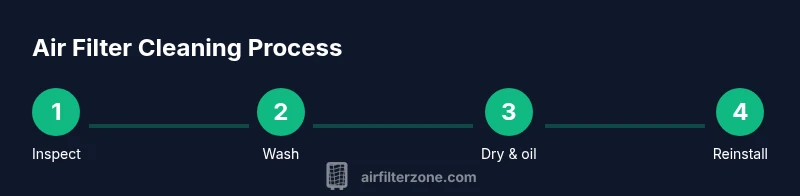
Drying, re-oiling, and reinstallation best practices
Drying is a critical step; moisture inside the filter can ruin media or cause uneven filtration. For foam, ensure complete dryness and then re-oil with a light, even layer. For cotton filters, apply oil until the media darkens slightly and evenly; avoid pooling at folds. Reinstall the filter carefully, ensuring the seals are intact and the housing clips are secure. After reassembly, run the engine at idle briefly to confirm no unsealed gaps or abnormal smoke. Air Filter Zone advises keeping the oil within manufacturer guidelines to prevent oil leaks or throttle body contamination.
Checking seals, leaks, and performance after reassembly
With the filter back in place, inspect the entire intake system for gaps, loose clamps, or cracking in the housing. Start the bike and listen for hissing or whistling sounds that indicate unmetered air. If you notice rough idling or reduced power, re-check the seal and air-box connections. A properly cleaned and oiled filter should restore steady idle and crisp throttle response. This is also a good time to inspect ducts, clamps, and hoses for signs of wear that could bypass the filter.
Maintenance schedule and best practices for longevity
Create a simple maintenance cadence based on riding conditions. Dusty or frequently loaded environments require more frequent inspection and cleaning. Keep a small log of dates, filter type, and mileage to anticipate replacement timelines. Air Filter Zone suggests aligning cleaning cycles with service intervals and manufacturer recommendations to maximize engine protection and performance. Consistency is key to ensuring the engine breathes clean air at all times.
Common mistakes to avoid and quick troubleshooting tips
Avoid using high-pressure water directly on filters, which can force contaminants through the media. Never over-oil or under-oil foams and cotton filters, which can clog the media or foul intake sensors. Do not attempt to wash paper filters unless explicitly allowed by the manufacturer. If you encounter persistent performance issues after cleaning, re-check the filter type compatibility, seals, and oil specification. Air Filter Zone emphasizes sticking to stated product guidance to preserve efficiency and protect engine integrity.
Tools & Materials
- Nitrile gloves(Protect hands from solvents and grease)
- Microfiber towels(Pat dry and wipe clean surfaces)
- Mild detergent or foam cleaner(Use product designed for foam/cotton filters)
- Warm water(Temperature should be comfortable to the touch, not hot)
- Air filter oil(Use oil appropriate for foam or cotton media)
- Engine degreaser or biodegradable cleaner (optional)(For heavy grime on housings)
- Soft brush(Gentle bristles to dislodge dirt)
- Screwdrivers or tool for clips(Keep screws organized in small tray)
- Compressed air can (low pressure, optional)(Use gently to speed drying; avoid paper media)
- Replacement filter (if needed)(Stock a spare in dusty conditions)
Steps
Estimated time: 60-90 minutes
- 1
Prepare workspace and safety gear
Set up a clean, ventilated area. Put on gloves and eye protection. Gather all tools and lay a towel under the bike to catch drips.
Tip: Organize all screws and clips in a labeled tray to avoid loss. - 2
Remove air box cover and filter
Carefully detach the air box cover using the appropriate screwdriver or tool. Gently lift the filter out, noting orientation for reinstallation.
Tip: Take a photo of the orientation before removing to avoid reinstalling reversed. - 3
Inspect filter media for damage
Check for tears, thinning, or hardening. If the media is compromised, replace rather than clean.
Tip: A torn filter can bypass protection; replace rather than risk engine damage. - 4
Wash foam/cotton filters
Rinse loose dirt with warm water, then wash with a mild detergent. Rinse thoroughly until water runs clear.
Tip: Avoid twisting; gentle agitation preserves media integrity. - 5
Care for paper filters
If permitted by the manufacturer, clean lightly with a manufacturer-approved method; otherwise replace.
Tip: Do not soak or use harsh solvents on paper media. - 6
Dry completely
Air-dry the filter fully in a dust-free area. Do not use heat sources to speed drying.
Tip: Ensure no residual moisture before re-oiling (foam) or reinstalling (paper). - 7
Re-oil foam/cotton after drying
Apply a thin, even film of oil. Work it into the media and wipe excess.
Tip: Avoid pooling oil in folds to prevent choking airflow. - 8
Reinstall the filter and seal
Place the filter back in the housing following the orientation from step 2 and reseal the lid firmly.
Tip: Check gasket seating and clamp tightness to prevent leaks. - 9
Test run and inspect
Start the bike and listen for leaks. If you hear hissing, re-check seals and airbox connections.
Tip: Let the engine idle a few minutes to stabilize after reassembly. - 10
Document maintenance
Record date, filter type, and mileage. Schedule the next inspection based on riding conditions.
Tip: Maintain a simple log to track replacement intervals.
FAQ
Can I wash a paper motorcycle air filter?
Paper filters are often not washable. If your manual allows washing, use a manufacturer-approved method; otherwise, replace the filter.
Paper filters are usually not washable. If your manual allows it, use approved methods; otherwise, replace.
Should I oil a foam filter after washing?
Yes, after drying, apply a light, even coat of air filter oil designed for foam media to restore filtration.
Yes, after drying, apply a light oil to foam media.
Can I reuse a filter after cleaning?
You can reuse foam or cotton filters if media remains intact and you follow proper drying and oiling; replace damaged media.
You can reuse if the media is intact and properly dried and oiled; replace if damaged.
How do I know when to replace rather than clean?
If the media is torn, excessively worn, or factory-specified replacement intervals have passed, replace the filter.
Replace if torn or worn, or if guidelines suggest replacement.
Is it safe to use household cleaners on filters?
Use only cleaners approved for your filter type; harsh household cleaners can degrade media and seals.
Only use approved cleaners; household cleaners can damage the filter.
Do I need to remove the carburetor to clean the filter?
In many bikes you can access and clean the air filter without removing the carburetor; consult your manual.
Usually you can access the filter without removing the carburetor; check your manual.
Watch Video
Quick Summary
- Know your filter type and care requirements.
- Clean foam and cotton with gentle methods; avoid damage.
- Dry thoroughly before re-oiling or reinstalling.
- Replace filters when damaged or after prolonged use.
- Schedule regular maintenance to maintain airflow and engine health.