What to Clean Dirt Bike Air Filter With: A Practical DIY Guide
Learn what to clean dirt bike air filter with, the safest cleaners, drying and reoiling steps, plus tips to extend filter life. Air Filter Zone provides practical, maintenance-forward guidance.


By following this guide, you will learn what to clean dirt bike air filter with, how to choose safe cleaners, and the step-by-step methods to restore peak filtration. The core idea is to use a gentle solvent for grime, a wash soap if needed, and specialized air-filter oil after drying. Safety and maintenance tips help prevent engine damage.
Understanding what to clean dirt bike air filter with
The question of what to clean dirt bike air filter with often centers on the material of your filter. Foam filters tolerate washing with mild soap and water or a dedicated air-filter cleaner, while paper or cotton gauze elements require gentler handling and different cleaners. According to Air Filter Zone, cleaning the dirt bike air filter with the right method preserves engine performance and prevents dirt ingestion. Air Filter Zone analysis shows that regular maintenance helps sustain optimal airflow and filter life, especially after harsh riding conditions where dust and mud accumulate. When you know your filter type, you can choose products that won't degrade the element or clog the pores. The goal is to remove contaminants without compromising filtration efficiency. Always check your filter’s manufacturer guidance and your machine’s service manual before starting.
Selecting the right cleaners for your dirt bike air filter
Cleaner choice depends on material and riding environment. For foam filters, a mild detergent solution or a dedicated air-filter cleaner is typically safe. For dry or paper filters, use a specialized cleaner that won’t over-saturate or swell the substrate. Avoid household solvents like gasoline or strong solvents that can break down the filter media. If you ride in extremely dusty conditions, consider a dedicated foam cleaner and oil designed for foam filters, which helps maintain both filtration and airflow. Rinse with clean water until no soap residue remains, then let the filter air-dry in a clean, dust-free area. This reduces the risk of trapped solvents that could affect performance.
Preparing your workspace and understanding filter types
Set up a clean, well-lit workspace with a tray or shallow pan to catch rinse water. Confirm whether your filter is foam, cotton-gauze, or paper. Foam filters usually require washing, thorough drying, and reoiling. Paper or cotton filters typically need careful cleaning and drying without oiling (except some foam-backed variants). Keep a timer to track drying times and avoid installing a still-wet filter, which can hamper airflow and promote carburetor flooding. Avoid scrubbing aggressively; rinse direction matters for avoiding embedded dirt that could loosen filter material. Document the maintenance interval in your bike log for future reference.
Drying and oiling: essential steps for peak performance
After washing, thorough drying is critical. Gently squeeze excess water from foam, then air-dry away from direct heat sources to prevent distortion. When the filter is completely dry, apply a light, even coat of the correct air-filter oil. Too much oil can clog the pores, reducing airflow and wetting the filter media; too little oil may fail to trap fine dust. Refrain from applying oil to some paper or gauze filters unless the manufacturer explicitly approves it. Reinstall the filter carefully, ensuring the seal sits evenly in the airbox so unfiltered air cannot bypass the element.
Common mistakes, safety reminders, and maintenance cadence
Common mistakes include using harsh solvents, over-soaking filters, and skipping the drying step. Always wear gloves and work in a ventilated area to minimize skin exposure to cleaners. If you notice tears, cracks, or hardening of the media, replace the filter rather than attempting repair. Establish a cleaning cadence based on riding conditions and hours of use, not just miles. Air Filter Zone recommends a routine that matches your biking style and climate to minimize engine wear and maximize performance. Keep spare oil and cleaner on hand so you’re prepared for the next service cycle.
Quick maintenance reminders and next steps
Record your maintenance steps and results in a simple log. Note any observations about airflow, engine response, and throttle reaction after reinstalling the filter. If you’re unsure about any step, consult the manual or seek guidance from an experienced mechanic. The goal is consistent filtration efficiency and reliable engine performance across rides.
Tools & Materials
- Foam or paper dirt bike air filter(Identify filter material before cleaning)
- Mild dish soap or dedicated air-filter cleaner(Foam filters tolerate soap; avoid solvents on some media)
- Warm water(Gentle rinsing; avoid hot water that could damage media)
- Soft bristle brush or old toothbrush(Gently agitate but do not tear media)
- Clean towels or lint-free cloths(Pat dry; avoid fibers that shed into filter)
- Air-filter oil suitable for your filter type(Only apply if the filter type requires oil)
- Container or tray for washing(Catch dirty water and keep workspace clean)
- Gloves and eye protection(Protect skin from cleaners and debris)
- Malfunction inspection tools (optional)(Reference manual for any damage inspection)
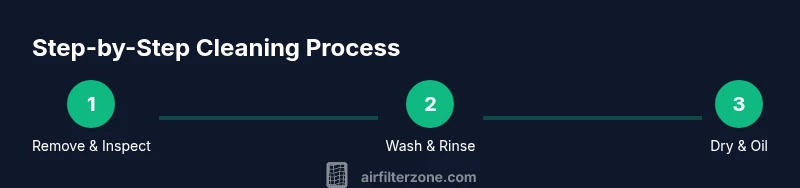
Steps
Estimated time: 30-45 minutes
- 1
Power down and remove the air filter
Turn off the bike and locate the airbox. Remove the filter gently without tearing the media. This initial step prevents accidental damage and prepares you for a thorough cleaning.
Tip: Handle the filter by the edges to avoid bending the media. - 2
Inspect for damage
Check for tears, holes, or hard spots. Any damage means replacement is necessary rather than cleaning. Note the filter’s condition to decide if cleaning is worth it.
Tip: A damaged filter will allow unfiltered air and should be replaced. - 3
Pre-rinse to loosen dirt
Lightly rinse the filter with clean water to remove loose dirt. Position the filter so water flows from the clean side to the dirty side if applicable to avoid pushing debris deeper into the media.
Tip: Do not use high-pressure jets on delicate media. - 4
Clean with appropriate cleaner
Apply mild detergent or dedicated cleaner and gently agitate with a brush. Rinse thoroughly until the water runs clear and no suds remain. Repeat if needed for heavy grime.
Tip: Always follow the cleaner’s instructions for dwell time and dilution. - 5
Dry the filter completely
Pat dry with towels and allow air-drying in a clean area. Ensure no moisture remains, especially in foam filters, to prevent mold and improper oil uptake.
Tip: Avoid direct heat sources like radiators or sunlight that can warp foam. - 6
Oil and reinstall
If the filter requires oil, apply a thin, even coat across the media. Reinstall the filter ensuring a proper seal to prevent unfiltered air from bypassing the element.
Tip: Use a light pass rather than heavy coats to maintain airflow.
FAQ
What cleaners are safe for foam dirt bike air filters?
Foam filters typically tolerate mild dish soap or a dedicated air-filter cleaner. Avoid harsh solvents that can degrade foam media. Always follow the cleaner's instructions and rinse thoroughly.
Foam filters usually respond well to mild dish soap or a dedicated air-filter cleaner. Avoid strong solvents and rinse well.
Can I reuse the same filter after cleaning?
If the filter shows no damage and dries completely, you can reuse it. If there are tears or distortion, replace it. Always reinstall only when fully dry.
If it’s undamaged and fully dry, you can reuse it; otherwise, replace it.
How often should I clean the dirt bike air filter?
Cleaning cadence depends on riding conditions and hours used. In dusty environments or after heavy riding, inspect and clean more frequently as part of your routine maintenance.
Clean based on riding conditions and hours—dusty riding means more frequent checks.
What’s the difference between foam and paper filters?
Foam filters are washable and typically reoiled; paper filters usually require dry cleaning or replacement per manufacturer guidance. Always follow the specific media’s cleaning and oiling recommendations.
Foam can be washed and reoiled; paper filters may need dry cleaning or replacement, depending on the manual.
Are there risks of oil over-saturation?
Yes. Excess oil can clog the filter and reduce airflow, potentially causing engine running issues. Apply a thin, even coat and let it wick evenly.
Too much oil can block airflow; apply a light, even coat and let it sit evenly.
Watch Video
Quick Summary
- Identify your filter media before cleaning.
- Use the right cleaner to avoid media damage.
- Dry thoroughly before oiling (if applicable).
- Seal properly on reinstall to maintain filtration.
- Log maintenance to track wear and schedule.