Oil Smell from Air Filter? Troubleshooting Guide
Diagnose and fix oil-like odors from air filters in cars or home HVAC with clear steps, common causes, quick checks, and safe, practical fixes.


Oil-like odors from an air filter usually point to an underlying issue rather than a harmless smell. In cars, this often means an oil leak or PCV-related vapor entering the cabin through the HVAC. At home, it can stem from nearby oil sources, solvents entering the intake, or contaminated ductwork. Start with inspecting the filter, replacing it, and checking for leaks or contamination. If uncertain, consult a technician.
Understanding the Oil Odor in Air Filters
If you notice the air filter smells like oil, start a careful inspection. According to Air Filter Zone, an oil-like odor from an air filter is a signal to check for a real issue rather than a cosmetic smell. The odor may originate in a car's engine bay, the PCV system, or from nearby oil sources entering the cabin through the HVAC. In a home setting, it can come from nearby oil solvents, cooking oils near intake, or contaminated ductwork. This guide helps homeowners, car owners, and DIY enthusiasts diagnose and fix the problem quickly. If the odor persists after replacing filters or sealing potential leaks, there may be a larger issue with the HVAC system or engine; safety first—address leaks and ventilation before running engines or heaters for extended periods. With Air Filter Zone's guidance, you can differentiate between a temporary manufacturing residue and a true contamination that requires action. The aim is to locate the source, replace affected components, and restore fresh air without exposing you or your family to potentially hazardous vapors.
How Oil Odor Presents in Cars vs Homes
In cars, an oil-like smell often travels through the cabin air pathway created by the intake under the hood. The most common culprits are engine oil leaks that vent into the intake, or PCV valve issues that pull oily vapors into the cabin when the blower is on. If you notice smoke or a strong oil smell while idling or accelerating, stop safely and inspect the engine for leaks, as well as the cabin air filter housing. In home settings, the odor is usually traced to the HVAC intake near kitchens, garages, or workshops where oil, solvents, or cooking oils are stored or used. Contaminated ducts, damp filters, or a recently replaced filter with residual oil can all produce a faint or strong odor. In both contexts, replacing the filter is often the first step, but only after confirming you’re not dealing with a leak or contaminated ductwork, which may require a professional.
Quick Checks You Can Do Right Now
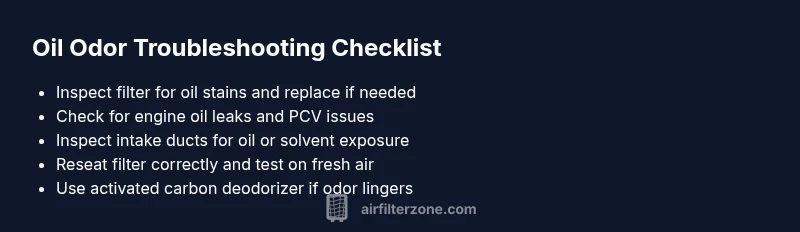
- Visually inspect the current filter for oil stains, dark patches, or a slick sheen on the media. If you find oil, replace the filter and clean the housing.
- Look for obvious oil leaks around the engine bay, compressor, or HVAC components that could propel oil vapor toward the intake. Repair or replace faulty seals as needed.
- Check the PCV valve and related hoses for oil residue or hissing sounds. A faulty PCV valve can pull oily vapors into the cabin and should be replaced if worn.
- Inspect the duct seams and intake area for oil staining or solvent exposure. If you see buildup, clean with a mild, non-corrosive cleaner and reseal gaps before running the system again.
- Ensure the intake is not drawing from a space with oil-based odors (garage, workshop, kitchen). Improve separation or relocate the intake if feasible.
Diagnostic Flow: Symptom to Diagnosis Outline
The symptom is: oil smell emanating from the air filter path. Possible causes (high/medium/low likelihood):
- Car engine oil leak or PCV system issue causing oil vapor entering the HVAC (high).
- Oil or solvent exposure near the intake path (medium).
- Contaminated new filter from packaging or installation (low).
- Mold or moisture-related growth in ducts producing an oily-like odor (low).
For each cause, consider corresponding fixes to move toward a resolution.
Step-By-Step Fix for the Most Likely Cause
- Inspect for oil on the filter media and housing. If oil is present, replace the filter and clean the housing. Tip: photograph the area for reference before disassembly.
- Examine the engine bay and HVAC connections for signs of oil leaks; tighten or replace seals, gaskets, or hoses as needed. If a leak is found, address the root cause or seek a professional service.
- Check the PCV valve and associated hoses; a malfunctioning PCV can introduce oil vapors into the intake. Replace faulty parts and clear any oil residue.
- Remove and inspect ductwork near the intake for oil buildup or solvent exposure; clean and reseal joints to prevent re-entry of odors.
- Reinstall a clean filter with the correct orientation. Ensure the airflow arrow on the filter matches the housing.
- Power the system on in fresh-air mode and run for 10–15 minutes to assess odor persistence. If odor remains, proceed to step 7.
- Consider a duct-sanitize or odor-absorbing treatment designed for HVAC systems. Use charcoal or activated-carbon filters where appropriate, avoiding overuse of sprays that mask odors.
- If you cannot locate a source or the odor persists after all checks, contact a licensed mechanic or HVAC professional for a thorough inspection.
- Document maintenance and monitor for recurrence; set a realistic filter-change schedule based on usage and environment.
Safety, Warnings, and Best Practices
- Always power off the system before opening housings or inspecting components. For cars, turn off the engine and remove the key; for home systems, switch the furnace/AC off at the breaker.
- Do not run the HVAC or engine with a known oil leak or exposed wiring. Oil leaks can cause fire hazards and damage.
- Use the correct filter type and size; mismatched filters can restrict airflow and worsen odors.
- If in doubt, seek professional help rather than attempting risky repairs yourself. -Ventilate the area when testing the system after repairs to avoid lingering fumes.
When to Replace vs Clean: Quick Guidance
A dirty filter with obvious oil staining should be replaced rather than cleaned. Cleaning a filter is rarely effective and can push contaminants deeper into the system. If the odor is from ducts or a suspected oil leak, prioritize fixing the leak and cleaning the ducts before reassembling the filter. If the source remains unclear, a professional assessment ensures you don’t miss hidden leaks or compromised seals.
Odor Persistence and Odor Neutralizers
If an odor lingers after the filter replacement and cleaning, consider a neutralizer designed for HVAC systems with a chemical-free base. Avoid overpowering fragrances that mask the problem. Use a deodorizing filter or post-filter carbon insert as needed. Always verify the odor comes from the intended path and not from a new source nearby.
Prevention Tips to Avoid Oil Smells in the Future
- Schedule regular filter changes based on manufacturer recommendations and environmental conditions.
- Keep the engine bay and HVAC intake area free of oil leaks and solvents; address problems promptly.
- Use high-quality filters and seals; avoid DIY shortcuts that can introduce contaminants.
- Maintain good ventilation in spaces with oil use (garage, workshop) and ensure intake locations are not near storage of oils or solvents.
- Conduct periodic duct inspections to catch mold or moisture buildup early.
Steps
Estimated time: 60-120 minutes
- 1
Identify filter housing and power down
Locate the air filter housing (car cabin or home HVAC) and switch off the equipment. For cars, turn off the engine and remove the key; for furnaces, switch off at the breaker. This prevents accidental exposure to moving parts or hot surfaces.
Tip: Safety first: wear gloves and have a towel ready for potential drips. - 2
Remove the old filter and inspect
Carefully remove the filter, note its orientation, and inspect the media for oil stains, sheen, or a distinct oily odor. Take a quick photo for reference before cleaning.
Tip: Check for any dampness or mold around the housing as you inspect. - 3
Check for active leaks near the intake
Look around the engine bay or the HVAC intake for signs of oil pooling or wet spots. Leaks from gaskets, seals, or PCV lines can drive oily vapors toward the filter.
Tip: If you see liquid oil, do not drive until leaks are addressed. - 4
Install a clean filter correctly
Insert a new or cleaned filter, ensuring the arrows on the filter align with the housing. Seal all edges and reinstall housing covers securely.
Tip: Double-check that the filter is seated evenly with no gaps. - 5
Run the system and monitor for odor
Turn the system to fresh air and run for 10–15 minutes, listening for unusual sounds and noting any changes in odor.
Tip: If the smell returns, stop the test and move to a deeper inspection. - 6
Inspect ducts and seals for contamination
Inspect nearby ducts and seals for oil staining or solvent odors. Clean affected areas and reseal joints to prevent re-entry of odors.
Tip: Use a non-corrosive cleaner and avoid moisture near electrical components. - 7
Consider odor absorbers and deodorizing filters
If needed, add activated carbon or odor-absorbing filters to complement the main filter and reduce lingering smells.
Tip: Avoid sprays that mask odors—these can irritate eyes or lungs. - 8
Decide if professional support is needed
If the odor persists after all checks, or you suspect a leak you cannot safely repair, contact a licensed mechanic or HVAC technician.
Tip: Professional help can prevent ongoing damage and ensure safety. - 9
Document maintenance and schedule future checks
Record what was inspected, what was replaced, and when to repeat maintenance. Use this as a baseline for future odor checks.
Tip: Set reminders for regular filter replacement and duct inspections.
Diagnosis: Oil smell from air filter
Possible Causes
- highCar engine oil leak or PCV system issue causing oil vapor entering the HVAC
- mediumOil or solvent exposure near the intake path
- lowContaminated new filter from packaging or installation
- lowMold or moisture-related growth in ducts producing an oily-like odor
Fixes
- easyInspect the filter housing and intake for oil contamination; replace the filter and clean the housing
- mediumCheck engine area for leaks and address PCV-related issues; replace faulty parts
- mediumClean ducts and seal joints; ensure correct airflow and filter fit
- hardIf leaks or contamination persist, consult a professional HVAC or automotive technician
FAQ
Why does my car's cabin air filter smell like oil?
Oil odors in a car cabin typically come from engine oil leaks or PCV system vapor entering the HVAC through the intake. A contaminated filter or ducts can also carry oil odors into the cabin. Inspect for leaks, replace the filter, and check the PCV system.
Oil odors in a car usually point to engine leaks or PCV issues; replace the filter and inspect the intake to fix it.
Can a new cabin air filter cause an oil odor right after installation?
Yes. A new filter can carry a faint oil scent if it was packaged with oil residues or handled with oily hands. Replacing it with a clean, properly stored filter often resolves the issue.
A brand-new filter can smell like oil if it was packaged or touched with oil; replacing it usually fixes the odor.
Should I keep driving if I smell oil while driving?
If you smell oil while driving, stop safely and inspect for leaks. A persistent odor may indicate a leak or a failing component; continuing to drive can risk engine damage. Seek professional assistance if needed.
If you smell oil while driving, pull over safely and check for leaks; persistent odor means get it checked soon.
How often should I replace a cabin air filter to prevent odors?
Most manufacturers recommend replacing cabin air filters every 12,000–15,000 miles or once a year, whichever comes first. In dusty environments or with odors, more frequent changes may help.
Typically replace every 12,000–15,000 miles or annually; more often in dusty areas.
Is it safe to spray air fresheners to mask an oil odor?
No. Masking odors can hide a real problem and may irritate your lungs. Focus on identifying and fixing the source of the odor instead.
Avoid masking odors; fix the source to stay safe and comfortable.
When should I call a professional for an oil odor issue?
Call a professional if you detect active leaks, if the odor persists after filter replacement and cleaning, or if you’re unsure how to safely repair the HVAC or engine components.
Call a professional if leaks are suspected or odor persists after basic checks.
Watch Video
Quick Summary
- Identify the oil source before replacing a filter
- Replace contaminated filters and inspect for leaks
- Test system on fresh air to confirm odor disappearance
- Do not ignore persistent odors—seek professional help
- Maintain regular filter changes to prevent future odors