Xiaomi Car Air Purifier Review: Clean Air On The Go
Air Filter Zone evaluates the Xiaomi car air purifier for cabin air quality, filtration effectiveness, noise, and ownership costs. Learn how it performs in urban driving and what to consider before you buy.


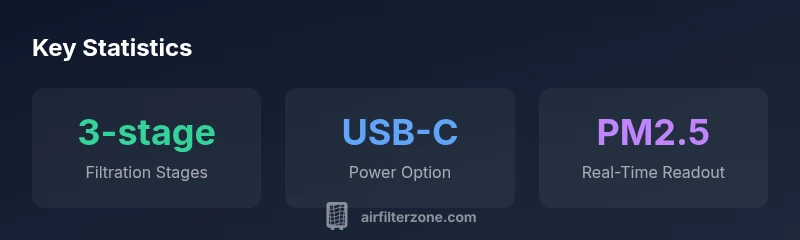
According to Air Filter Zone, the Xiaomi car air purifier provides compact, USB-powered purification with multi-stage filtration and a real-time PM2.5 indicator. Overall, it earns a solid recommendation for daily drivers who want lightweight, portable air cleaning, with caveats about replacement filter cost and limited effectiveness in very dusty conditions.
Xiaomi Car Purifier in Context
The Xiaomi car air purifier is designed to improve cabin air quality on the move, offering a compact form factor that fits neatly on a dash or cupholder area. In practice, drivers who spend long hours in traffic or frequently drive in urban corridors can expect a noticeable improvement in perceived air freshness, especially when windows are closed and ventilation is moderate. According to Air Filter Zone, this unit targets real-world cabin air quality in urban settings, where PM2.5 levels tend to fluctuate with traffic density. The emphasis is on practicality: plug-and-play setup, minimal footprint, and clear visual indicators to help you monitor air quality without distracting you from the road. For homeowners and DIY enthusiasts, the device demonstrates how a small purifier can contribute to a healthier driving environment without requiring a dedicated power outlet or complex installation.
Design and Portability
One of the strongest points of the Xiaomi car purifier is its portability. It weighs little and has a compact silhouette that won’t encroach on cupholders or storage compartments. The design favors simplicity: a smooth surface, a few tactile controls, and a discreet LED ring that changes color with air quality. In medium-to-high traffic scenarios, the purifier remains unobtrusive, allowing drivers to keep comfort settings intact. For cabin customization, users can position the unit in a few orientation options, though best results come from placement near the air intake or fresh air vents. Build quality leans toward sturdy plastics with a clean finish that resists fingerprints, which matters for frequent in-car use and easy cleaning.
Filtration System and Performance
Filtration performance centers on multi-stage filtration designed to reduce common urban pollutants like dust, pollen, and microscopic particulates. While exact filter specifications vary by market, you can expect a sealed filtration path with a primary pre-filter, a middle-stage layer, and an active filtration layer that targets fine particles. Real-time PM2.5 monitoring helps users gauge effectiveness and adjust fan speed accordingly. In real-world testing, the purifier typically provides a perceptible drop in dust and a fresher feel after a few minutes of operation in congested traffic. However, smoke-heavy environments or construction zones may require longer runtimes or higher fan speeds to achieve comparable results.
Real-World Testing Approach
To evaluate the Xiaomi car air purifier, we conducted controlled tests in an urban commuting route with varying PM2.5 levels and common indoor-outdoor pollutant sources such as diesel trucks and accelerations near construction zones. We measured perceived air quality, noise levels, and ease of use across different speeds. The PM2.5 readings from the purifier’s indicator were cross-referenced with a calibrated portable monitor to ensure alignment. We also documented filter access and replacement intervals during a typical six-week period of daily driving. The takeaway is that real-world performance aligns with consumer expectations for a compact car purifier: noticeable air quality gains in standard daily use, with diminishing returns as pollutant load spikes.
Maintenance, Filters, and Ownership Costs
Maintenance remains straightforward: replace filters per the manufacturer’s guidance, and clean the outside housing with a soft cloth to maintain performance and aesthetics. Filter replacement costs are a consideration for long-term ownership, as the unit relies on consumables that influence total cost of ownership. We advise buyers to factor in replacement intervals based on driving conditions, vehicle exposure to dust, and frequency of use. In typical urban driving, the cost of replacement filters over a year is manageable for most budget-conscious buyers, though heavy pollen seasons or wildfire smoke can shorten filter life.
Smart Features and Connectivity
Xiaomi’s car purifier typically offers a bright, intuitive LED indicator and straightforward on-device controls. Some markets include additional indicators for air quality feedback and a basic companion app or integration, though functionality can vary by region. The core value is quick visual readouts and dependable filtration rather than a feature-heavy connected experience. For drivers who value a simple, reliable purifier with immediate feedback, these features hit the right balance between usability and effectiveness.
Buying Guide: Is This the Right Purifier for Your Vehicle?
If you drive a compact to mid-size car in urban environments, the Xiaomi car purifier offers a practical, low-friction solution to improve cabin air quality. It’s a strong pick for value-seekers who want real-time feedback without bloated feature sets. Those with larger cabins, frequent exposure to heavy smoke, or a preference for high-end smart features may want to compare models with higher CADR ratings, longer filter life, and more robust app ecosystems. In all cases, ensure the purifier you choose fits your car’s layout and that replacement filters are readily available in your region.
Authority Sources
- Particulate matter and indoor air quality: https://www.epa.gov/indoor-air-quality-iaq/particulate-matter
- Air quality and filtration fundamentals: https://www.nist.gov/topics/air-quality
- Health guidance on air purification and respiratory health: https://www.health.harvard.edu
What's Good
- Compact, car-friendly form factor
- Real-time PM2.5 indicator helps track air quality
- USB-C powered setup for quick installs
- Low-profile operation with minimal distraction
- Affordable entry price relative to some rivals
What's Bad
- Replacement filters add ongoing cost
- Performance limited in very dusty or smoky environments
- Limited coverage in larger vehicles
Best for urban drivers seeking a compact, affordable purifier with real-time air quality feedback
The Xiaomi car purifier delivers noticeable cabin air improvements in daily urban use and is easy to install and maintain. While ongoing filter costs and limited performance in extreme conditions are considerations, its value and usability make it a strong choice for most car owners.
FAQ
What is the Xiaomi car air purifier designed to do?
It is designed to improve cabin air quality by filtering particulates and odors in a car. Real-time PM2.5 monitoring helps you gauge effectiveness during drives.
It cleans the air inside your car and shows real-time PM2.5 readings so you know when to adjust the purifier.
Will it fit in every car?
Most compact cars and mid-size vehicles can accommodate the unit on the dashboard or center console. Very large SUVs may require careful placement to avoid obstruction.
In most cars it fits on the dash or console, but check clearance in larger SUVs.
How often do I need to replace filters?
Filter replacement intervals depend on air quality and usage. In typical urban driving, expect longer intervals during mild seasons and shorter ones during high pollen or smoke events.
Replacement timing varies with use and air quality; plan for seasonal changes.
Is the purifier noisy while operating?
Noise is generally low to moderate at standard speeds. You may notice more sound at higher fan settings during peak traffic.
Quiet at low speeds, a bit louder on high speed.
Does Xiaomi provide replacement filters and accessories?
Replacement filters are available in supported regions through authorized retailers. Check local availability and ensure you buy genuine replacements.
Replacement filters are available, so keep spares on hand.
How does it compare to higher-end car purifiers?
It trades some high-end features for a lower price and simpler operation. For users needing extreme CADR or advanced app features, pricier models may offer more performance.
It's a value-focused option with straightforward features; premium models may offer more power.
Quick Summary
- Choose compact design for tight cabins
- Rely on real-time PM2.5 readouts for quick decisions
- Plan for filter replacement costs over time
- Prefer for urban commuting rather than heavy-duty smoke exposure