What Do You Need for an Air Purifier: A Practical Guide
Learn what you need for an air purifier: sizing, filters, CADR, placement, maintenance, and budgeting with practical guidance from Air Filter Zone.


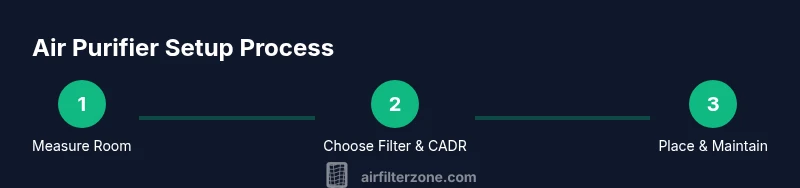
To choose an air purifier, you need to know your room size, a target CADR, and a compatible filter type. Ensure the device’s CADR matches the space, select a true HEPA or equivalent filter, and plan for quiet operation and energy use. Place the unit away from walls to maximize airflow, and factor in maintenance needs like filter replacement.
Essentials you'll need before buying an air purifier
According to Air Filter Zone, starting with accurate room measurements and a clear purification goal is essential for choosing the right air purifier. Before you shop, gather the basics: room dimensions (length, width, height), furniture layout, and any odor concerns such as cooking, pets, or smoke. Understand that purifiers differ in filtration efficiency, energy use, and noise. Look for a true HEPA filter as the core, upgraded activated carbon if odors or gases are a concern, and a well-sealed unit that minimizes bypass. Check for certifications like CARB and Energy Star where applicable. Decide where you’ll place the purifier for optimal airflow and how you’ll maintain it. A simple maintenance plan—checking filters and replacing them according to the manufacturer’s guidance—saves time and money in the long run.
How to size an air purifier for a room
Sizing starts with room volume. Measure length, width, and height to determine the overall space the purifier should service. Then compare purifier CADR ratings to that room volume. A higher CADR means faster air cleaning, which is especially helpful in spaces with smoke, pets, or high dust. If you live in a small apartment, a compact unit with a balanced CADR can suffice; for larger rooms or open layouts, you’ll want a model with a stronger filtration capacity. Always consider the impact of open windows and doorways on air changes per hour, and remember that more effective purifiers can also increase energy use and noise, so balance needs with comfort.
Filter types explained
Most effective purifiers use a multi-stage approach: a true HEPA filter to capture 99.97% of particles at 0.3 microns, an activated carbon layer to reduce odors and gases, and a pre-filter for larger particles. True HEPA matters; look for labels like HEPA H13 or H14 rather than generic “HEPA-like.” Activated carbon or specialty adsorbents help combat cooking smells and smoke. Some units include UV-C or ionizers, but be cautious: ozone-generating features can worsen indoor air quality and are often restricted in homes. Pair filters with sealed housings to prevent leakage and ensure ongoing performance.
Features that matter beyond filtration
Beyond the core filter, evaluate noise levels, energy efficiency, and smart features. A quiet purifier is essential for bedrooms and nurseries; seek models with decibel ratings comfortable for your use case. Energy Star certification signals lower operating costs over time. Smart features—air quality sensors, auto mode, timers, and app control—make maintenance and optimization easier. A visible air quality indicator helps you monitor performance, and filter life indicators reduce guesswork on replacements. Remember: smart features should enhance usability, not complicate setup or stealthily increase power draw.
Placement and safety considerations
Placement affects performance just as much as the device itself. Sit purifiers on a stable surface away from walls and obstacles by several inches to maintain airflow. Avoid corners where airflow can stagnate, and keep units off damp floors or near moisture-prone areas like bathrooms. If you have pets, position higher or on unobstructed furniture to maximize reach. Ensure cords are tucked safely and away from high-traffic areas to prevent tripping. For multi-room homes, consider strategic placement to create effective relative airflow corridors and minimize backdraft between rooms.
Maintenance and replacement guidance
Maintenance is the most overlooked part of purifier ownership. Regularly inspect filters for signs of wear or clogging, and follow the manufacturer’s replacement schedule rather than relying on memory. Clean the exterior and any vent slots with a damp cloth when needed, but avoid water ingress into the motor housing. Reset filter indicators after replacements and test operation to confirm continuous performance. Store spare filters in a dry place, and keep a simple calendar reminder for maintenance tasks to ensure consistent air quality.
Budgeting and long-term costs
Initial price varies by wattage, CADR, and features. Ongoing costs primarily come from replacement filters and, to a lesser extent, energy use. Compare per-filter costs across models and estimate annual maintenance based on your usage. Cheaper upfront purifiers may incur higher ongoing filter costs, while higher-end models can offer lower maintenance intervals and energy efficiency. Consider your air quality goals, whether you need odor control, and how often you expect to use the purifier to balance upfront investment with long-term value.
Choosing based on needs
Different living situations demand different priorities. In smoke-prone kitchens or apartments with dense traffic, prioritize higher CADR and effective carbon filtration. For households with allergy sufferers, emphasize a true HEPA filter and sealed construction. Pet owners should seek models with efficient dander filtration and robust intake paths to minimize hair buildup. If space is limited, look for compact units with strong performance; for open-plan living, you might opt for multiple smaller purifiers or a single high-capacity model. Always cross-check room size recommendations against your actual space to avoid under- or over-purification.
Quick-start checklist
- Measure the room (L × W × H) and note any odor sources.
- Define your air-cleaning goals and budget.
- Compare CADR ratings to room volume and choose a true HEPA model with carbon filtration if odors are a concern.
- Check energy use, noise level, and any smart features.
- Verify placement options and install/replace filters per manufacturer instructions.
- Run in auto or high mode as needed and monitor performance.
- Schedule regular maintenance and replace filters when indicated.
- Keep a simple log to track changes in air quality over time.
Authoritative sources
For additional guidance, refer to government and academic resources:
- https://www.epa.gov/indoor-air-quality-iaq/air-purifiers-and-filters
- https://www.cdc.gov/healthyplaces/healthtopics/indoorairpollution.html
- https://www.britannica.com/science/air-purification
Tools & Materials
- Measuring tape(For precise room dimensions (length, width, height))
- Notebook or digital note app(Record measurements, placement plan, and filter needs)
- Converter or calculator app(Helpful for quick unit conversions and rough CADR estimates)
- Product manuals for purifier options(Check filter types, replacement intervals, and maintenance steps)
- Current air quality data (optional)(If available, helps set goals and expectations)
- Cleaning supplies (microfiber cloth, mild detergent)(Used to wipe exterior; avoid moisture near electronics)
- Replacement filter kit (optional)(Have on hand if you’re selecting a model with readily replaceable filters)
Steps
Estimated time: 60-90 minutes
- 1
Measure your room
Use a measuring tape to capture length, width, and height. Record the values in a note and note any architectural features that might obstruct air flow. This step establishes the space the purifier must service and informs later CADR choices.
Tip: Measure multiple times in case of angled walls or alcoves. - 2
Compare CADR and filter types
Review purifier specifications for CADR relative to room size and check for a true HEPA filter plus activated carbon. Avoid units with vague filters or unproven efficiency claims. This ensures you get effective filtration for the space and odor needs.
Tip: Prioritize sealed construction and verified certifications. - 3
Unbox and inspect the purifier
Remove packaging, inspect for any shipping damage, and confirm included filters. If a carbon filter is separate, verify its fit and order replacements if needed. This prevents surprises after setup.
Tip: Take photos of the box contents in case of missing parts. - 4
Install or verify the filter
Install the filters following the manufacturer’s sequence and seal. Make sure the door or cover closes securely. A proper seal prevents bypass and maintains performance.
Tip: Do not operate with a loose filter or missing seals. - 5
Place the purifier correctly
Position on a stable surface away from walls and large furniture. Ensure unobstructed intake and outlet paths, and avoid damp areas. Proper placement maximizes effectiveness.
Tip: Aim for at least a few inches of clearance on all sides. - 6
Power on and set modes
Connect to power and select auto or high mode depending on needs. Use the auto mode to balance filtration with noise and energy use. Observe how the unit responds to changes in air quality.
Tip: Use a timer if you prefer daytime-only operation. - 7
Schedule maintenance reminders
Set reminders for filter checks and replacements according to the manufacturer’s schedule. Keep spare filters on hand and log the dates for future reference. Regular maintenance preserves performance.
Tip: Write down replacement intervals in a dedicated maintenance log.
FAQ
Do air purifiers remove viruses from the air?
Air purifiers with true HEPA filters can capture many airborne particles, including some viruses, but they do not sterilize the air. They are most effective when used as part of a broader indoor air quality strategy, including ventilation and cleaning.
Yes, high-quality HEPA purifiers can capture many airborne particles, but they don’t sterilize air. They work best with good ventilation and cleaning practices.
What does CADR mean and why is it important?
CADR stands for Clean Air Delivery Rate. It measures how quickly a purifier cleans air of smoke, dust, and pollen. A higher CADR generally means faster filtration, which is helpful in larger rooms or rooms with greater pollutant loads.
CADR tells you how fast a purifier cleans different pollutants. Higher is usually better for bigger spaces or smoky environments.
Is carbon filtration necessary for most homes?
Activated carbon filters help reduce odors and some gases. If odor and VOCs are a concern, choose a purifier with a carbon stage in addition to a true HEPA filter. For clean, everyday air, HEPA with basic filtration may suffice.
If odors bother you, pick a purifier with carbon filtration along with HEPA. For general cleanliness, HEPA alone can be enough.
How often should I replace filters?
Replacement intervals vary by usage, environment, and filter type. Always follow the manufacturer’s guidance and monitor indicators when available. Proactive replacement helps maintain effective filtration and air quality.
Follow the manufacturer’s guidance and watch the filter indicators. Replace when needed to keep filtration effective.
What certifications should I look for?
Look for certifications like CARB for California compliance and Energy Star for energy efficiency. These indicators help ensure the purifier meets performance and efficiency standards.
Check for CARB or Energy Star certifications to ensure quality and efficiency.
Can I use a purifier in every room of my home?
Purifiers work best when sized for the room they serve. In homes with multiple rooms, prioritize frequent-use spaces, and consider multiple devices or a larger unit for open-plan layouts.
Size each purifier to its room, and place devices in high-traffic areas. For multi-room homes, you may need more than one unit.
Watch Video
Quick Summary
- Measure room dimensions accurately before shopping.
- Match CADR to room size and choose true HEPA filters.
- Prioritize sealed units and mindful placement.
- Plan for maintenance and budget ongoing filter costs.