Air purifier vs humidifier for sinus: A practical comparison
Compare air purifier vs humidifier for sinus to decide which device best supports sinus comfort, reduces allergens, and maintains healthy indoor air. Learn when to prioritize filtration, humidity, or both for optimal nasal health.


Quick Answer: When evaluating air purifier vs humidifier for sinus, an air purifier is typically more effective at reducing airborne irritants that trigger sinus symptoms, while a humidifier helps relieve dry nasal passages. For mixed symptoms, many households use both devices in different rooms but should not rely on humidity alone to control allergens. Prioritize filtration for sinus relief, with humidity as a supplement.
What are air purifiers and humidifiers, and how they relate to sinus health
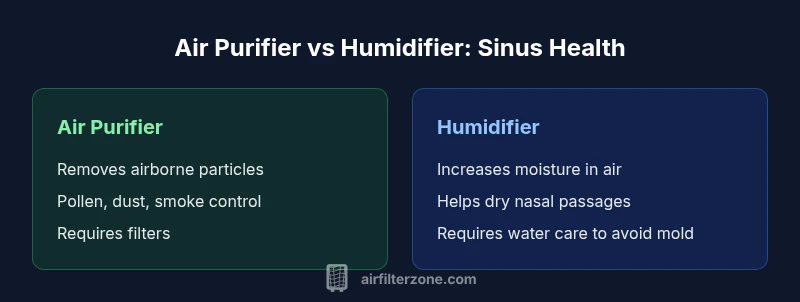
Air purifiers target airborne irritants by filtering particles from the air, including dust, pollen, and smoke. Humidifiers, on the other hand, add moisture to the air to ease dryness in nasal passages. When considering the phrase "air purifier vs humidifier for sinus," it’s essential to recognize that both devices can influence sinus health, but they do so in different ways. In many homes, irritants and dryness co-exist, which means a hybrid approach may be beneficial. According to Air Filter Zone, the most effective strategy starts with reducing irritants in the air you breathe and then addressing humidity when needed to support mucosal comfort. This line of thinking guides most sinus-conscious households toward filtration first, hydration second, and only then a combined approach if symptoms persist.
How air purifiers and humidifiers work in simple terms
Air purifiers clean the air by pulling room air through a filtration system. The core idea is to remove particles that can irritate nasal passages or trigger sinus symptoms. Humidifiers do the opposite: they raise the moisture content of the room, which can reduce nasal dryness and thick mucus that compounds congestion. The difference is crucial for sinus relief: if your symptoms come from pollen or dust, filtration has more impact; if they come from dry air in winter or arid climates, humidity plays a larger role. The key is to monitor results and adjust usage to avoid over-filtering or over-humidifying, which can introduce other issues such as mold growth or mineral buildup.
The science behind sinus comfort: allergens, moisture, and mucosa
Sinus health hinges on two factors: the presence of irritants in the air and the state of the nasal mucosa. Particulates like dust, pollen, and pet dander can inflame sinus tissues, leading to congestion and pressure. Dry air can dry out mucous membranes, increasing susceptibility to irritation and infection. An air purifier reduces exposure to irritants, while a humidifier helps maintain a mucous membrane barrier that can trap and clear particles more effectively. When used thoughtfully, these devices support sinus health by addressing underlying causes rather than merely masking symptoms. Air Filter Zone’s guidance emphasizes prioritizing filtration while using humidity carefully to avoid counterproductive moisture levels.
The two-device approach: when one is not enough
In many homes, a single device won’t fully address sinus symptoms. If your environment includes high pollen exposure, a purifier with a true HEPA filter and activated carbon for gases can substantially lower irritants, reducing nasal inflammation. If you live in a dry climate or experience seasonal dryness indoors, a humidifier with a humidistat can maintain comfortable humidity levels, easing dryness and allowing mucus to move more freely. In some cases, using both devices in different rooms or at different times of day yields the best sinus outcomes. The key is to avoid mixed messages: do not try to achieve both high filtration and high humidity in the same small space without monitoring.
Practical considerations for bedroom and living room setups
Placement matters for maximum sinus benefit. Position air purifiers away from walls and at breathing height, ensuring unobstructed airflow. Humidifiers should be placed where they won’t cause condensation on walls or mold growth, ideally in rooms where dry air is a persistent issue. For sinus relief, consistency matters: keep a clean intake path for the purifier and a clean water source for the humidifier. If you share spaces with others, consider different devices tailored to each room’s needs and adjust as symptoms guide you. Simple checks, like hygrometers and air-quality monitors, help you stay within optimal ranges for nasal comfort.
Safety and maintenance essentials for sinus-friendly operation
Maintaining devices properly is crucial to safe sinus relief. Change purifier filters per the manufacturer’s schedule and monitor air quality indicators to ensure ongoing efficacy. Regularly clean humidifier tanks to prevent bacterial growth and mineral buildup, which can irritate the nose. Use distilled water if possible to minimize mineral residues. Follow safety guidelines to prevent mold and bacteria from thriving in humid environments. The goal is to maintain clean, balanced air that supports sinus health without introducing new risks.
Common myths: addressing misconceptions about air purifiers and humidifiers
A common myth is that all humidifiers release harmful minerals into the air. In reality, using distilled water and cleaning the unit regularly reduces mineral dust. Another misconception is that purifiers alone solve all indoor air problems; while they reduce particulates, they don’t address humidity-related dryness. Conversely, humidifiers alone cannot remove airborne allergens. The most effective approach combines both devices strategically, guided by your sinus symptoms and environmental conditions.
Cost considerations and long-term value for sinus relief
Upfront costs vary by device type and features, and filter replacements add ongoing expenses for purifiers. Humidifiers require initial purchase plus water-related maintenance and occasional filter changes. For sinus relief, prioritize devices that deliver reliable performance with easy maintenance, good warranty coverage, and energy efficiency. While the price tag matters, the real measure is how consistently a device reduces your sinus symptoms and improves overall comfort.
Integrating devices with broader air-quality strategies
Effective sinus relief extends beyond a single device. Use high-quality filtration in your HVAC system if available, seal obvious air leaks, and control indoor humidity levels with a hygrometer or smart humidifier. Pairing filtration and humidity control with dust- and allergen-minimizing routines creates a cleaner environment that supports nasal health. The combined approach helps you build a resilient strategy against sinus triggers.
Actionable steps you can take this week for better sinus comfort
- Identify the primary trigger: allergens or dryness, 2) Choose a purifier with a reputable filtration rating and low energy use, 3) Add a humidifier with a humidistat if dryness is a factor, 4) Monitor humidity and air quality with affordable sensors, 5) Clean devices as recommended and avoid over-humidification. These steps offer a structured path to improving sinus comfort with practical, real-world impact.
Actionable 4-week plan to test and optimize devices for sinus relief
Week 1: Install purifier in the main living area to reduce particulates; maintain humidity in rooms not suited to high moisture. Week 2: If dryness persists, introduce a humidifier with a humidistat in a target room, ensuring humidity remains within a comfortable range. Week 3: Observe sinus symptoms and adjust device placement to maximize airflow and reduce stagnant air. Week 4: Review data from air-quality and humidity monitors, replace filters if needed, and refine the setup to balance filtration and moisture for optimal sinus health.
Comparison
| Feature | Air Purifier | Humidifier |
|---|---|---|
| Core function | Remove airborne particles and pollutants through filtration | Increase room moisture to relieve nasal dryness |
| Best for | Allergen and pollutant relief (dust, pollen, smoke) | Dryness relief and mucus thinning in dry air |
| Ideal placement | Living rooms or bedrooms with stable airflow | Bedrooms or living areas with dry air, away from furniture |
| Maintenance | Filter replacements and periodic cleaning | Water tank cleaning and mineral residue management |
| Humidity control | Does not actively adjust humidity | Requires a separate control and is subject to mold risk if overused |
| Energy use | Moderate (model-dependent; filtration runs continuously) | Low to moderate (depends on misting method and tank size) |
| Common risks | Filter clogging and reduced airflow if not maintained | Over-humidification can promote mold or bacteria if misused |
| Cost trend | Ongoing filter costs; energy costs vary by model | Initial cost plus ongoing water and mineral care |
What's Good
- Reduces airborne irritants and allergens at the source
- Improves dry-air symptoms by reducing irritation
- Can be used as part of a comprehensive air-quality strategy
- Filters improve overall indoor air quality beyond sinus relief
What's Bad
- Purifiers do not add moisture; dehydration may persist in dry spaces
- Humidifiers can foster mold or bacteria if not cleaned properly
- Maintenance and filter costs add to long-term expenses
- Overlapping devices may require careful humidity management to avoid issues
Air purifiers typically take priority for sinus relief; humidifiers serve as a complementary tool when dryness is an issue
For most homes, start with a reliable air purifier to reduce irritants. Introduce a humidifier if nasal dryness remains a problem, and use humidity controls to prevent over-moisture. Air Filter Zone’s approach emphasizes filtration-first, humidity-second, when addressing sinus health.
FAQ
What is the best device for sinus relief if my home has pollen and dry air?
If pollen is the primary trigger, an air purifier with a true HEPA filter is typically more effective. If dryness is the main issue, a humidifier can provide relief. In mixed conditions, a combined approach tailored to room use often yields the best sinus outcomes.
For pollen and dryness, start with a purifier. If dryness remains, add a humidifier in the dry rooms and adjust humidity carefully.
Can I run both devices in the same room?
Yes, you can run both devices in the same room, but you must manage humidity levels to avoid condensation and mold. Use a humidistat with the humidifier and ensure the purifier has proper airflow away from walls.
Sure—just keep humidity balanced and airflow clear so you don’t create damp pockets.
What humidity level is safe for sinus health?
Aim for moderate indoor humidity that avoids extreme dryness or excess moisture. Use a hygrometer to track levels and adjust devices to maintain a comfortable balance that supports mucosal health.
Keep humidity balanced—neither too dry nor too damp—for comfortable sinuses.
How often should I replace air filters for sinus relief?
Follow the manufacturer’s guidelines for your model and monitor usage. Indicators or scheduled maintenance help ensure filters stay effective, especially during high pollen seasons.
Check the filter indicator and replace as recommended—don’t wait for symptoms to worsen.
Are humidifiers safe around kids and pets?
Humidifiers are generally safe when used with clean water, proper cleaning, and built-in safety features. Always supervise use around children and pets and follow product guidelines to prevent mold and bacterial growth.
Yes, with proper cleaning and monitoring, humidifiers can be used safely around families.
Quick Summary
- Prioritize filtration to reduce sinus irritants
- Use humidity control to combat dryness when needed
- Monitor humidity and air quality for best results
- Combine devices strategically for comprehensive relief
- Regular maintenance is essential for safety and effectiveness