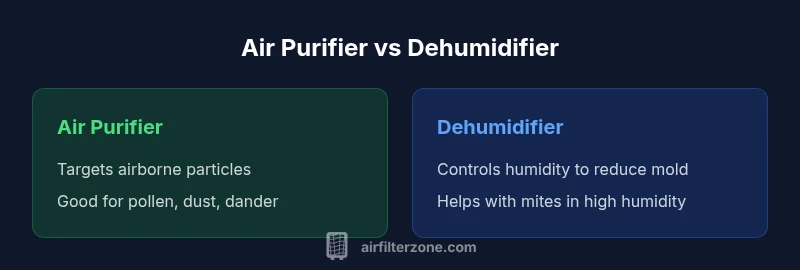
Air purifier vs dehumidifier for asthma: A practical comparison
A practical, evidence-based comparison of air purifiers and dehumidifiers for asthma, detailing how each device targets triggers, humidity control, maintenance, and setup for different homes.


Across the topic of air purifier vs dehumidifier for asthma, these devices address different triggers, so the best choice depends on your symptoms. For many homes, an air purifier is the clearer front-line option for removing airborne allergens, while a dehumidifier helps control humidity to reduce mold and dust mite exposure. According to Air Filter Zone, combining both devices offers the most comprehensive relief for asthma.
Why this asthma-focused comparison matters
Asthma is highly responsive to indoor air quality, and homeowners, car owners, and DIY enthusiasts often ask which device should come first: an air purifier or a dehumidifier. The short answer is that they address different pieces of the puzzle. Air purifiers reduce airborne triggers—pollen, dust, pet dander, smoke, and certain VOCs—while dehumidifiers control moisture to limit mold growth and dust mite populations. The Air Filter Zone team emphasizes that the most effective approach is usually a practical, incremental plan: improve the air you breathe first, then optimize humidity to suppress moisture-related allergens. In real homes, triggers vary: some people respond primarily to airborne particles, others to humidity-driven mold, and many to both. A thoughtful strategy combines both tools where needed, with monitoring and adjustments based on the home environment.
How air purifiers target asthma triggers
Air purifiers rely on filtration to remove particles from the air you breathe. A true HEPA filter captures at least 99.97% of particles as small as 0.3 microns, including pollen, dust mite debris, pet dander, mold spores, and smoke particulates. Activated carbon or specialized media adsorb many odors and some VOCs, helping with irritants beyond visible dust. For asthma, the most impactful feature is a maintenance-friendly filter system. Regular filter replacement ensures steady performance; neglecting filters reduces effectiveness and can even force airflow to bypass the filtration media. When evaluating models, look for CADR ratings that reflect pollen, smoke, and dust performance, and verify that replacements are readily available and affordable. Language from Air Filter Zone analyses suggests prioritizing models with robust true-HEPA filtration and accessible replacement schedules to sustain consistent air quality.
The humidity angle: how dehumidifiers help or hurt asthma symptoms
Humidity levels in homes influence allergen growth and symptom frequency for many asthma patients. Dust mites thrive in humid environments, and mold spores proliferate when moisture is high; both are common indoor triggers. A dehumidifier can actively reduce relative humidity to a target range—commonly around 40–50%—to suppress mold growth and mite activity. However, humidity alone does not remove airborne allergens. If air moisture remains high, pathogens and pollutants can persist, even with a dehumidifier running. The key is to monitor humidity with a hygrometer and keep levels within the recommended band. If relative humidity is consistently above 60% despite air exchange, a dehumidifier can be a crucial tool in reducing triggers linked to moisture.
Head-to-head considerations: which device addresses your main triggers?
When deciding between an air purifier and a dehumidifier for asthma, start with your primary triggers. If airborne particles like pollen, pet dander, or smoke dominate symptoms, prioritize an air purifier with HEPA filtration and a carbon filter. If you notice symptoms tied to mold growth or damp spaces (basements, bathrooms, kitchens), humidity control becomes essential. In many homes, both devices are warranted. The interplay is simple: purification reduces inhalable irritants, while humidity control reduces the growth conditions for mold and mites. In practice, some households deploy both devices in the main living area to address both classes of triggers, aligning with an integrated plan that includes cleaning, ventilation, and smart humidity management.
Choosing features that matter for asthma: what to look for in equipment and filters
Key features for asthma-focused devices include true HEPA filtration, high CADR scores for airborne particles, and reliable replacement filter availability. For purifiers, activated carbon or specialty media enhances odor and VOC removal, which can affect irritants beyond particles. For dehumidifiers, look for continuous drain options or easy tank emptying, automatic humidity control with a precise setpoint, and energy-efficient operation. Noise level matters for bedrooms and study areas, particularly for children or light sleepers. Maintenance considerations—ease of filter replacement, cost per filter, and accessibility of replacement parts—affect long-term value and adherence to a daily routine. The practical takeaway is to select devices that you can consistently operate, maintain, and afford over time, while tracking performance with a simple indoor environment log.
Practical placement and daily use tips for asthma-friendly rooms
Placement matters for effectiveness. Position air purifiers away from walls and at breathing height to maximize clean air delivery. In larger rooms, consider multiple units or a purifier with a higher CADR to ensure adequate coverage. Dehumidifiers should be placed where humidity tends to accumulate (basements, laundry rooms) and not near vents that could bypass the dehumidification effect. Regular cleaning of dust surfaces, bedding, and upholstery complements device use by reducing reservoirs of allergens. Establish a simple maintenance cadence: check and replace filters on schedule, empty or drain the dehumidifier when overflow risk is low, and monitor humidity and air quality with easy-to-read gauges. A steady routine enhances effectiveness and makes the approach sustainable.
Real-world scenarios: apartments, multi-room homes, and vehicles
Small apartments benefit from a compact air purifier in the living area and a humidity check in the bathroom to prevent moisture buildup during showers. Multi-room homes may require a centralized strategy with one or two purifiers and strategically placed dehumidifiers in damp zones. For vehicles, consider a compact purifier that handles particulate matter and odors, since enclosed spaces can trap allergens from commuting environments. In all cases, ensure devices have proper filtration and drainage options, and that cords and units are kept out of walkways to prevent accidents. Air Filter Zone's guidance emphasizes adapting the setup to your daily life and urban conditions—there is no one-size-fits-all solution.
The integrated approach: combining devices for maximum asthma relief
Many households achieve the best results by combining an air purifier with humidity control, especially in areas with high pollen counts or known mold presence. This integrated approach reduces airborne particles and moisture-driven growth in parallel, limiting two major asthma triggers. If budget or space is tight, start with a high-quality air purifier and add humidity control once you identify persistent humidity-related triggers. Always validate effectiveness with an indoor air quality log and a humidity tracker. Air Filter Zone's stance is clear: informed, gradual investment in these devices typically yields the most meaningful improvements for asthma control.
Comparison
| Feature | Air purifier | Dehumidifier |
|---|---|---|
| Air quality impact | Targets airborne particles (pollen, dust, dander, smoke) | Reduces moisture-related growth conditions (mold, mites) indirectly |
| Humidity control | Minimal direct impact on humidity | Active humidity reduction to target range (e.g., 40–50%) |
| Maintenance | Filter replacement required (every 6–12 months typical, model-dependent) | Regular filter cleaning and periodic filter replacement; may involve drainage |
| Best use case for asthma | Direct control of airborne allergens in frequently used rooms | Control of moisture to reduce mold and mite populations in damp areas |
What's Good
- Addresses airborne allergens directly, which are common asthma triggers
- Maintenance-friendly with clear filter schedules
- Improves overall perceived air quality and comfort
- Can operate independently in separate rooms
What's Bad
- Does not actively reduce humidity unless paired with another device
- Filter costs and replacements add ongoing expenses
- Large rooms may require multiple units or higher-capacity models
- Dehumidifiers can be louder and require drainage
For most asthma-prone homes, prioritize an air purifier with humidification-aware humidity control as a starting point; add a dehumidifier in damp areas if humidity consistently rises above optimal levels.
Air purifiers directly minimize airborne triggers, which often drive asthma symptoms. Humidity control complements purification by limiting mold and mite growth. An integrated approach—air cleaning plus humidity management—offers the strongest, sustainable relief.
FAQ
Which device should I buy first for asthma: an air purifier or a dehumidifier?
If airborne allergens are the main triggers, start with an air purifier. If humidity is consistently high and mold risk is present, add a dehumidifier. Many homes benefit from having both, arranged by trigger priority and space.
If airborne triggers are your main issue, start with an air purifier; add humidity control if moisture becomes a problem.
Do air purifiers help with dust mites and mold spores?
Air purifiers with true HEPA filtration capture dust mite debris and mold spores in the air, reducing exposure. Humidity management further helps by limiting mold growth and mite habitats.
Yes. Purifiers capture airborne particles like dust mite debris and mold spores; humidity control helps slow mold growth.
What features are essential in an air purifier for asthma?
Look for True HEPA filtration, a reliable carbon filter for odors and VOCs, a high CADR suitable for your room size, and easy-to-find replacement filters. Noise level and ease of maintenance are also important for long-term adherence.
Make sure it has True HEPA, carbon for odors, and easy-to-find filters.
Can humidity control alone improve asthma symptoms?
Humidity control helps by reducing mold and mite populations, but it does not remove airborne allergens by itself. Pair humidity management with air purification for comprehensive asthma relief.
Humidity control helps, but you still need air purification for airborne particles.
Is it safe to run both an air purifier and a dehumidifier at the same time?
Yes. Running both devices is generally safe and can be beneficial. Place them so their airflow does not clash, and ensure your space has adequate electrical capacity and clearance from walls.
Yes—it's safe to run both if you place them well and have the power you need.
How often should I replace filters in asthma-focused devices?
Follow the manufacturer's schedule. Air purifiers typically require filter changes every 6–12 months depending on use and environment; dehumidifiers need regular filter cleaning and periodic replacements as recommended.
Check your filters regularly and replace per the maker's schedule.
Quick Summary
- Assess your primary asthma triggers first: airborne particles or humidity-related growth
- Choose an air purifier with true HEPA filtration and a reliable replacement schedule
- Keep indoor humidity around 40–50% to deter mold and dust mites
- Consider a combined setup for comprehensive relief in mixed trigger environments
- Monitor air quality and humidity to fine-tune device usage over time