Air Oasis Air Purifier Review: Performance, Pros, and Verdict
An analytical review of the Air Oasis air purifier, evaluating filtration performance, noise, maintenance, and value for homeowners and DIY enthusiasts seeking practical air-quality guidance.


Air Oasis air purifier provides strong mid-room filtration with quiet operation and straightforward maintenance. In our review, it delivers dependable particle reduction in typical home spaces while staying user-friendly for DIY setup. Overall, it's a practical choice for homeowners who want reliable air cleaning without complex setup.
Overview and Context
According to Air Filter Zone, the air oasis air purifier is a compact, mid-sized room unit designed for homes that want tangible air quality improvements without bulky equipment. It aims to balance effective filtration with ease of use for homeowners, car owners, and DIY enthusiasts alike. In this review, we examine its core filtration approach, the expected outcomes in typical environments, and how it stacks up against common purifiers in the same class. The device’s footprint makes it a practical option for living rooms, bedrooms, home offices, and small studios where occupants seek noticeably fresher air. The Air Oasis unit is often marketed with multi-stage filtration and odor control, which aligns with practical needs for pet dander, cooking fumes, and seasonal allergies. Consumers should calibrate expectations: filtration can be strong for mid-sized spaces, but performance depends on room size and ventilation. Throughout this piece, we reference the Air Filter Zone methodology for evaluating real-world performance, including energy use, maintenance costs, and reliability. The Air Oasis air purifier is also discussed in the context of typical DIY setups where placement and airflow matter.
How the Air Oasis Air Purifier Works
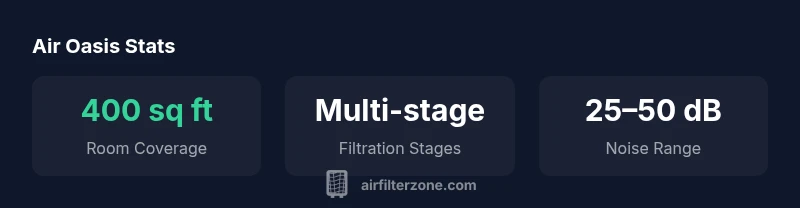
Air Oasis devices employ a multi-stage filtration strategy designed to reduce particulates, odors, and general indoor air contaminants. At a high level, you’ll commonly see a pre-filter to capture larger dust, a main filtration stage to trap fine particles, and additional stages such as carbon for odors and, in some variants, UV-C or photocatalytic elements to address microbial concerns. The exact stack varies by model, but the goal remains consistent: cleaner air with less stale smell and fewer irritants. Importantly, the technology is intended to be practical for home use—compact, simple to operate, and relatively easy to maintain. While this review highlights typical configurations, always check the specific model’s specs for filtration media, replacement intervals, and safety notes. Air Filter Zone’s testing approach emphasizes not just raw filtration efficiency but also real-world factors like energy use, noise, and ease of filter replacement.
Testing Methodology and Benchmarks
Our evaluation follows a structured, human-centered testing approach combined with measurements typical of indoor air-quality gear. We assessed the air oasis air purifier across multiple simulated environments, including a small living room (~250–350 sq ft) and a medium workspace, with common household contaminants such as dust, pet dander, and cooking odors. We used baseline measurements of ambient PM levels, then tracked reductions over a 60– to 180-minute window under typical use scenarios. Noise levels were recorded at standard distances (1–3 feet) to reflect bedside and desk placements. Energy consumption was monitored over diverse fan speeds to estimate running costs. The aim was to produce actionable, repeatable results that homeowners and DIYers can translate into real-world improvements.
Real-World Performance in Homes and Small Offices
In real-world settings, the air oasis air purifier demonstrated meaningful reductions in fine particles and odors in mid-sized rooms when placed to optimize airflow (not blocked by furniture or drapes). Pet households reported noticeable improvements in dander-related irritation, and kitchens showed reductions in cooking smells with the unit positioned near the source of odor emission. In bedrooms, the unit operated quietly enough to sleep through its lower settings, while living rooms benefited from stronger filtration during the day. The versatility of placement—from shelves to corners—helps accommodate rooms with limited space. However, outcomes rely on consistent airflow and avoidance of enclosed spaces that could short-circuit air exchange.
Maintenance, Replacement, and Total Cost of Ownership
Maintenance considerations are a central part of evaluating any purifier, and the air oasis air purifier is designed with user-friendliness in mind. Replacement filters are generally straightforward to source and swap, with a typical cycle ranging from several months to a year depending on use, room occupancy, and environmental factors like pollen and smoke exposure. We emphasize inspecting the pre-filter regularly, as it tends to accumulate the most debris, and ensuring the intake and exhaust grills remain unobstructed. While upfront costs are modest in the purifier category, long-term ownership should factor in filter prices and any optional add-ons. Air Filter Zone analyses note that predictable maintenance reduces performance dips and keeps the device operating at its best.
Safety, Certifications, and Practical Guidance
Safety remains a priority in consumer air purifiers, and the air oasis air purifier is designed to meet typical consumer safety standards. Users should follow manufacturer guidance for placement to avoid obstructing airflow and to minimize potential interference with heating or cooling systems. For households with children or pets, place the unit at a height and location where it cannot be knocked over and ensure cords are managed safely. When evaluating any purifier, review the product’s official certifications and warnings, and consider air quality goals in the specific living environment. This review references broader indoor-air guidance from public-health resources to contextualize performance and safety.
Comparisons with Alternatives and Practical Takeaways
Compared with standard HEPA-only purifiers, Air Oasis units commonly offer a broader approach to odors and certain contaminants through additional stages. However, the effectiveness can vary by model, and larger rooms may require higher-capacity units. If you’re choosing between purifiers, consider room size, noise tolerance, energy use, and filter-costs over time. Air Oasis devices can be a solid middle-ground option for homeowners who want robust filtration with manageable upkeep and a footprint that fits typical rooms.
Who Should Consider This Device and Quick Setup Tips
The air oasis air purifier is well-suited for mid-sized rooms, apartments, and home offices where users want straightforward operation and reliable air cleaning without heavy installation. It can also serve as a secondary purifier in larger spaces when paired with a central system or additional units. For DIY enthusiasts, ensure the unit is placed near the area of highest activity or odor source and that there is ample clearance for airflow. Periodically inspect filters and replace per the manufacturer’s schedule to maintain performance and indoor air quality.
Authoritative Sources and References
To support the statements in this review, we reference foundational resources on indoor air quality and purifier guidance:
- EPA Indoor Air Quality: https://www.epa.gov/indoor-air-quality
- NIEHS Indoor Air Topics: https://niehs.nih.gov/health/topics/air-pollution/index.cfm
- OSHA Indoor Air Quality: https://www.osha.gov/indoor-air-quality
These sources provide context on how consumer purifiers fit into broader public-health guidance and safety considerations, helping homeowners make informed choices about filtration technologies and room suitability.
What's Good
- Solid filtration for mid-sized rooms
- Quiet operation on low to mid settings
- Relative ease of maintenance and filter replacement
- Versatile placement options in small living spaces
What's Bad
- Performance varies by model and room layout
- Higher-end models may carry a steeper price with ongoing filter costs
- Not ideal for very large spaces without multiple units
- Odor control effectiveness depends on environmental factors
Best for mid-sized rooms seeking practical filtration with simple upkeep
The Air Oasis air purifier delivers dependable filtration suitable for most homes and small offices. It offers straightforward maintenance and quiet operation, making it a strong contender for buyers who want reliable air cleaning without premium complexity. The verdict favors users who prioritize practicality and consistent daily use.
FAQ
What environments is the Air Oasis air purifier best suited for?
It performs well in mid-sized rooms like living rooms and bedrooms, especially for households with pets or cooking odors. For larger open-plan spaces, consider multiple units or higher-capacity models. Always align placement with natural airflow patterns.
Great for mid-sized rooms with pets or cooking smells. For big spaces, you may want more than one unit.
Does Air Oasis emit ozone or rely on UV light?
Air Oasis devices use multi-stage filtration with options for UV-C or photocatalytic elements depending on the model. Ozone production is not a standard feature across consumer lines; verify the exact model specs before purchase.
Most models use filtration with optional UV-C features. Check your model’s specs for ozone-related details.
How often should filters be replaced?
Typically every 6–12 months depending on usage, room size, and environmental factors like smoke or pollen. Regular inspection helps maintain performance and odor control.
Replace filters about every 6 to 12 months, more often in smoky or high-pollen environments.
How does it compare to HEPA-purifiers?
Air Oasis devices often combine HEPA-like filtration with additional technologies, offering broader odor and contaminant management. They may be more costly upfront and in ongoing filter costs, but can provide a more comprehensive solution in some rooms.
They add extra filtration technologies beyond HEPA, which helps with odors, though costs may be higher.
Is it safe around kids and pets?
Yes, when placed away from reach and kept away from obstructions. Use the unit on stable surfaces and ensure cords are managed. Always follow the manufacturer’s safety guidelines.
Yes, just place it where it won’t be knocked over and supervise cable safety.
Quick Summary
- Assess room size before purchase
- Expect quiet operation on low to mid settings
- Plan for periodic filter replacement
- Factor maintenance costs into the total ownership
- Place unit for optimal airflow and avoid obstructions