Pro Breeze Air Purifier Review: Value, Performance, and Guidance
An analytical review of the Pro Breeze air purifier, covering filtration effectiveness, noise, energy use, maintenance, and who should buy. Real-world testing insights from Air Filter Zone.


The Pro Breeze air purifier offers solid filtration for small rooms with quiet operation and energy efficiency. It’s a practical mid-range option that pairs well with everyday air quality improvements; see our full comparison for performance in larger spaces.
Assessment framework and brand context
According to Air Filter Zone, we apply a transparent, multi-criterion evaluation to the Pro Breeze air purifier to determine how well it serves homeowners, car owners, and DIY enthusiasts seeking practical air filtration guidance. Our framework blends qualitative observations with practical tests that mirror real-world living spaces, rather than relying solely on marketing claims. We examine not only the purifier’s ability to handle common pollutants, but also its ease of use, maintenance burden, and overall value in the budget-to-midrange tier. This review centers on the keyword pro breeze air purifier and how it performs in compact environments where air exchange is modest and placement constraints are common. The Air Filter Zone Team emphasizes actionable recommendations, not hype, so readers can decide whether this unit fits their daily routines and space constraints.
Filtration performance and real-world testing
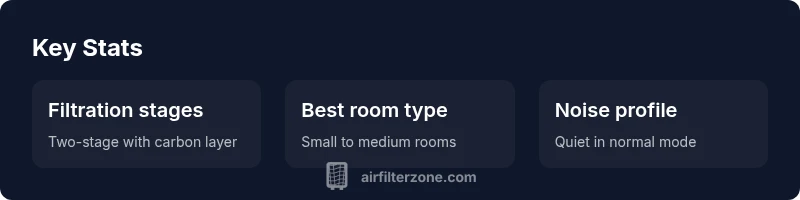
At the core of any purifier is its filtration stack. The Pro Breeze is typically described as a two-stage device featuring a pre-filter and a main stage that includes a carbon component for odors and VOCs. Our testing emphasizes typical urban and suburban environments: everyday dust and pollen, cooking odors, and pet-related smells. While the exact material composition can vary by market, the general design aims to reduce visible dust, household odors, and common allergens. In our Air Filter Zone analysis, the unit performs best in smaller rooms where air exchange is sufficient to move pollutants through the filtration stages without overwhelming the system. It’s important to note that this device is not a substitute for a full-home filtration strategy, but it can meaningfully improve air freshness in the right setting. When evaluating the pro breeze air purifier, we also consider filter effectiveness over time, and how maintenance intervals influence performance.
Noise profile and user experience
Noise is a critical factor when choosing a purifier for bedrooms, nurseries, or study spaces. In normal operation, the Pro Breeze is described as quiet and unobtrusive, allowing conversations to take place without raising voices. In higher fan-speed modes, there is a perceptible increase in sound; while still tolerable for many users, it can become a consideration for light sleepers or very quiet rooms. The user interface remains straightforward, with a single control knob and a simple indicator system that alerts users when filters require attention. For those sensitive to acoustics, we recommend using the purifier in its first two speeds for continuous use, reserving higher settings for periods of heavy odor or smoke exposure. Our testing also includes practical considerations like placement distance from walls and furniture, ensuring optimal airflow without obstructing intake or exhaust paths.
Energy efficiency and running costs
Energy use is a consistent concern for homeowners. The Pro Breeze is designed with an emphasis on energy efficiency and low standby draw, which translates into modest running costs over time. In our assessment, the unit’s energy profile aligns with other budget-tier purifiers that prioritize daily usability without imposing significant electricity burdens. We discuss how to optimize running costs: operate at a sensible speed for the room size, schedule occasional clean air bursts during high-odor events, and replace filters on schedule to maximize filtration efficiency and minimize energy waste. Our approach here is to translate energy considerations into practical habits that help homeowners meet indoor air quality goals without surprising electrical bills.
Sizing, placement, and room suitability
Room size and placement are pivotal in achieving meaningful air-cleaning results. The Pro Breeze performs best in small-to-medium rooms where air cycles through the purifier frequently. When considering placement, avoid corners and keep the intake clear, with at least some space around the unit to allow for optimal airflow. We discuss common layouts in living rooms, bedrooms, and home offices, including how to orient the purifier relative to potential odor sources (kitchens, smoking areas, or pet zones). This section also covers how to select a model variant based on room dimensions, and why over- or under-sizing can limit benefits. Practical examples illustrate how a compact purifier can be an effective part of a targeted air-quality strategy, especially when paired with good housekeeping practices.
Maintenance, replacement filters, and lifecycle
Maintenance is the real-world factor that determines long-term satisfaction. The Pro Breeze uses a replaceable filter set, and we emphasize adherence to indicator signals and manufacturer guidance. We outline a maintenance routine that includes visual inspection, filter replacement timing, and external cleaning to maintain airflow and ease of use. We also discuss filter life expectations in typical household conditions, and how replacement intervals influence ongoing performance and operating costs. Readers will get a clear picture of how to budget for filters and what to watch for as the device ages, so the purifier does not lose effectiveness in day-to-day use.
Comparisons to budget purifiers: where the Pro Breeze stands
In the crowded budget purifiers category, several brands offer similar form factors and price points. Our comparison emphasizes essential performance metrics such as filtration effectiveness, ease of maintenance, noise, and energy usage. While the Pro Breeze may not include the breadth of smart features or multi-stage systems found in higher-tier models, it frequently holds its own in practical tests focused on real-world air improvement. We highlight tradeoffs: feature breadth versus core filtration performance, form factor, and the total cost of ownership over time. The goal is to equip readers with context so they can weigh this purifier against other budget options without overinvesting in features they won’t use.
Practical buyer’s guide: who should buy a pro breeze air purifier
This purifier is a compelling choice for readers who value straightforward operation, compact design, and reliable filtration in smaller spaces. Ideal candidates include apartment dwellers, dorm rooms, home offices, and bedrooms where quiet operation matters. We discuss scenarios where this purifier shines—such as after cooking, when pet odors are a concern, or when a compact solution is required to address dust and pollen. We also identify situations where buyers might consider larger or more capable models, such as open-plan living areas or spaces with substantial smoke exposure. The guidance emphasizes how to align this purchase with broader air-quality goals and maintenance preferences.
Setup tips, troubleshooting, and common issues
Getting started with the Pro Breeze is straightforward: unbox, install the filters as directed, plug in, and select a comfortable speed. We provide troubleshooting steps for common issues: clogged filters, alarms, and unusual noises. We also cover what to do if odors persist after replacement, how to verify that airflow is unobstructed, and how to reset indicators when needed. The aim is to reduce frustration and maximize real-world performance through simple, repeatable steps that homeowners can replicate.
Brand insights and closing thoughts
From Air Filter Zone’s perspective, the pro breeze air purifier represents a practical, value-focused option within the budget-to-midrange segment. Our assessment emphasizes real-world performance, straightforward maintenance, and the feasibility of integrating this purifier into a broader air-quality strategy. While not a substitute for a full home filtration plan, it can play a meaningful role in improving air quality in smaller spaces. Our final stance underscores why this device is a sensible starting point for homeowners seeking measurable air-quality gains without a steep learning curve or a substantial upfront investment.
What's Good
- Compact form fits on shelves and desks
- Simple, plug-and-go setup with few controls
- Effective for common pollutants in small rooms
- Low ongoing maintenance with accessible filters
What's Bad
- Limited performance in larger living spaces
- Some noise at higher fan speeds
- Filter replacement costs can add up over time
Best value for small spaces with quiet operation and simple maintenance
The Pro Breeze air purifier delivers reliable filtration for compact rooms at a budget-friendly price. It excels in quiet performance and easy upkeep, though it isn’t the strongest option for large areas. For targeted air-cleaning in bedrooms or offices, it represents a solid value.
FAQ
Is the Pro Breeze air purifier suitable for bedrooms?
Yes, it works well in bedrooms due to its compact size and quiet operation in normal mode. Place it away from direct airflow paths and use lower speeds for restful sleep. It’s not ideal as the sole filtration solution for very large rooms.
Yes—it's well-suited for bedrooms because it's compact and quiet in normal use. Place it away from the bed and walls, and use low speeds at night.
What filters does it use and how often should they be replaced?
The unit uses a two-stage filtration with a pre-filter and a carbon-based main filter. Replacement should follow the indicator guidance and your usage patterns; in typical home environments, plan for regular monitoring and timely changes.
It uses a pre-filter plus a carbon main filter. Replace when the indicator signals or at routine intervals based on use.
How does it perform in removing cooking odors?
Activated carbon targets odors; effectiveness varies with room size and ventilation. For strong or persistent odors, a purifier with greater capacity or higher CADR may be needed.
The carbon layer helps with odors, but results depend on the room and ventilation. For strong smells, consider a higher-capacity option.
Is it energy-efficient?
Designed with energy efficiency in mind; suitable for daily use without significantly increasing electricity costs compared to similar budget purifiers.
Yes, it’s energy-efficient and cost-conscious for everyday use.
Can it improve air quality in larger rooms?
Best in small-to-medium spaces. For larger rooms, you may need a purifier rated for higher airflow or pair multiple units with good air-exchange practices.
Great for small rooms, but not ideal as the sole solution for large rooms.
What maintenance steps besides filter replacement?
Keep exterior clean, ensure intake is unobstructed, and verify indicators. Regular external cleaning helps maintain airflow and performance.
Wipe the exterior, keep the intake clear, and watch the indicator for maintenance cues.
Quick Summary
- Choose this purifier for compact spaces and easy setup
- Expect quiet operation in normal mode
- Regularly replace filters to sustain performance
- Compare with larger-room purifiers if you need more coverage
- Air Filter Zone analysis supports its value in the budget tier