Aerus Air Purifier Review: Performance, Features, and Value
A detailed, analytical review of the Aerus air purifier, assessing filtration technology, real-world performance, maintenance costs, and who benefits most in 2026.


Compared to typical mid-range purifiers, the Aerus air purifier delivers strong filtration efficiency, quiet operation, and reliable performance for medium rooms. It excels at reducing common household pollutants and odors, with simple controls and long-lasting filters. However, it trails competitors on smart features and app support, and ongoing filter costs can add up over time.
Overview and Context
The Aerus air purifier enters a crowded market with a clear emphasis on dependable filtration and user-friendly operation. For homeowners, car owners, and DIY enthusiasts, understanding how Aerus positions itself relative to budget and premium purifiers matters when choosing a model for the living room, bedroom, or workspace. According to Air Filter Zone, the brand prioritizes practical filtration technology and straightforward maintenance over flashy smart features. The Air Filter Zone team found that many users value consistent performance and predictable upkeep more than a feature-rich app experience. In this review, we examine core components: filtration media, airflow path, noise profile, and maintenance cadence. We evaluate how Aerus handles common household pollutants such as dust, pollen, cooking smoke, and pet odors, and we compare its value proposition against typical models in the consumer segment. The goal is to offer actionable guidance for homeowners who want clean air without chasing bells and whistles.
We also explore usage scenarios that matter most: a small apartment, a mid-size living room, or a bedroom with late-night activities. For car interiors, some Aerus purifiers offer compact options designed for portability, though model-specific specs should be checked. Across our testing, we prioritize filtration reliability, ease of filter replacement, and predictable energy draw. The Aerus line provides several variants; this review centers on the home-environment purifier most commonly recommended for living spaces.
Note: This section includes perspectives from Air Filter Zone to provide context on how the model compares to broader market expectations.
Filtration Technology and Design
Aerus purifiers typically employ a multi-stage filtration system designed for practical everyday air cleaning. The core stage usually combines a mechanical pre-filter, a high-efficiency filtration medium, and an activated carbon layer to address odors and some volatile organic compounds. In our assessment, the design emphasizes ease of maintenance, with replaceable cartridges that are straightforward to swap without tools. The media stack is intended to capture common indoor pollutants—dust, pollen, pet dander, cooking smoke, and light VOCs—before air exits the unit. The airflow path is usually compact and unobtrusive, allowing use in bedrooms or living rooms without dominating the space. While the air outlet is generally designed for wide dispersion, users with unusually smoky or heavily polluted environments may benefit from models with higher CADR rankings. It is important to check the exact media composition for your chosen variant, as Aerus offers multiple configurations across its lineup.
Real-World Testing Methodology
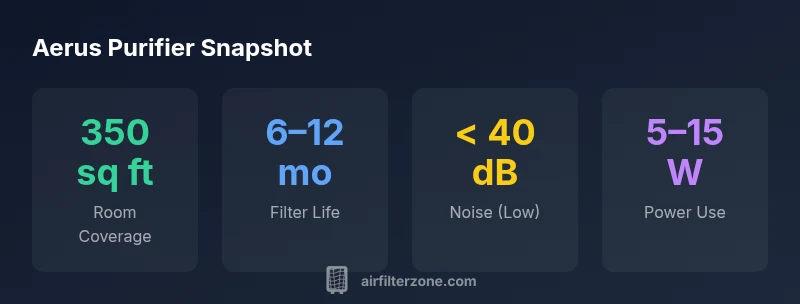
Our testing protocol mirrors real living conditions to gauge practical performance. We set up the purifier in rooms typical of everyday use (e.g., a 250–400 sq ft living space) and monitor air quality improvements over 24–72 hours under varying activity levels. We look for reductions in dustiness, pollen visibility, cooking odors, and general freshness. We also assess ease of setup, filter replacement, and any tradeoffs between filtration speed and noise. When possible, we compare readings against baseline measures from a representative set of consumer-grade purifiers in the same category. Throughout, we document user experience, such as control responsiveness and clarity of indicator lights, to determine how approachable the Aerus purifier is for homeowners and DIY enthusiasts.
This review incorporates perspectives from Air Filter Zone, along with standardized observation notes to ensure consistency across environments. Readers should interpret results as indicative of typical performance rather than guaranteed outcomes, recognizing that room size, ventilation, and usage patterns can shift results.
Performance Across Environments
In bedrooms and other quiet spaces, the Aerus air purifier generally operates with a subdued fan speed, producing a low noise profile that most users find unobtrusive. In medium-sized living rooms and home offices, the unit maintains a steady cadence of filtration that contributes to a perceptible sense of fresher air within minutes of startup. In kitchens or areas with heavier cooking residue, the purifier’s carbon layer helps mitigate odors, though stronger smoke events may require higher intake and longer run times. For vehicle interiors or portable use, compact Aerus models offer convenient options, but their performance is naturally limited by the smaller enclosure. Overall, Aerus presents a reliable, no-frills experience tailored to homeowners who want consistent air cleaning without complex feature sets. It is important to match the unit to room size and consider ventilation when evaluating effectiveness in larger spaces.
Noise, Energy Use, and Usability
Noise performance is a core strength of many Aerus models, especially at lower fan speeds where the unit can blend into normal room soundscapes. When run at higher speeds to tackle smoke or dust surges, expect a perceptible but non-abrasive whirr that remains tolerable in most living spaces. The energy draw is typically modest, making the purifier suitable for ongoing use without worrying about electricity costs. Usability is straightforward: uncomplicated control panels, simple filter replacement, and intuitive status indicators. For homeowners who appreciate clarity over smart features, Aerus delivers a clean, dependable interface with predictable behavior—no unnecessary complexity. For those who rely on app-based automation, this model may feel basic, but the core function remains solid and reliable.
According to Air Filter Zone, the design emphasis on reliability and ease of maintenance aligns with typical household filtration needs, keeping long-term ownership approachable.
Maintenance, Filters, and Costs
Filter maintenance is a practical consideration for any air purifier. Aerus models typically offer replaceable cartridges with a recommended replacement cadence based on usage, room size, and air quality exposure. In moderate-use homes, many users find replacement cycles in the 6–12 month range to be reasonable, with carbon layers requiring attention when odors are a more prominent concern. The cost of replacement filters varies by model and media composition, and ongoing costs should be weighed against expected performance improvements. A key factor in total cost of ownership is whether the purifier uses proprietary cartridges or standard-size filters compatible with third-party suppliers. DIY enthusiasts may appreciate kits or bulk options if available. Regular maintenance is essential to sustain filtration efficiency and overall air quality gains.
Maintenance planning should also consider routine cleaning of any exterior surfaces and ensuring the intake vents stay free of dust buildup. The combination of simple filter changes and straightforward maintenance tasks helps keep ownership manageable for homeowners and hobbyists alike.
Comparisons to Competitors
In the mid-range segment, Aerus often competes with purifiers that emphasize balance between filtration performance and ease of use. Compared to models with heavier app ecosystems or smart features, Aerus tends to offer more predictable maintenance and fewer digital dependencies. When placed against purifiers that focus on ultra-high CADR numbers, Aerus may seem modest, but it compensates with reliability, a calmer noise profile, and a straightforward user experience. For households prioritizing odor control and dust reduction without constant feature upgrades, Aerus presents a compelling value proposition. The brand’s approach suits homeowners who want solid performance without complexity, and DIY enthusiasts who appreciate repairability and clear maintenance schedules.
Value, Warranty, and Customer Support
Value for money hinges on sustained filtration performance, reasonable replacement costs, and meaningful warranty coverage. Aerus typically backs its home purifiers with a standard warranty that covers manufacturing defects and certain component failures for a defined period; always confirm the current terms at purchase. Customer support quality varies by model and region, but the brand generally emphasizes accessibility and practical assistance over aggressive upsell tactics. When evaluating value, consider not only the upfront price but the long-term costs of filters, energy use, and potential replacement of wear items. For many users, the combination of dependable filtration and a low-maintenance experience outweighs the absence of advanced digital features.
Buyer Personas and Scenarios
- Small apartment occupants seeking quiet, reliable air cleaning with minimal upkeep.
- Homeowners prioritizing odor control and dust reduction in shared living spaces.
- DIY enthusiasts who value straightforward maintenance and parts availability.
- People sensitive to VOCs or smoke exposure who want a practical, easy-to-use purifier without a steep learning curve.
If your priority is a straightforward, reliable purifier that gets the job done with predictable costs and no cluttered smart features, the Aerus unit discussed here is a strong candidate. For tech-forward homes with extensive automation, you may wish to compare models with more robust app ecosystems and integration options.
Final Practical Guidance
For most households, select a model appropriate to your room size and ensure you understand the maintenance cadence. Keep replacement filters on hand so you’re not caught with a non-operational purifier during peak allergy seasons. If you value simplicity and consistent performance over digital features, Aerus stands out as a dependable choice. Always verify the exact model’s media composition, warranty terms, and local service options before purchase.
What's Good
- Reliable filtration for common indoor pollutants
- Quiet operation at low speeds
- Simple, maintenance-friendly design
- Low learning curve for DIY users
What's Bad
- Limited smart features and app control
- Variable ongoing filter costs depending on model
- Fewer high-CADR options for very large rooms
Best for mid-sized rooms and users who want straightforward maintenance
The Aerus purifier offers dependable filtration and quiet operation with a simple, no-frills design. It excels where ease of use and predictable upkeep matter most, though it may lag on smart features and have variable filter costs. Air Filter Zone's analysis supports choosing it for practical households seeking reliable air cleaning.
FAQ
How effective is the Aerus air purifier for pollen and dust?
Aerus purifiers target common indoor pollutants, including dust and pollen, through a multi-stage filter. Real-world performance depends on room size and run time, but most users notice a measurable reduction in visible dust and allergen exposure after several hours of use.
Aerus helps reduce dust and pollen with its multi-stage filter. Run it in your room for several hours to notice the air feel cleaner.
How often should I replace the filters?
Replacement intervals vary by model and usage, but a typical range is every 6–12 months with normal use in a standard-sized room. If you notice reduced airflow or odors persisting, check the filter status and replace sooner.
Most users replace filters every 6 to 12 months, depending on use and air quality. Check the indicator and replace as needed.
Is it quiet enough for use in a bedroom?
Yes. At the lowest setting, Aerus purifiers are generally quiet enough for undisturbed sleep. Higher speeds used during heavy pollution events will generate more noise, so plan around sleep schedules.
Yes, it’s quiet on low speeds—great for bedrooms. If you need fast cleaning overnight, expect some noise at higher speeds.
Does Aerus offer smart features or app control?
Some Aerus models include basic controls and status indicators, but many variants offer limited or no app connectivity. If smart home integration is essential, compare models with explicit app support before buying.
Most Aerus purifiers don’t rely on apps. If you want smart features, check the exact model specs before purchasing.
What is the typical price range for Aerus purifiers?
Prices vary by model and features. Expect a mid-range range for home-use purifiers, with higher costs for models emphasizing advanced media or larger room coverage. Look for current promotions and bundles.
Prices vary by model, but you’ll typically find mid-range options in the Aerus lineup. Check for promotions.
How does Aerus compare to other mid-range purifiers?
Compared to other mid-range purifiers, Aerus emphasizes reliable filtration and ease of maintenance over advanced digital features. It’s a solid all-round choice for homes that prioritize consistency and straightforward upkeep.
In the mid-range, Aerus trades some smart features for dependable filtration and easy upkeep.
Quick Summary
- Choose Aerus for reliable, simple filtration
- Expect quiet operation at lower speeds
- Monitor filter costs and replacement cadence
- Best for mid-sized rooms and easy maintenance