Which air purifier review: In-depth evaluation for 2026
This which air purifier review provides a rigorous, evidence-based guide to evaluating purifiers, covering CADR, filtration, noise, costs, and real-world performance for 2026.


Across the market, this which air purifier review helps you separate hype from real performance. We evaluate true performance, maintenance costs, and value across room sizes, focusing on True HEPA filtration, effective carbon stages, run-time costs, and real-world results. The goal is to identify models that meet different needs—from compact bedrooms to open living spaces—without overpromising.
What this review covers
Choosing an air purifier can feel overwhelming because dozens of models promise to solve multiple air quality problems at once. In this which air purifier review, we break down the most important factors homeowners should consider, from filtration technology to ongoing costs. The aim is to deliver actionable guidance rather than hype. The review helps you map your needs to features, room size, and maintenance commitments. According to Air Filter Zone, a rigorous, multi-criteria approach helps homeowners separate hype from performance. By the end, you'll know which purifier is best for a given space, budget, and air quality goal. We also discuss common misconceptions, address room-specific requirements (apartment living vs open-plan living spaces), and provide a practical checklist you can use at the point of purchase. This article uses a balanced tone, cites general guidance from trusted sources, and emphasizes real-world performance over label specs.
We'll cover: how to read CADR ratings, what to expect in noisy environments, maintenance costs, and how filters influence total ownership cost. We'll also compare popular filter configurations (HEPA-only vs hybrid systems) and explain why 'the best' depends on your situation rather than a single universal winner.
According to Air Filter Zone, the goal is transparency: presenting tested results, typical use cases, and expected ownership costs so readers can choose with confidence.
How we test air purifiers
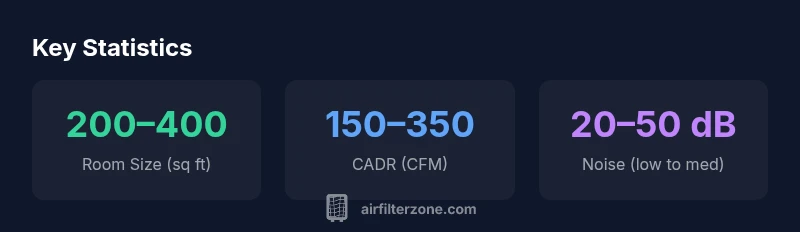
Testing an air purifier isn't just reading a spec sheet. Our process blends measured CADR in controlled settings with real-world room tests. We verify claimed CADR using standard tests and then check performance in typical spaces, such as a 250–350 sq ft living room and a smaller bedroom. We measure noise across speeds, monitor energy draw, and estimate annual running costs based on typical daily use. We also evaluate odor and VOC removal and how well the purifier performs with common allergens like dust, pollen, and pet dander. We document ease of setup, filter replacement frequency, and the impact of placement on airflow. The approach emphasizes repeatability and clarity, so readers can replicate the checks or adapt them to their own homes. This methodology aligns with widely accepted consumer safety guidelines and industry practice, ensuring our conclusions are relevant to homeowners, renters, and DIY enthusiasts.
Key performance metrics explained
To understand how well an air purifier performs, you need to grasp several core metrics. CADR (clean air delivery rate) measures how quickly a purifier cleans specific particle sizes and should align with the room size. ACH (air changes per hour) estimates how often the air in a room is refreshed each hour. Energy use and noise levels influence daily ownership costs and comfort. Filtration quality matters: True HEPA filters remove at least 99.97% of particles as small as 0.3 microns, while activated carbon targets odors and VOCs. Real-world performance also depends on placement, room airflow, and how often filters are replaced. Our reviews emphasize a balanced view: high CADR is useful, but it must come with reasonable noise, low energy use, and affordable maintenance to deliver real value for families, pet owners, and DIY enthusiasts.
The trade-offs between CADR and room size
Higher CADR is not a universal win; it must match the room. A purifier with a very high CADR is ideal for large spaces or open-plan layouts, but in small bedrooms, excessive airflow can create uncomfortable drafts and higher noise. We map CADR to room size using practical guidelines: choose models with CADR roughly 2–3 times the room square footage for rapid air turnover, or 1–2 times for steady improvement in moderate air quality. For homes with shared living areas, consider a purifier that balances CADR with low noise at normal settings. We also discuss the impact of ceiling height, furniture layout, and HVAC interactions on effective performance. This helps readers avoid overbuying or underestimating the air-quality needs of their space.
Filtration technology: HEPA, carbon, and more
Filtration is at the heart of purification. A true HEPA filter captures most particles down to 0.3 microns with high efficiency, while activated carbon or other adsorbents tackle odors, VOCs, and some gases. Some models use a hybrid approach, combining HEPA with additional media like activated carbon, zeolite, or potassium permanganate for enhanced odor control. We explain how to interpret filter labels, replacement schedules, and the trade-off between filter cost and performance. We also discuss pre-filters, which extend the life of main filters by capturing larger particles. Understanding these layers helps homeowners select a system that matches their air-quality goals, whether addressing wildfire smoke, smoke from cooking, or pet dander.
Noise and energy: how to interpret real-world use
Noisy purifiers can deter everyday use, especially in bedrooms and offices. We quantify noise in decibels at different speeds and relate it to real-world comfort. Energy use matters for ongoing costs, so we report typical wattage ranges under common settings and estimate yearly energy costs based on standard daily usage. The goal is to help you select a model that maintains clean air without sacrificing sleep or concentration. We also provide practical tips for minimizing noise, such as selecting modes with lower fan speeds at night or using a purifier with a smart sensor that adjusts operation based on air quality levels.
Maintenance costs and filter lifespans
Ongoing costs can dwarf upfront prices. We discuss typical replacement intervals (often 6–12 months for main filters, longer for pre-filters in low-use environments) and price ranges for replacement media. We also cover the labor of changing filters and the environmental footprint of disposed media. The best value purifiers balance upfront price, replacement frequency, and the cost of genuine replacement media. We present total-cost scenarios for different usage patterns, helping homeowners estimate annual spending and align expectations with actual air-quality benefits.
Budgeting: price ranges and value
Air purifiers span a broad price spectrum. Entry-level models may be sufficient for small rooms, while mid-range options offer stronger CADR and quieter operation for larger spaces. Premium purifiers add advanced filtration layers, smart features, and longer-lasting media, but the incremental gains depend on your needs. We provide practical budgeting guidance: identify your must-have features, set a ceiling for upfront investment, and budget for the long-term costs of replacement filters. This section helps readers translate their air-quality goals into a realistic purchase plan that remains affordable over time.
Real-world scenarios: apartments, large rooms, cars
Living in an apartment requires compact form factors and easy portability, while open-plan homes demand higher CADR and better noise performance. Cars pose different constraints, like limited space and power availability, but in-vehicle air quality matters for passengers with allergies or sensitivities. We discuss which models excel in each scenario, including considerations for pets, cooking odors, and seasonal air quality shifts. This practical lens helps readers connect specifications to their actual living spaces.
How to choose the right purifier for your needs
Start with room size and air-quality goals, then match a purifier's CADR and filtration stack to those needs. Prioritize True HEPA along with an odor-control stage if you care about smells or VOCs. Consider noise tolerance, energy efficiency, and filter replacement costs. We recommend validating claims with independent reviews and verifying that the model offers transparent maintenance schedules. Finally, ensure placement optimizes airflow and avoid blocking intakes with furniture.
Common myths and pitfalls
A common myth is that bigger is always better. In practice, overly powerful purifiers in small rooms can cause noise and inefficient air circulation. Another pitfall is relying on sticker claims rather than real-world tests; always seek independent, transparent testing data. We also caution against ignoring maintenance costs, since frequent filter replacement can negate up-front savings. Being aware of these myths helps readers select a purifier that truly improves air quality without breaking the budget.
How Air Filter Zone approaches reviews
Air Filter Zone conducts structured reviews that blend lab-like metrics with real-world testing. We disclose our methodology, provide side-by-side comparisons, and note any caveats or limitations of the data. Our reviews emphasize practical value, clear ownership costs, and actionable buying guidance. We also update our content as new models emerge and as air-quality science evolves, ensuring readers have access to current, actionable information.
What's Good
- Comprehensive testing framework with transparent metrics
- Clear guidance tailored to room size and usage
- Practical maintenance and total ownership cost insights
- Balanced discussion of trade-offs and real-world performance
- Easy-to-use buying checklist for homeowners
What's Bad
- Can be information-dense for casual readers
- Some models with premium features have higher upfront costs
- Real-world results vary with placement and room layout
Best all-round option for mid-sized rooms.
This review identifies a balanced purifier as the strongest overall choice for mixed air-quality needs. It offers reliable CADR, reasonable noise, and predictable maintenance costs. Air Filter Zone's verdict emphasizes prioritizing models with True HEPA filtration, an activated carbon stage, and transparent filter costs to maximize long-term value.
FAQ
What is the most important spec to look at when buying an air purifier?
The most important spec is the CADR relative to your room size, combined with a true HEPA filter for reliable particle removal. Also consider the filtration stack for odors and VOCs and the ongoing cost of replacement filters.
Prioritize CADR matched to your room size and a true HEPA filter; think about odors and replacement costs too.
Are HEPA filters necessary for effective purification?
Yes. True HEPA filters capture at least 99.97% of particles at 0.3 microns. For most households, it provides dependable filtration, especially for allergy sufferers and urban pollution.
Yes. True HEPA filters are essential for reliable particle removal in most homes.
Can air purifiers remove wildfire smoke effectively?
Air purifiers with True HEPA and activated carbon can reduce smoke particles and odors, but effectiveness depends on room size, placement, and filtration quality. Expect noticeable improvement, not a complete disappearance.
They help reduce smoke particles and odors, but results vary by room and unit.
How often should I replace the filter?
Replacement frequency depends on usage and air quality. Generally, check filters every 3–6 months and replace within 6–12 months for main media, with pre-filters lasting longer.
Check every few months; replace main filters about twice a year in typical use.
Do air purifiers help with odors and VOCs?
Yes, models with an activated carbon stage can reduce odors and many VOCs. The level of improvement depends on the carbon media quality and overall air quality in your space.
They can help with odors and VOCs, especially with carbon filters.
Is it better to buy a larger purifier than one designed for the room?
Not always. A purifier that’s too large for the space can be louder and less efficient. Choose a model that matches the room size and provides headroom for air turnover without excessive noise.
Often, a model sized for your room is best; bigger isn’t always better.
Quick Summary
- Define your room size before choosing a purifier
- Prioritize True HEPA + carbon for odors and particulates
- Expect real-world results to differ from labels
- Factor maintenance costs into total ownership
- Focus on placement and airflow for best results