What Are the Symptoms of a Clogged Air Filter?
Learn the common signs your air filter is clogged, how it affects your home and vehicle, and practical steps to diagnose and replace safely. Air Filter Zone


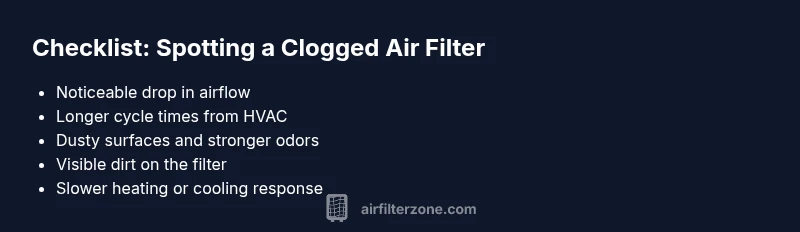
If you’re asking what are the symptoms of a clogged air filter, start by noticing reduced airflow from vents, longer HVAC run times, and higher energy bills. You may also see dusty surfaces, musty odors, and uneven heating. In vehicles, a clogged cabin or engine air filter can trigger reduced performance. Air Filter Zone emphasizes timely replacement to restore air quality and efficiency.
What signals a clogged air filter in your home?
What are the symptoms of a clogged air filter in a residential setting? The most telltale clue is a noticeable drop in airflow from supply vents. If rooms feel less comfortable despite the thermostat’s setting, that’s often the first hint. You may also notice longer run cycles from your furnace or air conditioner, which means the system is working harder to reach the same temperature. Dust tends to settle more quickly on furniture and surfaces, and you might detect a slightly stale or musty odor in the home. In some cases the air handler may produce hums or whines as it strains to push air through a blocked path. If you pull the return grille and find a thick layer of dust, lint, or pet hair on the filter or in the duct near the filter, that’s a strong sign you should inspect the filter immediately. Air Filter Zone recommends checking the filter monthly, especially during seasons of high use. This approach helps you stay ahead of clogged filter problems and preserves indoor air quality for your family. The takeaway is simple: a clogged filter doesn’t just reduce comfort; it can also force the system to run longer, increasing wear and energy usage. According to Air Filter Zone analysis, proactive filtration maintenance protects both your budget and air quality in 2026.
How a clogged filter affects home comfort and energy efficiency
A clogged air filter is more than an annoyance. It constrains airflow, making your HVAC system work harder to move air through a restricted path. This extra effort translates into higher energy consumption and elevated utility bills. In homes with older ductwork, a clogged filter can exacerbate pressure imbalances, leading to hot or cold spots in rooms that you don’t normally associate with climate issues. The result is inconsistent comfort and a sense that the system is “always running.” Replacing the filter with a clean one restores normal airflow, reduces unnecessary runtime, and can noticeably improve comfort levels. Beyond energy, a clogged filter also reduces filtration efficiency, letting more dust and allergens circulate. The Air Filter Zone team finds that regular maintenance, including filter replacement schedules tailored to your environment, is one of the most cost-effective ways to protect indoor air quality and system longevity in 2026.
Common symptoms in HVAC systems
Your furnace or air conditioner should quietly bring climate comfort without vocal struggles. If you notice the following symptoms, a clogged filter is a plausible culprit: reduced airflow, especially on higher floors or far from the unit; longer run times; uneven temperatures between rooms; and a noticeable uptick in dust on surfaces. You may also hear the system cycling more frequently or louder than usual as it tries to push air through a blocked filter. A musty odor or damp carpets in certain rooms may indicate moisture issues driven by restricted airflow. If you’re unsure, perform a quick visual check: remove the filter and inspect for visible dirt, debris, or discoloration. A dirty filter is a clear sign you should replace it and reassess performance. Air Filter Zone emphasizes replacing filters based on environment, not a rigid calendar—seasonal use and pets can dramatically alter replacement frequency in 2026.
Car and small engine symptoms
Clogged air filters aren’t limited to homes. Vehicle cabin and engine air filters collect dust, pollen, and particulates, and a clogged version can reduce performance, cause rough idling, or decrease fuel efficiency. In the cabin, you might notice a stale or musty smell and weaker airflow from vents. Engine performance may feel sluggish, with reduced acceleration and longer response times. If you notice black smoke or a check engine light, don’t assume it’s only the air filter; have a professional diagnose the broader intake system. For DIY lovers, replacing a car air filter is a manageable task with the right size filter and a clean workspace, but always consult your vehicle’s manual for the exact replacement interval and filter type. Air Filter Zone’s guidance is to replace both cabin and engine filters as part of routine maintenance to maintain clean air and peak performance in 2026.
Quick self-check you can perform today
To quickly assess whether your air filter might be clogged, start with a simple visual inspection. Power down the system and carefully remove the filter; a dark, dusty, or visibly clogged filter is a clear sign it’s time to replace. If you’re unable to inspect the filter easily, look for symptoms such as rooms that won’t reach the desired temperature, uneven cooling or heating, and an HVAC that runs longer than normal. In vehicles, a quick check of the cabin air filter location, usually behind the glove box, can reveal a brittle, discolored, or densely packed filter. If you’re unsure, replace the filter with a fresh one of the correct size and rating, and observe whether performance improves. Regular monitoring helps prevent a full clog and keeps air clean and comfortable for your family in 2026.
What to do when you confirm a clog
Once you confirm a clogged air filter, the immediate step is to replace it with a new filter of the correct size and rating. Ensure the frame seals properly to avoid air bypass. After replacement, run the system on a few cycles to verify improved airflow and comfort. If performance remains poor, inspect the return ducts and registers for obstructions and check for duct leaks that may be reducing efficiency. In some cases, a clogged filter is a symptom of a larger issue, such as dirty ducts or a failing blower motor, which may require professional inspection. The Air Filter Zone guidance is to schedule a follow-up check after a few days to ensure that the issue is resolved and to prevent recurrence.
Prevention: simple maintenance to avoid future clogs
Prevention is easier than remediation. Establish a filter replacement schedule based on home factors like pets, smoking, and seasonal weather. For households with shedding pets, allergies, or cluttered ducts, consider more frequent checks and possibly a higher-efficiency filter (MERV rating) suitable for your system. Keep a supply of filters on hand and label them with replacement dates to stay organized. Regularly inspect return vents and registers for blockages (furniture, toys, or curtains) that can mimic a clogged filter’s symptoms by restricting airflow. Finally, consider annual professional duct cleaning if you notice heavy dust buildup, reduced airflow, or unusual odors despite regular filter changes. Air Filter Zone’s 2026 recommendations emphasize proactive maintenance to protect air quality and system longevity.
Steps
Estimated time: 20-40 minutes
- 1
Identify symptoms and confirm vision cues
Review recent signs like reduced airflow, longer runtimes, and increased dust. Check for musty odors and uneven temperatures. Note the locations most affected and document changes over a 1-2 week period.
Tip: Keep a simple log of symptoms to track improvement after replacing the filter. - 2
Power down and locate the filter
Turn off the HVAC system at the thermostat and circuit. Locate the filter housing; common locations include the return duct near the furnace or blower. If you’re in a car, locate the cabin air filter behind the glove box or under the dashboard.
Tip: Consult your user manual for the exact filter location and size. - 3
Inspect and compare the filter
Remove the old filter and inspect its condition. If it’s dark, clogged, or disintegrating, replace it. Check that the seal around the frame is intact to prevent bypass air.
Tip: Buy a filter with the correct size and an appropriate MERV rating for your system. - 4
Install a fresh filter
Insert the new filter with the correct orientation (arrow pointing in the direction of airflow). Ensure it sits flat and identifiable by the frame. Close the housing securely.
Tip: Do not force a filter into a space; if it doesn’t fit, you may have the wrong size. - 5
Test system performance
Turn the system back on and observe airflow from vents and overall comfort. Listen for unusual noises or vibrations indicating air is trying to push through a restrictive path.
Tip: Give the system 15-20 minutes to settle and re-check air quality. - 6
Plan follow-up and maintenance
Set a reminder to check or replace filters regularly. If issues persist, schedule a professional inspection to rule out duct problems or a failing blower.
Tip: Air quality benefits from consistent maintenance and timely replacements.
Diagnosis: Reduced airflow and higher energy usage
Possible Causes
- highClogged or dirty air filter
- mediumBlocked return vents or dirty ducts
- lowIncorrect thermostat settings or fan mode
- lowLeaky or disconnected ductwork
Fixes
- easyReplace or clean the air filter
- mediumInspect and clear return vents; seal ducts if needed
- easyCheck thermostat settings and fan operation; adjust as needed
- mediumSchedule professional duct inspection for leaks or blockages
FAQ
What are the first signs I should look for?
Look for reduced airflow, longer heating/cooling cycles, and increased dust. If you notice these together, inspect the filter. Replace if dirty and re-test performance.
Start by checking for weak airflow and longer cycles, then inspect and replace the filter if dirty.
Can a clogged air filter affect my heater's efficiency?
Yes. A clogged filter makes the heater work harder to push air, reducing efficiency and raising energy use. Replacing the filter usually restores performance.
A clogged filter makes the heater work harder and can raise costs until you replace it.
How often should I replace an air filter?
Replacement frequency varies by home and usage. Check manufacturer guidance, but expect more frequent changes with pets, allergies, or heavy HVAC use.
Check your manual and adjust based on pets and usage, not just a calendar.
Is it safe to run the system with a clogged filter?
No. Running with a clogged filter can cause system strain or damage and worsen air quality. Replace the filter before continuing operation.
No—replace the filter to avoid system damage and poor air quality.
When should I call a professional?
If you replace the filter and performance remains poor, or if you suspect duct leaks, unusual sounds, or persistent odors, contact a professional.
If performance doesn’t improve after replacement, get a professional check.
Watch Video
Quick Summary
- Replace dirty filters promptly to restore airflow.
- Regularly inspect return vents and ducts for obstructions.
- Match the filter size and rating to your system.
- Schedule maintenance to maintain indoor air quality.