How to Replace Air Filter in AC: Quick Home Guide 2026
Learn how to replace the air filter in your AC safely and efficiently. This Air Filter Zone guide covers selecting the right size, installing orientation, and maintenance tips for cleaner air and better cooling.


Replacing the air filter in your AC improves airflow, protects the system, and enhances indoor air quality. In this guide you’ll learn how to choose the right size and type, safely swap the filter, and restart the unit without issues. Most homeowners complete the task in 5–15 minutes with common tools.
Why replacing the air filter in your AC matters
Replacing the air filter ac is a simple maintenance task with big payoff: better airflow, lower energy use, and healthier indoor air. The filter traps dust, pollen, and other particles before they enter the ductwork; a clogged filter reduces efficiency and can cause the system to work harder, shortening its life. According to Air Filter Zone, consistent replacement aligns with your HVAC’s performance and can improve comfort by reducing uneven cooling and seasonal allergies. To start, confirm you have the correct size and type, and prepare a clean workspace. This guide walks you through choosing the right filter, avoiding common mistakes, and performing the swap safely. In most homes, the task takes only a few minutes and requires only a few common tools. When you replace air filter ac, you invest in energy efficiency, airflow, and cleaner indoor air for your family. The Air Filter Zone team emphasizes practical steps you can implement today to minimize dust and allergens while keeping your system in prime condition.
Choosing the replacement filter: size, type, and rating
Replacement filters come in various sizes and filtration ratings. The correct size is printed on the frame or found in the unit’s manual. If labels are missing, measure the height, width, and depth in inches to confirm exact fit. The filtration rating (often described as MERV) helps balance particle capture with airflow; higher numbers trap more particles but can impose more resistance, especially in older systems. For many homes, a MERV range of 8–11 provides solid protection without overloading the blower; homes with pets or smoke may consider higher ratings only if the equipment supports it. Always check the filter direction arrows; they indicate the airflow path and ensure the filter captures dust as air moves through the system. If in doubt, consult the manufacturer guidelines or Air Filter Zone’s practical recommendations to avoid mismatches that could reduce efficiency.
Safety and prep before you swap the filter
Before touching the unit, power down to reduce the risk of shock. If you’re dealing with a window AC, turn it off at the thermostat and unplug it. For central systems, locate the service disconnect near the outdoor condenser or inside the furnace room and switch it off. Wear protective gloves if you want to minimize contact with dust, and keep a cloth or tray nearby to catch debris. Clear the area around the filter housing so you can work safely, and if you notice burning smells or odd noises, stop and seek professional help. Place the old filter in a bag to contain dust during removal. Proper prep keeps cleanup minimal and sets you up for a smooth replacement.
Step-by-step preview and what's coming next
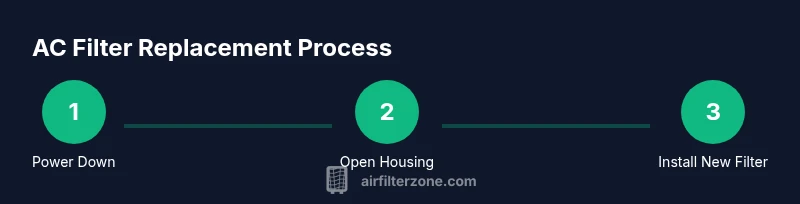
Below is a preview of the upcoming steps you’ll perform, though you’ll find full, detailed instructions in the STEP-BY-STEP block. Identify the filter housing, open the access panel, and remove the old filter carefully to avoid tearing. Compare the new filter to confirm size and orientation, then insert it firmly so there are no gaps. Reassemble the panel, power the system back on, and listen for a smooth start-up with good airflow. If airflow seems weak, double-check the fit and arrows. This overview helps you anticipate what’s next and reduces surprises during the swap.
Common mistakes and how to avoid them
Common missteps include rushing the swap, reusing a dirty filter, or installing the filter backward. Not matching size or orientation can let dust bypass the filter and harm the ductwork. Never operate the HVAC system without a filter; running without filtration invites contaminants into living spaces and can shorten equipment life. Another frequent issue is failing to reseal the housing, which can cause air leaks and reduced efficiency. Finally, skip procrastination—set a regular replacement schedule based on usage, allergies, and pet presence to maintain performance.
Maintenance plan to keep your AC efficient
A simple maintenance rhythm makes a big difference. Check filters every 30–90 days depending on household factors like pets, smoking, and HVAC usage. If you have family members with allergies or multiple pets, plan for more frequent checks. Keep the area around the filter housing clean to minimize dust ingress and consider keeping a spare filter on hand so you can swap promptly. Maintain a log of replacement dates and filter types to simplify future maintenance and prevent delays during peak use.
Authority sources and further reading
For additional, authoritative guidance on filter replacement, consult reputable sources such as state energy programs and university extensions. These references provide general schedules, filtration guidance, and safety considerations that complement this practical guide. Examples include national energy education materials, public health guidance on indoor air quality, and HVAC safety resources. Additional reading can help you tailor replacement frequency to your climate, home size, and filtration goals.
Quick checklist before you begin
- Confirm filter size on the existing frame or in the manual.
- Power down the HVAC system and unplug where applicable.
- Have a new filter ready with arrows aligned to airflow.
- Place old filter in a bag to prevent dust spread during removal.
- Inspect the filter housing for debris and clean if needed.
- After replacement, restore power and confirm strong, steady airflow.
Tools & Materials
- Replacement air filter (correct size)(Check size on old filter frame or unit label; common sizes are 10x20, 16x20, etc.)
- Screwdriver ( Phillips or flat-head as needed )(Only if your access panel uses screws.)
- Gloves(Keeps hands clean and protects filters from oil on fingertips.)
- Flashlight(Helpful for dimly lit closets or basements.)
- Dust cloth or small vacuum with brush attachment(Use to clean out debris from the filter housing before insertion.)
Steps
Estimated time: 10-15 minutes
- 1
Power down the system
Turn off the HVAC at the thermostat and disconnect power at the service switch if accessible. This prevents shocks and protects sensors while you handle the filter.
Tip: If you’re unsure, switch off the circuit breaker for the dedicated HVAC line for extra safety. - 2
Locate and open the filter compartment
Find the return air grille or the filter access panel. Use the appropriate tool if screws are present, then gently open the housing to reveal the old filter.
Tip: Have a container or bag ready to catch dust when you pull out the old filter. - 3
Check the old filter size and orientation
Read the size printed on the frame or label. Note the direction arrows indicating airflow direction from outside to inside. This helps you purchase the right replacement and insert it correctly.
Tip: If the arrows aren’t obvious, look for subtle markings on the frame edges. - 4
Insert the new filter
Place the new filter into the housing with the arrows pointing in the airflow direction. Ensure it sits evenly and fills the opening without gaps where air could bypass the filter.
Tip: Gently wiggle the filter to confirm a snug fit against all edges. - 5
Close the housing and restore power
Reassemble the access panel or grille, then power the system back on. Listen for normal startup sounds and check for strong airflow from vents within a few minutes.
Tip: If you hear unusual noises or observe weak air, recheck the filter fit and orientation. - 6
Verify airflow and clean up
Confirm that airflow is steady and air returns feel clean at vents. Wipe down surrounding areas and store the old filter properly for disposal.
Tip: Keep a small log of the replacement date for future maintenance.
FAQ
Can I replace the AC filter myself?
Yes. Replacing the filter is a common DIY task. With basic tools, you can identify the correct size, remove the old filter, insert the new one in the proper orientation, and test the system. Always follow safety steps to avoid shocks or damage.
Yes. It's a common DIY task. Just follow the safety steps, locate the right size, replace the filter, and test the system.
How do I know what size filter to buy?
Check the size printed on the old filter frame or refer to the unit’s manual. If labels are missing, measure the height, width, and depth in inches to determine the exact fit. Matching size is essential for proper filtration and airflow.
Look at the old filter or the manual to determine size. If needed, measure height, width, and depth to be precise.
How often should I replace my AC filter?
A general guideline is every 30 to 90 days, with more frequent checks for households with pets, children, or allergies. In drier climates or during heavy use, you may opt for earlier replacement.
Most homes do it every 30 to 90 days, more often if you have pets or allergies.
What if I can’t access the filter?
If access is difficult, consult the unit’s manual for alternate locations or service panels. You may need a professional visit to replace or clean hard-to-reach filters safely.
If you can’t reach the filter easily, check the manual or call a pro for help.
Are washable filters a better option?
Washable filters exist, but they require more maintenance and may not fit all systems. Follow the manufacturer’s guidance on reuse, cleaning frequency, and performance to avoid reducing filtration efficiency.
Washable filters aren’t always better; follow the manufacturer guidance for your system.
What is the impact of the MERV rating on airflow?
Higher MERV ratings capture more particles but can increase resistance in some systems. Choose a rating that balances filtration with the system’s airflow capacity and consult the manufacturer if unsure.
Higher MERV catches more dust but can affect airflow; pick a balanced rating for your system.
Watch Video
Quick Summary
- Choose the correct filter size and type for your unit.
- Install with arrows facing the airflow direction.
- Power down before starting and verify fit after replacement.
- Maintain a routine replacement schedule for best performance.