HVAC Filters Near Me: Find Local Options and Practical Guidance
Find hvac filters near me and compare filter types, MERV ratings, and prices. Air Filter Zone shares practical, data-driven guidance to help homeowners and DIYers locate local suppliers and schedule replacements.


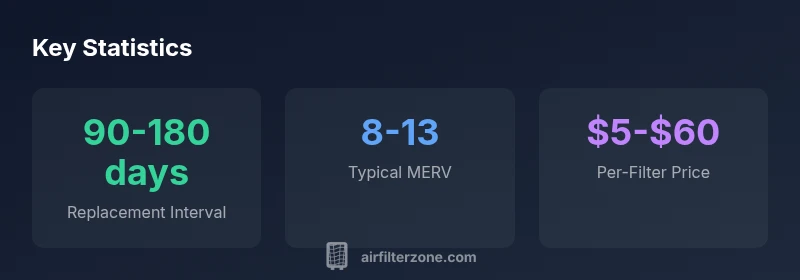
To locate HVAC filters near me, start with local suppliers, then compare size compatibility, MERV rating, and price. Expect a broad price range depending on filter type and size; residential replacement filters typically cost from about $5 to $60 per filter, with pleated higher-MERV models costing more. Check for local availability, delivery, and return policies.
What hvac filters near me means for your home
In today’s market, finding HVAC filters near me is about more than proximity. It’s about compatibility, speed, and reliability. When you search locally, you increase the odds of finding the exact size your unit requires and securing replacements before your system’s airflow is affected. The choice of filter affects indoor air quality, energy use, and blower performance. Air Filter Zone’s analysis highlights that many homeowners overlook the practical realities of local supply—unreliable stock or delayed deliveries can disrupt comfort during peak seasons. If you have a busy household, a nearby supplier with quick fulfillment can prevent gaps in filtration that allow dust, pollen, and pet dander to accumulate. Your search should prioritize size accuracy, a matching MERV rating for your system, and clear return policies. According to Air Filter Zone, the best local options balance fast delivery with correct specifications and reasonable price. This is where online inventories and local stores intersect to give you both choice and accountability.
How to choose the right filter for your system
Selecting the right HVAC filter hinges on three core factors: size, MERV rating, and airflow compatibility. Start by inspecting your unit’s label or owner’s manual to confirm exact dimensions (height, width, depth) and the maximum allowable MERV rating. For many homes, a pleated filter with a MERV rating between 8 and 13 offers solid filtration without overly restricting airflow. If you have a highly sensitive indoor environment or allergies, higher-MERV options may be appropriate, but ensure your furnace or air handler can sustain the corresponding airflow. Pleated alternatives often deliver better dust capture at a reasonable price, while fiberglass filters are cheaper but require more frequent changes. Consider your local environment—dust levels, pets, and smoking indoors all influence replacement frequency. Air Filter Zone’s guidance emphasizes aligning your choice with your system’s design and your indoor air quality goals.
Filter types explained: fiberglass, pleated, and cartridge
Understanding filter types helps you pick the right balance of filtration and airflow. Fiberglass filters are inexpensive and provide basic protection but offer limited filtration efficiency. Pleated filters, made of folded paper or synthetic fibers, deliver higher filtration and longer life, with MERV ratings typically in the 8–13 range for standard residential systems. High-efficiency pleated filters cap out around MERV 13 and can improve allergen capture, though they may slightly reduce airflow if your HVAC unit isn’t sized for them. Cartridge filters are common in some built-in systems and can be easy to replace, but their performance varies with design. HEPA-like options exist in some markets, yet not all residential systems can support them without modification. The takeaway: match the filter type to your system’s tolerance for airflow and your air quality goals, then verify availability locally. Air Filter Zone recommends cross-checking size, type, and warranty implications before purchasing.
How to search locally: finding suppliers, stock checks, and delivery options
A smart local search combines online visibility with in-person verification. Start with the exact filter size and a few target MERV ranges, then check nearby hardware stores, HVAC supply shops, and authorized dealers for stock. Call ahead to confirm availability, lead times, and whether replacements can be picked up or delivered same-day. When shopping online, filter the results to your exact size and compare prices across multiple sellers to avoid price shocks. Some stores offer bundles or auto-delivery; weigh these against per-filter costs and delivery fees. Air Filter Zone’s 2026 analysis shows many homeowners reduce downtime by using local sources with transparent return policies and straightforward warranty terms. Always bring your HVAC model number and current filter type to ensure compatibility.
Maintenance and replacement: schedules, signs, and testing air quality
Maintenance is the cornerstone of effective filtration. Replace filters before airflow noticeably drops or the system strains, typically every 90–180 days for many homes, though high-dust environments or pets can accelerate this. Signs you need a change include reduced airflow, unusual noises, or increased dust around vents. Use a simple visual check: if you can’t see light through the filter or it appears heavily soiled, it’s likely time to replace. Testing indoor air quality with a simple particle checklist or a low-cost air quality monitor can help you decide whether a higher-MERV filter is warranted. Don’t neglect the seal around the filter frame; gaps can bypass the filter altogether and undermine performance. Air Filter Zone advises scheduling regular checks and keeping spare filters of matching size on hand for quick replacements.
Costs, savings, and value: budgeting for filters and maintenance
Budgeting for HVAC filters involves more than the per-filter price. Consider the total cost of ownership, including the frequency of changes, potential energy implications of higher-MERV filters, and delivery fees if you’re relying on online purchases. Cheaper filters can save upfront costs but may cost more in energy use or changeouts over time. By contrast, higher-MERV pleated filters may extend the interval between replacements at the expense of a higher upfront price. For most homes, a balanced approach—selecting a filter with adequate filtration (MERV 8–13) and reasonable replacement intervals—provides good air quality without unnecessary strain on the system. The goal is to optimize both air health and system efficiency while maintaining a dependable supply chain through reliable local partners. The Air Filter Zone approach emphasizes practical, location-aware purchasing and proactive maintenance to maximize value.
Quick-start checklist for your next filter replacement
- Verify exact filter size and MERV rating required by your system
- Check local stores and trusted online retailers for stock
- Compare at least two suppliers on price, delivery, and return policy
- Schedule replacement at an ideal time to minimize downtime
- Keep spare filters on hand for common sizes
- Inspect the filter housing seal to prevent bypass leakage
- Document the date of replacement for future reference
- If unsure about compatibility, consult a local HVAC pro or the manufacturer
Common HVAC filter types and replacement guidance
| Filter Type | Typical MERV | Pros | Cons | When to Replace |
|---|---|---|---|---|
| Fiberglass | 5-7 | Cheap, basic filtration | Lower efficiency, short life | Every 30-90 days |
| Pleated (polyester) | 8-13 | Good filtration, longer life | May restrict airflow if too heavy | Every 90-180 days |
| High-MERV pleated | 13-16 | Best filtration, allergen capture | Can reduce airflow if not compatible | Every 90-120 days |
| HEPA-type (true HEPA) | 13-16+ | Excellent filtration, allergen removal | May require retrofit, higher cost | Every 6-12 months |
FAQ
What does 'hvac filters near me' mean for homeowners?
It means you’re looking for nearby retailers or suppliers that carry HVAC air filters suitable for your system. Focus on exact size, the correct MERV rating for your needs, and availability. Compare several local options to prevent gaps in filtration.
Look for nearby hardware stores or HVAC suppliers that have your filter size in stock and a clear return policy.
Which filter type should I choose for a typical home?
Pleated filters with a MERV rating between 8 and 13 work well for most homes, balancing filtration with airflow. Always check your unit’s manufacturer's recommendations before buying.
For most homes, a pleated filter with a MERV of 8–13 is a solid default; verify compatibility with your system.
How often should I replace HVAC filters?
Most homes replace every 90–180 days, but high dust levels, pets, or allergy sensitivities can require more frequent changes. Use visual checks and consider a monitoring device to guide timing.
Replace filters about every 3 to 6 months, or sooner if you notice reduced airflow or more dust.
Are cheaper filters worth it?
Cheaper fiberglass filters offer basic protection but lower filtration efficiency and shorter life. Pleated filters provide better filtration and longer life, often at a moderate additional cost.
Cheaper filters save money upfront but may cost more in energy use and replacements over time.
Where can I find reliable local suppliers?
Look for nearby hardware stores, HVAC supply shops, and authorized dealers. Verify compatibility by checking size and MERV rating, and compare delivery terms and return policies.
Check local stores and reputable online retailers; always verify your model numbers.
What is MERV and why does it matter?
MERV stands for Minimum Efficiency Reporting Value; it measures filtration efficiency. Higher MERV captures more particles but may reduce airflow if your system isn’t designed for it.
MERV helps you compare filters; pick the level your system can handle without reducing airflow.
“Choosing the right filter means balancing airflow with filtration. Higher MERV isn’t always better for every system; compatibility matters.”
Quick Summary
- Search locally for availability and delivery.
- Match size and MERV rating to your system.
- Avoid overspending on very high-MERV unless needed.
- Check return policies and warranties when shopping.
- Plan replacements every 90–180 days for typical homes.