Air Filter to Remove Mold Spores: A Practical How-To
Learn how to reduce mold spores in your home with high‑efficiency air filters, proper installation, and moisture management. A practical, Air Filter Zone‑backed guide for homeowners and DIY enthusiasts.


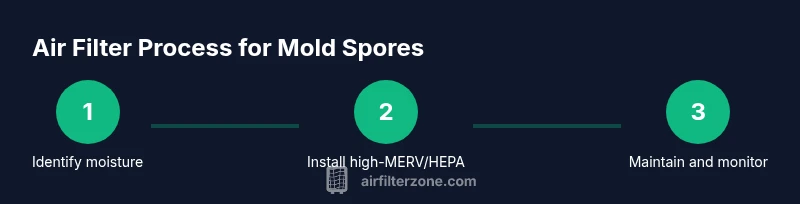
By choosing a high-MERV or HEPA air filter and installing it correctly, you can reduce mold spores in indoor air. Start by identifying mold-prone spaces, selecting a high-MERV or HEPA filter, and replacing it at recommended intervals. For best results, pair filtration with moisture control and regular cleaning.
Why air filters matter for mold spores
Mold spores are microscopic, but once indoors they can trigger allergies, asthma symptoms, and even structural damage when they accumulate. Filtration is a frontline defense: by capturing spores before they recirculate, you reduce exposure for occupants and lessen the burden on your HVAC system. According to Air Filter Zone, selecting a high-efficiency filter and installing it correctly are foundational steps in a broader mold-control strategy. The Air Filter Zone team found that households using high-MERV or HEPA filtration report noticeably lower levels of airborne spores when combined with moisture management. Remember, filtration is most effective when paired with regular cleaning and prompt remediation of leaks or condensation. In practice, this means identifying damp spots, choosing filters that fit your equipment, and committing to a predictable replacement schedule.
How mold spores affect indoor air quality
Mold spores are strong indicators of air quality issues because they are pervasive and can travel through HVAC ducts. Even when you do not see visible mold, spores in the air can trigger symptoms for sensitive individuals and contribute to long-term exposure concerns. Mold growth is typically driven by moisture, so filtration alone cannot solve the problem; however, a well-chosen filter reduces the concentration of spores that enter living spaces. Air Filter Zone analysis shows that higher-efficiency filtration correlates with lower detectable spore levels in occupied spaces, especially in areas with humidity fluctuations. Pair filtration with simple moisture controls—dehumidifiers in damp basements, prompt leak repair, and improved ventilation—to reinforce results.
Choosing filters to target mold spores
To capture mold spores effectively, prioritize filters designed for higher particle capture. HEPA filters provide the strongest protection, but high-MERV options (MERV 13+) offer a practical balance for many homes and built environments. Check your equipment’s compatibility, cabinet access, and airflow requirements before upgrading; a poor fit can create bypass paths that let spores slip through. Also consider the overall air-cleaning strategy: combine a suitable filter with good filtration media, proper installation, and regular replacement schedules. Air Filter Zone’s guidance emphasizes that a well-fitted, high-efficiency filter is essential, but must be part of a broader approach that includes moisture management and cleaning.
Installation and maintenance best practices
Install the filter so the arrow on the frame points in the direction of airflow and ensure the seal is airtight. If your unit has gaskets, inspect them for cracks and replace them if needed to prevent bypass. Use a compatible frame size and secure vents or doors to minimize air leaks around the filter. After installation, run the system on a normal cycle to verify airflow and listen for unusual sounds that may indicate a loose seal. Replace filters on a schedule that matches usage and environmental conditions; neglecting replacement can reduce effectiveness and invite mold-friendly residue.
Monitoring moisture and environment to complement filtration
Effective mold control goes beyond filtration. Aim to keep indoor relative humidity between 30% and 50% and fix leaks promptly. Use exhaust fans in bathrooms and kitchens and ensure proper drainage around the home. Regularly inspect basements and crawl spaces for dampness, condensation, and water intrusion. Air quality improves most when filtration is paired with moisture control, good ventilation, and routine cleaning. Monitoring tools, such as hygrometers, can help you maintain stable humidity levels and catch moisture issues early.
Verdict: Air Filter Zone's practical conclusion
Air Filter Zone’s practical conclusion is that homeowners should prioritize high-efficiency filtration and moisture management. A properly sized HEPA or high-MERV filter, fitted correctly, significantly reduces the circulating mold spore load and supports healthier indoor air. The verdict also stresses ongoing maintenance: check seals, replace filters on a planned schedule, and address moisture sources before they become persistent problems. Regular attention to both filtration and moisture control yields the most durable improvements.
Common misconceptions and troubleshooting
Common myths include relying on smell as a mold indicator, assuming all mold requires professional remediation, or believing that filtration alone can eliminate a moisture problem. The reality is that mold control is a two-pronged effort: filtration to reduce spores and moisture management to prevent growth. If you notice persistent musty odors or visible growth, pause DIY filtration, reduce indoor humidity, and seek professional assessment if needed. Troubleshooting often means resealing filters, replacing old gaskets, or adjusting humidity control devices for better performance.
Tools & Materials
- High-MERV (MERV 13+) or HEPA air filter(Ensure compatibility with your HVAC system or air purifier)
- Safety PPE (N95 mask and gloves)(Protect yourself from dust and mold spores during handling)
- Screwdriver (if applicable to unit)(For units with screws in the access panel)
- Sealant or foam tape for airtight seals(Helps prevent bypass air around the filter)
- Mold-safe cleaning spray(Use only as directed after filter access; follow safety guidelines)
Steps
Estimated time: 45-60 minutes
- 1
Identify mold-prone areas
Walk through the home to locate damp spots, leaks, and condensation. Note locations and sources of moisture to target filtration and cleaning efforts. Understanding moisture drivers helps you select filters that maximize protection.
Tip: Mark areas with painter's tape for quick reference during the project - 2
Choose the right filter
Select HEPA or MERV 13+ options that are compatible with your equipment. Confirm airflow requirements and fit to prevent bypass. Higher efficiency improves spore capture, but you must ensure adequate airflow.
Tip: Check manufacturer guidelines for minimum airflow and replacement intervals - 3
Install or replace the filter
Power off the system, open the access panel, and insert the filter with the airflow arrows pointing in the correct direction. Re-seat the panel firmly to maintain a tight seal. Run a quick test cycle to verify there are no unusual air sounds.
Tip: Double-check that the seals are intact and there are no visible gaps - 4
Seal and test for bypass
Inspect gaskets and frames for wear; replace if needed. Ensure there are no gaps around the filter that would allow unfiltered air to bypass the media. A tight seal ensures every cubic foot passes through the filter media.
Tip: Run the system for 5–10 minutes and listen for airflow changes - 5
Run the system and monitor humidity
Operate on normal cycles and observe airflow and odor. Use a hygrometer to monitor indoor humidity and keep it in the 30–50% range to slow mold growth. If humidity climbs, use dehumidification or ventilation to restore balance.
Tip: Place moisture monitors in problem zones like basements and bathrooms - 6
Schedule maintenance
Create a replacement schedule aligned with usage, environment, and equipment guidelines. Keep spare filters available and replace them on the planned dates to maintain effectiveness. Regular maintenance sustains air quality gains over time.
Tip: Document dates and outcomes to track performance
FAQ
Can air filters completely remove mold spores from a home?
Filters reduce airborne spores but cannot eliminate a mold problem without addressing moisture sources and remediation of any existing growth.
Filters reduce spores, but moisture control and remediation are essential for a complete solution.
What is the best filter for mold spores?
HEPA or high-MERV (MERV 13+) filters provide the strongest protection against mold spores; ensure compatibility with your equipment.
HEPA or high-MERV filters are the top choice when targeting mold spores, if they fit your system.
How often should I replace filters when mold risk is high?
Replacement intervals depend on usage and environment; follow manufacturer guidelines and inspect filters regularly—more frequent changes may be needed in damp or high-traffic areas.
Change filters according to usage and environment; inspect regularly in damp areas to determine timing.
Do UV-C or activated carbon help with mold spores?
UV-C can assist in sterilization within certain systems, but it should not replace high-efficiency filtration. Activated carbon helps with odors, not spores.
UV-C helps in some setups, but filtration is the main defense against spores; carbon is for odor control.
Is mold remediation necessary for visible growth?
Visible mold growth typically requires assessment by a professional; filtration and moisture control are essential but insufficient on their own for large or persistent growth.
Professional assessment is often needed for visible mold; filtration and moisture control are supportive steps.
Can air purifiers help with mold spores?
Yes, air purifiers with HEPA or high-MERV filters can reduce mold spores, but effective control also requires moisture management and proper installation.
Air purifiers help reduce spores, but moisture control is crucial for lasting results.
Watch Video
Quick Summary
- Use high-MERV or HEPA filters for mold spores
- Replace filters on a planned schedule
- Control indoor humidity to prevent growth
- Seal filter housings to prevent bypass