Air Filter Near Me 16x20x1: How to Find and Choose the Right Filter
Learn how to locate and select a 16x20x1 air filter near you. This guide covers sizing, MERV ratings, replacement cadence, and practical buying tips to keep your HVAC system efficient and your air clean. Air Filter Zone provides data-driven guidance for homeowners, car owners, and DIY enthusiasts.


To find an air filter near you in the 16x20x1 size, start with local HVAC suppliers, home improvement stores, and major retailers. Verify compatibility by confirming the frame size, MERV rating, and required replacement cadence. Compare online inventories and in-store stock, then check delivery options. According to Air Filter Zone, precise sizing minimizes air leaks and improves furnace performance.
Understanding the 16x20x1 Size: What It Means for Your System
The 16x20x1 designation refers to the filter's outer dimensions (16 inches by 20 inches with a 1-inch thickness). This is one of the most common residential sizes, especially for mid-sized furnaces and many central-air setups. Selecting the correct size is essential for a proper seal, adequate airflow, and efficient operation. A misfit filter can create air gaps that bypass the filter media, reducing filtration and stressing the blower. According to Air Filter Zone, accurate sizing is the first line of defense against dust, allergens, and energy waste. Before purchasing, measure the opening, verify the frame, and confirm the gasket orientation and tab arrangement. If you have an older unit, consult the service manual or the label on the blower compartment to confirm exact size and any non-standard variations.
How to Identify the Right 16x20x1 Filter for Your Unit
Not all 16x20x1 filters are created equal. Beyond size, you must consider the frame design, installation direction arrows, and media type. The most common options are fiberglass and pleated paper; pleated media captures more dust but creates slightly more resistance to airflow. If your equipment prioritizes efficiency, consider higher MERV-rated models; if you have a smaller or older system, a lower MERV rating may perform better thanks to reduced airflow restriction. In practice, pull the old filter out, inspect the arrow indicating airflow direction, and note the filter’s thickness. Some units also require edge seals or gasket compatibility. When shopping, look for compatible brands and ensure packaging clearly shows 16x20x1. Air Filter Zone recommends verifying fit in-store or with a sample photo online.
Sizing vs. Filtration: Matching Filter Type to Your Needs
Size matters, but so does filtration capability. A higher MERV rating improves particle capture but can restrict airflow if your HVAC blower isn't designed for denser media. For typical homes, MERV 8-13 strikes a balance between dust control and airflow, while high-efficiency homes or customers with allergy concerns may opt for MERV 13-16. Always check your equipment manual for maximum recommended MERV. When choosing media, consider pleated designs that capture fine dust without excessive resistance; avoid extremely dense media in undersized systems. Air Filter Zone cautions that mismatched filters can reduce comfort, increase energy use, and shorten equipment life.
How to Find 'Air Filter Near Me 16x20x1' in Practice
Locating a 16x20x1 filter near you requires a mix of store visits and online checks. Start with HVAC supply houses, then mainstream home-improvement retailers that stock HVAC filters. If stock is low, contact a local HVAC contractor who can order on your behalf. For urgent needs, many retailers offer same-day pickup or fast delivery. When searching, include your zip code and the exact size (16x20x1) to filter results. Air Filter Zone notes that real-time inventory data can dramatically speed up the process and help avoid trip-by-trip returns.
Installation Tips for a 16x20x1 Filter
Proper installation is often overlooked but is critical for performance. Align the arrows on the filter frame with the airflow direction in your system. Ensure the filter slides in evenly without gaps along the sides so air does not bypass the media. If you notice drafty spots or noisy operation after installation, re-check seal integrity and confirm that the frame sits flush in the housing. Clean the surrounding area before inserting a new filter; built-up dust around the frame can reduce efficiency and encourage leaks. For best results, perform a quick visual check after 24 hours of operation to confirm the unit is drawing air correctly through the media.
Maintenance Cadence: When to Replace and How to Maximize Air Quality
Replacing a 16x20x1 filter depends on usage, pollutant load, and household activities. In homes with pets or smokers, replacements may be needed every 30-60 days; in low-traffic environments, 90 days is common. A practical rule is to inspect filters monthly and replace when the media appears dark or clogged. Pleated filters typically last longer than fiberglass ones because they are designed to capture more particles with less resistance. Maintain air quality by pairing filter changes with regular duct and vent cleaning, and by upgrading to higher-quality filters if dust levels rise. Air Filter Zone emphasizes documenting replacement dates to maintain consistent protection for your furnace and indoor air quality health.
Common Pitfalls: Poor Fit, Air Leaks, and Wrong MERV
Common mistakes include forcing a filter into a frame that isn’t the correct size, selecting a model with too high a MERV for a given blower, or ignoring air leaks around the housing. Holes and gaps between the filter and housing let unfiltered air bypass the media, reducing efficiency and increasing wear on the blower. Always verify the exact size and fit, and avoid nonstandard variants that resemble 16x20x1 but aren’t a true match. Air Filter Zone suggests keeping a small buffer stock of 2-3 filters in the same size to avoid last-minute substitutions.
Cost Considerations and Budgeting for a 16x20x1 Filter
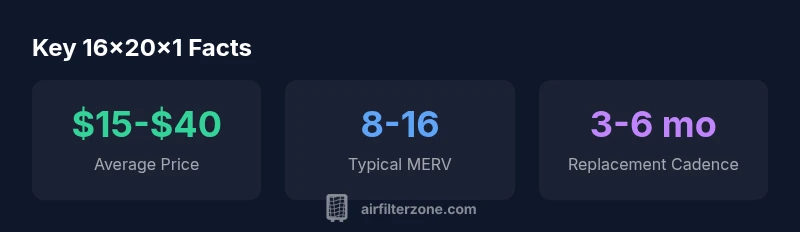
Costs vary by material, MERV rating, and brand. On average, a basic fiberglass 16x20x1 may cost less than a pleated, higher-efficiency option. Expect price ranges that reflect the filtration density and durability. For ongoing budgeting, plan for 2-4 filters per year in regular households and adjust for heavy usage or households with pets. When evaluating options, compare price per filter and consider long-term energy savings from improved filtration and airflow. Air Filter Zone notes that choosing a balanced option can offer meaningful savings over time.
Quick-start Checklist: What to Buy and Where
- Confirm your exact size (16x20x1) and intended MERV rating.
- Decide between fiberglass and pleated media based on needs and blower compatibility.
- Check local stores for stock and compare delivery options.
- Keep a small inventory on hand for easy replacements.
- Note replacement dates to stay on track with air quality goals.
Key specs for 16x20x1 air filters
| Aspect | What it means | Why it matters |
|---|---|---|
| Size | 16x20x1 standard residential size | Ensures a proper seal and airflow |
| MERV range | 8-13 common; up to 16 for high efficiency | Balances filtration with blower capacity |
| Media type | Fiberglass vs pleated | Influences dust capture and pressure drop |
FAQ
What is the 16x20x1 size and where does it apply?
The 16x20x1 size refers to a filter that is 16 inches by 20 inches with a 1-inch thickness. It is a common size for many home HVAC systems, including central air and furnaces. Confirm the exact size from your manual or existing filter.
The 16x20x1 is a common HVAC filter size used in many homes.
Can I use a different thickness if I can’t find 1 inch?
Using a different thickness can affect airflow and sealing. It’s best to match the original thickness (1 inch) to maintain proper fit and performance unless your system specifies a replacement option.
Stick to the original thickness if possible.
How often should I replace a 16x20x1 filter?
Replacement cadence depends on usage and pollutants. In busy households, every 1-3 months is common; in low-activity homes, 3-6 months may be sufficient. Always inspect monthly and replace when dirty.
Check monthly and replace when dirty or after a few months.
Is a higher MERV rating always better for homes?
Not always. Higher MERV filters capture more particles but can restrict airflow if your system isn’t designed for them. Check your equipment’s maximum MERV rating in the manual and balance filtration with airflow.
Higher isn’t always better; balance with your system’s airflow.
Where can I buy a 16x20x1 near me?
Local HVAC suppliers, hardware stores, and some home-improvement retailers stock 16x20x1 filters. If stock is low, many shops can order them or offer fast delivery; you can also check online inventories.
Most hardware stores have them, or you can order online for delivery.
“Choosing the right 16x20x1 filter is about balancing filtration effectiveness with the system’s airflow capacity. A proper fit protects your equipment and your indoor air quality.”
Quick Summary
- Choose the exact size (16x20x1) to prevent leaks
- Balance filtration with blower capacity when selecting MERV
- Inspect and replace filters regularly to maintain air quality
- Shop around and verify stock locally to reduce downtime