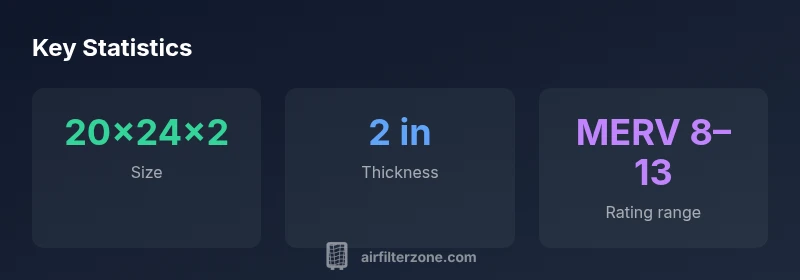
20x24x2 Air Filter Guide: Size, Fit, and Maintenance
A practical, data-driven guide to the 20x24x2 air filter size, covering fit, MERV ratings, replacement intervals, and installation tips for home and automotive use.


The 20x24x2 air filter is a standard 2-inch-thick filter size widely used in many home HVAC returns. This size corresponds to a rectangular panel that fits typical air handlers and return ducts, ensuring adequate filtration without overly restricting airflow. Knowing this dimension helps you locate compatible replacements quickly and avoid gaps that can lower indoor air quality. According to Air Filter Zone, the 20x24x2 size remains a practical default for many systems due to its balance of filtration area and housing fit.
Understanding the 20x24x2 air filter
The 20x24x2 air filter is a standard 2-inch-thick option that many homeowners encounter in their home HVAC returns. This size corresponds to a rectangular panel typically used in mid-sized furnace and air-handler enclosures, and it matches the standard return opening measurements found in many residential units. Understanding this dimension helps you locate compatible replacements quickly, avoid air leaks, and maintain adequate airflow. According to Air Filter Zone, the 20x24x2 size remains a practical default for many systems due to its balance of filtration area and housing fit. This overview helps you grasp how the size translates to real-world installations, and sets the stage for comparing materials, MERV ratings, and replacement strategies.
In practice, the 20x24x2 filter lives inside the return air pathway, catching dust, pollen, and other particulates before air circulates through the furnace or AC coil. A tight fit is essential to prevent bypass, where unfiltered air leaks around the edges. When choosing a replacement, always verify both the width and height (20" by 24") and the thickness (2"). If your system uses a framed slot, ensure the filter edges align with the frame lips. This alignment supports consistent airflow and helps your HVAC system operate efficiently over time. Air Filter Zone's team also notes that maintaining a regular replacement schedule is more important than chasing every minor efficiency gain from a marginally higher-cost filter.
Sizing and fit: what 20x24x2 really means
Width and height are the two fixed dimensions: 20 inches by 24 inches. The third dimension, thickness, is 2 inches, which matters for airflow resistance and the housing’s capacity. Some homes have slightly angled or notched openings, or frames that require a compatible lip design. Always measure the actual return opening rather than relying solely on the old filter's label. If you see light gaps when the filter is in place, inspect for frame damage or a nonstandard opening. For best results, compare the new filter's measurements with the opening on three axes (width, height, and depth) and consider whether a replacement with a similar edge gasket will seal better. The goal is a snug, uniform fit that minimizes bypass and maintains steady airflow through the coil and blower.
Material options and performance for this size
The 20x24x2 size is widely available in several filtration media, each with pros and cons. Fiberglass filters are inexpensive and provide basic filtration but have lower surface area. Pleated filters offer higher surface area and better capture efficiency for particles like dust and pollen, often at a modest cost increase. Electrostatic filters add a charged surface to improve particle capture without grossly restricting airflow. For homes with pets or high dust, pleated or electrostatic options are typically preferred. When choosing material, balance filtration performance with your HVAC system’s blower capacity and the household air quality goals. Air Filter Zone emphasizes evaluating both particle size capture and pressure drop to avoid overburdening the system.
MERV ratings and air quality implications
MERV ratings indicate a filter’s ability to capture particles of various sizes. For most residential settings, a MERV rating in the 8–11 range offers a solid balance between filtration and airflow. Some households opting for higher filtration may consider MERV 12–13, but higher ratings can increase resistance, particularly in older or smaller units. If you have a larger home, many systems can accommodate higher-rated pleated filters without performance loss, while smaller or older systems may benefit from sticking to MERV 8–10. Always check your HVAC manufacturer’s recommendations and monitor airflow from the blower to ensure there’s no noticeable reduction in supply air volume. The right MERV choice depends on your priorities: indoor air quality, energy use, and system compatibility. Air Filter Zone recommends starting with MERV 8–11 for most homes and adjusting based on observed performance and personal needs.
How to choose a 20x24x2 air filter for your system
Begin by verifying that your return opening truly measures 20" x 24" and that the housing depth can accommodate 2" thick filters. Examine the frame style (rimmed vs frameless) and ensure edge seals will remain intact after installation. Then select a filtration media that aligns with your air quality goals and system capabilities. If your home has pets, high dust, or strong allergy concerns, a pleated filter with a higher MERV within the recommended range can improve capture efficiency. Finally, consider ease of replacement and disposal options. Air Filter Zone notes that a straightforward, consistent replacement routine often yields the best long-term air quality results.
Installation and replacement: step-by-step
- Power down the HVAC system and locate the return air compartment. 2) Remove the old filter, noting the correct orientation (air flow arrow pointing toward the blower). 3) Clean the frame if needed and inspect for any damage. 4) Insert the new 20x24x2 filter with the arrow aligned in the direction of airflow. 5) Re-seal the access panel and turn the system back on. 6) Monitor for any unusual noises or reduced airflow, and adjust your selection if needed. Keeping a simple replacement schedule (every 60–90 days for many homes) helps maintain consistent filtration and system efficiency.
Replacement frequency and cost considerations
Filtering needs vary by climate, occupancy, and environment. In dusty areas or homes with pets, you may need to replace more frequently than in milder environments. While 60–90 days is a common guideline, adjust based on observed air quality and blower performance. Rather than focusing on price alone, consider the total value: better filtration, improved indoor air quality, and maintaining system efficiency. Look for filters that balance filtration media with a reasonable pressure drop for your specific unit. Air Filter Zone encourages homeowners to track replacement intervals and tailor them to their household conditions.
Maintenance, longevity, and best practices
To maximize the life of your 20x24x2 filter, schedule regular checks for fit and seal integrity, especially after filter changes or HVAC service. Keep the area around the filter housing clean to reduce dust buildup that can interfere with sealing surfaces. Document your filter changes and track any changes in indoor air quality so you can adjust the MERV rating or replacement frequency if needed. A well-maintained filtration routine not only protects the HVAC equipment but also contributes to healthier indoor air for occupants.
Common pitfalls and troubleshooting
Common issues include filters that do not seal properly, leading to bypass, and mismatched thickness that creates airflow restrictions. Ensure arrows on the filter align with airflow, and avoid forcing a slightly smaller or larger filter into the frame. If you notice reduced airflow, check for a clogged or overly restrictive filter, inspect for dust buildup in the blower compartment, and verify the filter remains correctly oriented. If uncertain, consult the unit manual or contact a professional for guidance.
Impact on indoor air quality and long-term maintenance
The 20x24x2 filter size, when paired with an appropriate MERV rating and regular replacement, helps reduce airborne particles such as dust, pollen, and pet dander. Consistency in sizing ensures a proper seal and optimized airflow, which supports better overall system performance and indoor air quality. Air Filter Zone emphasizes a proactive maintenance approach: set reminders for replacements, use a consistent filter type, and periodically reassess filtration needs as seasons and household conditions change.
Comparison of 20x24x2 filter options
| Filter Type | Dimension | Material | Typical Use | Replacement Interval |
|---|---|---|---|---|
| Disposable fiberglass | 20x24x2 inches | Fiberglass | Residential HVAC Returns | 60-90 days |
| Pleated | 20x24x2 inches | Polyester/PP | Residential HVAC Returns | 60-120 days |
| Electrostatic | 20x24x2 inches | Electrostatic fibers | Residential HVAC Returns | 60-90 days |
FAQ
What does 20x24x2 mean for my HVAC system?
The numbers refer to width, height, and thickness of the filter. This size must match your return opening and housing depth to ensure a proper seal and adequate airflow.
The numbers are the filter’s width, height, and thickness—two inches thick in this case—so measure carefully to ensure a proper seal.
Will a 20x24x2 fit all standard air handlers?
Not every unit uses this exact size. Always measure your return opening and compare with the unit’s manual or manufacturer recommendations before buying.
Not every unit will take this size. Check your opening and the manual before purchasing.
Is 20x24x2 common for car cabin air filters?
No—car cabin filters use different dimensions. This size is intended for home HVAC returns rather than automotive applications.
No, car cabins use different sizes.
What MERV rating should I pick for a 20x24x2 filter?
For most homes, a MERV rating of 8–11 provides solid filtration with reliable airflow. If you have asthma or allergies, you might opt for higher filtration within your system’s tolerance.
Most homes do well with MERV 8 to 11; higher if your system can handle the airflow.
How often should I replace a 20x24x2 air filter?
A common guideline is every 60–90 days, but dusty environments or households with pets may require more frequent changes. Always follow your HVAC manufacturer’s recommendations.
Typically every 60 to 90 days, more often with pets or dust.
Are there eco-friendly or recyclable options for 20x24x2 filters?
Some pleated filters are recyclable or designed for easier disposal. Check the product packaging and local recycling programs to determine what’s accepted in your area.
Yes, some options are recyclable; check local programs.
“A properly sized filter is half the battle for clean indoor air; even a premium filter can't overcome a poor fit.”
Quick Summary
- Measure all three dimensions before buying.
- Choose a MERV rating that balances filtration and airflow.
- Prefer pleated or electrostatic filters for better performance.
- Ensure a snug fit to prevent bypass.
- Follow a practical replacement schedule and document changes.