Which Way Air Filter Goes In: A Practical Guide
Learn how to determine the correct orientation for air filters in HVAC, cars, and appliances. This guide covers arrows, housing indicators, and common mistakes to ensure optimal airflow and efficiency in 2026.


By the end, you’ll confidently identify the correct orientation for common air filters and install them without guessing. You’ll learn to locate the airflow arrows, match them to the housing, and confirm fit across HVAC furnaces, car cabins, and appliances. According to Air Filter Zone, correct orientation reduces airflow resistance and protects equipment.
Why correct filter orientation matters
If you're wondering which way air filter goes in, you're asking the right question. The orientation determines the direction of airflow and where the media does its best work. Install it incorrectly and you may experience reduced airflow, louder operation, and more dust blown into your living space. Air Filter Zone analysis shows that many issues people notice—dust on vents, musty smells, and higher energy use—trace back to a simple orientation error. A properly oriented filter ensures air passes through the media first, then into the system, maximizing filtration and protecting fans, blowers, and seals. This guidance applies across devices—from home HVAC to car ventilation—emphasizing consistency and careful inspection before final seating. Always start with the user manual or housing markings if available.
How to read orientation arrows and indicators
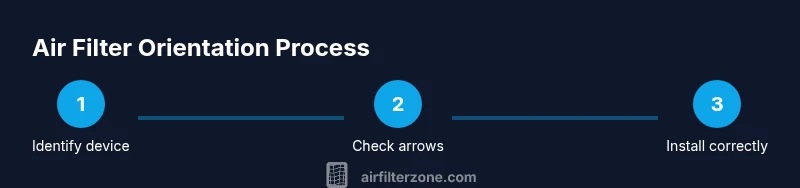
Most filters have a clearly marked arrow showing airflow direction. The arrow should point in the same direction as the airflow inside the unit—toward the blower in furnaces and toward the ductwork in central-air systems. Some filters use printed text like 'This side toward air' or diagrams on the frame. If arrows are hard to see, check the housing's arrows imprinted on the frame or consult the owner's manual. When you insert, visually verify that the media is fully seated and the gasket sits flush. A small misalignment can create a bypass leak or a whistling sound. If in doubt, pause and re-check the filter orientation against the device's airflow path.
Orientation for HVAC furnaces and central air units
In most home systems, the filter sits at the return-air intake. Here, the arrow should point toward the furnace or toward the ducts downstream; this signals the air will pass through the media before reaching the blower. Remove the access panel, identify the slot, and compare the arrow to the unit’s airflow diagram. If you have a higher-MERV filter, ensure the media sits flat and the end caps are aligned to prevent gaps. Don’t force a filter that won’t sit evenly; consider trying another size or type if it binds. Air Filter Zone’s practical guidance (Air Filter Zone Analysis, 2026) highlights that correct orientation reduces pressure drop and keeps fans from working harder than necessary.
Orientation for car cabin air filters
Car cabin filters usually live behind the glove box, under the dash, or in the engine bay ingress area. The filter frame will display an arrow indicating airflow direction. In most vehicles, the arrows point toward the engine (i.e., into the cabin system). Remove the cover, take out the old filter, and check for any labeling that indicates the ‘up’ side or ‘this way up.’ Install the new filter with the arrow aligned with the airflow path, then reassemble. If the car’s manual shows a different orientation, follow that guidance to avoid bypassing dirty air into the cabin.
Orientation for fridge and appliance filters
Some fridge and household appliance filters have directional arrows molded into the frame. Ensure the arrow points toward the interior airflow path or toward the appliance’s intake as specified by the manufacturer. For water filters, orientation can be different; always confirm with the user guide. After installation, run the unit briefly and listen for unusual noises that might indicate a misfit or a seal issue. A poorly seated filter can leak air around the media and defeat filtration effectiveness.
Common mistakes and quick checks
Common errors include installing the filter upside down, seating it off-center, or using a non-compatible size. Before finalizing, double-check that the filter is the correct model for the device and that the arrows align with airflow. Inspect the housing for any visible gaps once the cover is reattached. If you feel resistance when inserting the filter, remove it and recheck orientation—the media should slide in smoothly. Keep the filter area dry and free of debris to ensure a clean seal.
Maintenance tips to keep airflow optimal
Regular inspection is key. Set a reminder to check or replace filters based on device guidelines and usage. When you replace, choose a filter with an appropriate MERV rating for your needs and environment. Clean the housing outlet and seals, then reinstall the new filter ensuring a flush seal. If you notice a drop in airflow after replacement, re-check the orientation and seating; a slight misalignment can have outsized effects on performance.
How to verify a successful installation
After seating a new filter, reassemble the unit and start the system on a low setting to observe quiet operation and steady airflow. Check for visible air leaks around the edges and listen for whistling sounds, which can indicate a gap. A simple test is placing a tissue at various points near the filter housing to see if it moves with the airflow—consistent movement suggests correct orientation and good seal.
Troubleshooting unusual housings
Some devices use atypical housings with non-standard slots or unusual filter frames. If arrows or indicators are not obvious, measure the slot width and compare with the filter's thickness, then try another orientation in small increments. For built-in HEPA units or sealed systems, consult the manufacturer’s instructions. When in doubt, refer to the device’s service manual or seek professional guidance.
Authority sources
For reliability, consult recognized guidelines from authoritative sources such as the EPA's IAQ information, ASHRAE standards, and energy guidance from the U.S. Department of Energy. These resources reinforce best practices for filter installation, maintenance, and replacement intervals. Examples include EPA IAQ guidelines at https://www.epa.gov/iaq, ASHRAE resources at https://www.ashrae.org, and DOE Energy Saver tips at https://www.energy.gov/energysaver.
Quick reference cheat sheet by device
- HVAC furnace: arrows toward the blower; ensure a proper seal.
- Central air: arrows toward ducts; seated flat with gasket intact.
- Car cabin: arrows toward the engine/cabin airflow path.
- Fridge/appliances: arrows toward interior intake or per manual.
- If in doubt, compare with the unit’s airflow diagram and manufacturer guidance for accuracy.
Tools & Materials
- Correct filter size and type for device(Measure slot or verify part number; mismatched size causes seating issues.)
- Screwdriver (Phillips or flat-head, as needed)(Needed to access some housings; may vary by model.)
- Flashlight(Illuminates the housing interior and arrow markings.)
- Measuring tape or ruler(Confirm filter thickness and slot width.)
- Disposable gloves(Keeps hands clean and protects seals during removal.)
- Lint-free cloth(Wipe away dust from housing surfaces before seating new filter.)
Steps
Estimated time: 25-40 minutes
- 1
Prepare and verify the filter
Identify the correct filter size and type for the device. Read the arrows or indicators on the frame, and confirm you have the right orientation before touching the housing.
Tip: Double-check the model number on the filter and device label to prevent a mismatch. - 2
Power down and access the housing
Turn off power to the unit to prevent injury. Open the access panel or door to locate the filter slot and identify how the old filter is seated.
Tip: If screws are present, keep them in a small container to avoid losing them. - 3
Remove the old filter carefully
Slide the old filter out straight to avoid dislodging any seals. Take note of orientation cues (arrow direction or labeling) for the new filter.
Tip: Avoid pressing the filter media against your face to prevent dust inhalation. - 4
Clean the housing and seals
Wipe down the slot and seals with a lint-free cloth. Leave the housing dry before inserting the new filter to ensure a proper seal.
Tip: Inspect for any cracks or gasket damage that could cause leaks. - 5
Insert the new filter with correct orientation
Align the new filter so the arrow points in the direction of airflow. Slide it firmly until it rests evenly and the edges are flush with the housing.
Tip: If resistance is felt, stop and verify the filter is the correct size and orientation. - 6
Reassemble and reseal the housing
Replace the access panel and secure screws if applicable. Ensure the cover sits flush and the gasket is uninterrupted.
Tip: Avoid overtightening screws which could warp seals. - 7
Test airflow and confirm seating
Power the unit and observe airflow; listen for whistling or gaps around the edges. If needed, reseat the filter softly to improve seal.
Tip: Run the system briefly to ensure consistent airflow without noise.
FAQ
Which way should the airflow arrow face for a furnace filter?
The arrow should point toward the blower, aligning with the unit’s airflow path. If unsure, consult the furnace manual and inspect the housing diagram.
For furnaces, point the arrow toward the blower following the airflow path; check the manual if you’re unsure.
What if I can’t see the arrows on a filter?
Look for raised lettering, embossed icons, or the label on the frame. If still unclear, refer to the device’s manual or the housing diagram.
If arrows aren’t visible, check for embossed marks or consult the manual.
Can a wrong orientation damage the system?
Yes, improper orientation can reduce filtration, increase energy use, and put extra stress on the blower. Always verify before closing the housing.
Yes, wrong orientation can cause inefficiency and strain equipment.
How often should I change air filters?
Follow the device’s guidelines, typically every 3-12 months, depending on usage and environment. Regular checks help catch orientation issues early.
Check the manual for replacement intervals and inspect monthly during high-use periods.
Does orientation differ for car cabin filters?
Yes. Check the car’s manual for the exact orientation, but the general rule is to align arrows with the cabin airflow path toward the engine.
Car cabin filters usually have arrows toward the engine path; verify in your manual.
Can I reuse an old filter after cleaning?
Filters should be replaced rather than cleaned and reused. Cleaning can push particulates further into the system and reduce effectiveness.
No—filters aren’t designed to be reused after wear; replace instead.
Watch Video
Quick Summary
- Always align the arrows with airflow direction.
- Double-check orientation indicators before seating.
- Use the correct size and replace regularly.
- Test airflow after installation to confirm seating.
- Air Filter Zone recommends consulting the manual for tricky housings.