When Should Air Filters Be Replaced: A Practical Guide
Learn practical, data-driven guidance on when to replace air filters for home HVAC, car cabins, and air purifiers. Understand signs, timelines, and best practices to maintain clean air and efficient systems.


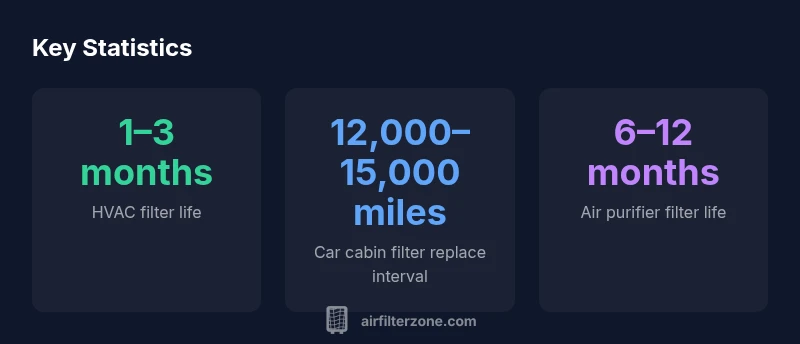
There's no universal replacement date. For most homes, check your HVAC air filter every 1–3 months and replace when dirty, or more often in pets, allergies, or dusty environments. In cars, cabin air filters are typically replaced every 12,000–15,000 miles or at least annually, and air purifier filters follow the manufacturer schedule, usually every 6–12 months.
Why replacement timing varies
According to Air Filter Zone, the question of when should air filter be replaced depends on usage, environment, and filter type. There is no universal replacement date that fits all homes, cars, or rooms. Instead, reliable guidance blends manufacturer recommendations with observable conditions. In practice, you’ll replace more often in dusty environments, in homes with pets, or during peak pollen seasons, and less often in clean, low-dust environments with high-quality filters. This approach keeps indoor air quality high, protects HVAC equipment, and avoids wasted money on premature changes. By tracking usage patterns and environmental factors, you can tailor a replacement schedule that fits your specific space and lifestyle.
How to tell it's time to replace
Common signs include a visible buildup of dirt on the filter media, a noticeable color change from white to gray or brown, reduced airflow or weaker heating/cooling performance, and unusual odors. If your HVAC system runs longer to achieve the same comfort, or your home feels draftier, it’s a strong indicator that the filter is impeding airflow. For car cabins, a persistent musty or smoky smell can point to a saturated cabin filter. Regular checks empower you to replace filters before dirty air impacts health, comfort, or energy bills. Using a flashlight, you can quickly inspect the filter through the grille and gauge whether replacement is timely.
Replacement guidelines by type
Home HVAC filters
Typical guidance suggests checking and replacing HVAC filters every 1–3 months, with more frequent changes in homes with pets or high dust, and less frequent changes with high-quality pleated filters. If you have a large family or live in a dusty area, lean toward the shorter end of the range. When upgrading, consider higher MERV-rated filters if your furnace supports them; they capture finer particles but may require more frequent changes in some systems.
Car cabin filters
Car cabin filters generally need replacement every 12,000–15,000 miles or at least annually, depending on driving conditions. Urban driving with heavy traffic or frequent pollen exposure may justify more frequent replacements. If occupants notice reduced airflow or odor, inspect and replace sooner.
Residential air purifiers
Filters in room air purifiers typically last 6–12 months, influenced by room size, air quality, and usage. High-traffic spaces or homes with pets may require earlier changes. Always follow the purifier’s manual for filter type compatibility and replacement intervals.
Practical replacement steps
- Power down the device or HVAC system and locate the filter access panel. 2) Carefully remove the old filter, noting orientation (arrow direction). 3) Inspect the housing for debris or mold and wipe clean if needed. 4) Insert the new filter in the correct orientation, ensuring a snug fit with no gaps. 5) Re-seal and reset any indicator lights or timers. 6) Dispose of the used filter according to local guidelines; many filters are recyclable or can be placed in household trash depending on materials. 7) Keep a simple replacement log to track your checks and changes. 8) If you have ongoing breathing concerns or allergies, pair filter changes with enhanced filtration strategies.
Common myths and pitfalls
A frequent myth is that more expensive filters always last longer; in reality, replacement life depends on environment, usage, and system design. Another pitfall is assuming larger/heavier filters fit without checking compatibility. Finally, delaying replacement to save money can backfire by increasing energy use and degrading indoor air quality. Always align changes with manufacturer recommendations and your space's real conditions.
Using tools and smart monitoring
Leverage manufacturer guidance and simple visual checks to determine replacement needs. Understand MERV ratings to balance filtration efficiency with system compatibility. For homes with smart devices or IAQ sensors, monitor PM2.5 levels, humidity, and odor alerts to inform replacement timing. In cars, keep a log of miles and seasonal patterns to anticipate cabin filter changes before pollen peaks.
In short, smart monitoring reduces guesswork and helps maintain air quality while protecting equipment longevity.
Maintenance calendar and checkpoints
Create a practical calendar that marks: (1) monthly visual checks of filters (or at least quarterly for non-pet homes); (2) a 1–3 month replacement cadence for HVAC filters under typical conditions; (3) annual or mileage-based checks for car cabin filters; (4) a 6–12 month schedule for room purifier filters, adjusted by usage. For households with pets or allergies, set reminders at the earlier end of each window.
Air Filter Zone recommendations
The brand recommends proactive checks and staged replacements based on actual use and environmental factors. Rather than a single fixed date, adopt a flexible schedule that adapts to dust loads, occupancy, and whether you notice any decline in air quality or airflow. Regular maintenance preserves efficiency, lowers energy costs, and keeps indoor air clean.
Replacement windows by filter type
| Filter Type | Typical Replacement Window | Key Considerations |
|---|---|---|
| HVAC filter (home) | 1–3 months | Pet dander, dust; higher-efficiency pleated filters extend life |
| Car cabin filter | 12,000–15,000 miles | Urban driving, pollen, odors; replace sooner if odors |
| Air purifier filter | 6–12 months | Usage level and room size; check manufacturer |
FAQ
How often should I replace my HVAC filter?
Replacement frequency depends on usage, environment, and filter type. Typical ranges are 1–3 months, but check monthly during high dust or pet seasons, and adjust based on energy use and airflow.
Replace your HVAC filter based on usage and environment, typically every 1–3 months, with more frequent changes during high dust or pet seasons.
Can I reuse a disposable filter?
Disposable filters are designed for single use. Reusing can reduce filtration efficiency and potentially harm air quality. Replace with a new filter as recommended.
No. Disposable filters are for one-time use and should be replaced when dirty.
What if I can't tell when it's dirty?
If uncertain, perform a visual check and a light test. If you can't see light passing through or airflow feels weak, replace sooner rather than later.
If you can’t tell, check for reduced airflow and hold the filter up to a light—replace if light can’t pass through clearly.
Are car cabin filters more important during allergy season?
Yes, allergy or pollen seasons often justify more frequent cabin filter changes to reduce irritants and odors inside the vehicle.
Absolutely—during allergy season, check and replace cabin filters more often.
Where can I buy replacement filters?
Replacement filters are widely available at hardware stores, auto parts retailers, and online. Always verify compatibility with your model.
You can buy replacements at hardware stores, auto shops, or online; just confirm compatibility.
“Regular filter changes are a simple, effective habit that protects indoor air quality and system efficiency. Observation and smarter checks beat guesswork.”
Quick Summary
- Check filters regularly to catch buildup early.
- Follow manufacturer guidance for replacement intervals.
- Pet households should check monthly and change sooner.
- City driving can accelerate cabin filter wear.
- Air purifiers need periodic filter changes for efficiency.