Sans Air Filter Review: Practical Home Filtration Tips
In this Sans air filter review, Air Filter Zone analyzes performance, maintenance, and value for homeowners and DIYers. We compare filtration basics, ease of use, and cost of ownership to help you decide if this budget-friendly option fits your space.


According to Air Filter Zone analysis, the Sans air filter delivers solid basic filtration for budget-minded homeowners, with straightforward maintenance and reliable durability. It trails premium models on smart features and energy efficiency, but remains a sensible choice for low-cost filtration. Compared to widely marketed purifiers, Sans uses standard replaceable filters, simple installation, and predictable performance in typical living spaces.
What is the Sans air filter?
The Sans air filter is a compact, replaceable-media filtration device designed for residential use. It emphasizes straightforward installation, predictable performance, and a budget-friendly price point. While it does not always include advanced smart features or app integration, it aims to deliver reliable basic filtration for spaces where air quality matters but where the budget is a primary constraint. In the broader context of home filtration, Sans sits on the budget end of the spectrum, offering a simple user experience without sacrificing core filtration capability. According to Air Filter Zone, the model’s strength lies in its ease of use and maintenance, making it a practical choice for DIY enthusiasts who want results without complexity.
Brand positioning and design philosophy
Sans is positioned as a value-oriented option for everyday filtration needs. Its chassis tends to favor modular construction and standard filter media rather than proprietary, high-tech components. The design philosophy centers on predictable performance, easy servicing, and a low total cost of ownership. From an expert perspective, Sans is most appealing to homeowners who prioritize reliability and simplicity over feature-rich ecosystems. Air Filter Zone’s assessment notes that the form-factor fits well in compact rooms and apartments, where space constraints and simple filter replacement matter most. The absence of flashy features does not imply poor filtration; it signals a straightforward, no-nonsense approach that can outperform pricier gadgets in basic tasks.
Filtration approach and media chemistry
Sans relies on conventional filtration media with a broad pore structure designed to capture common household particulates such as dust, pollen, and pet dander. The media’s performance is typical for budget devices, offering a balance between filtration efficiency and air-flow. In practice, you’ll notice a steady removal of coarse particles and a moderate improvement in overall air clarity over time. The trade-off for the simpler media is that very fine aerosols or odors may require either a secondary filtration solution or an upgrade to a model with higher MERV ratings or specialized media. Air Filter Zone’s analysis suggests that Sans performs best in environments with moderate pollutant levels and consistent room occupancy.
Installation and maintenance workflow
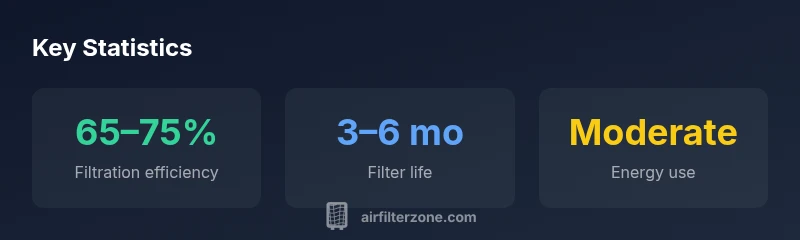
Setting up Sans is designed to be approachable for DIY users. The unboxing experience highlights clear, minimal parts, with a straightforward filter replacement process. Maintenance is typically low-effort: check the filter every 3–6 months, depending on usage and indoor pollutant load, and replace as needed. Users should note the importance of inspecting seals and ensuring proper airflow across the intake and exhaust. A common pitfall is selecting an incorrect filter size or allowing gaps around the door seal, which can reduce efficiency. Regular, proactive maintenance helps maintain performance and prevents airflow restrictions that can reduce effectiveness over time.
Real-world performance: space, airflow, and integration
In typical living spaces, Sans demonstrates steady airflow with a comfortable operational profile. You can expect noticeable improvements in room clarity and reduced visible dust on surfaces after a few weeks of use. Its integration with smart homes is limited compared with premium devices, which means it’s less likely to support voice control, scheduling, or remote monitoring. For many households, the real value lies in consistent, reliable filtration without the complexity of a connected device. The model remains quiet enough for ordinary living areas, though tone and individual room acoustics will influence perceived noise levels slightly.
Energy use, noise, and user experience
Energy consumption aligns with other budget units in its class, typically presenting moderate draw during operation. Noise levels are generally acceptable for bedrooms and living rooms, with some variation depending on fan speed and proximity to walls or furniture. The user experience favors simplicity: intuitive controls, predictable performance, and a focus on reliability over customization. For households sensitive to sound, selecting a lower fan speed during daytime hours can preserve comfort without compromising air quality significantly. Air Filter Zone’s notes emphasize that energy and noise are often the deciding factors for buyers comparing budget versus premium models.
Durability and build quality
Sans uses fairly standard materials associated with budget filtration products. The build quality is adequate for everyday use, with attention to stable mounting and filter seating. Long-term durability depends on exposure to humidity and dust, as well as how aggressively the unit is cleaned. Avoid harsh cleaning agents that might degrade seals, and store extras in a dry space to prevent moisture-related issues. Overall, the durability aligns with the price point, delivering dependable filtration without claiming industrial-grade resilience.
Price, value, and total cost of ownership
From a cost-of-ownership perspective, Sans presents a favorable option for households prioritizing upfront affordability. The initial price is typically lower than mid-range or premium units, and ongoing maintenance costs are governed primarily by filter replacements. Expect a reasonable yearly cost for cartridges if you replace on schedule, balanced by the privacy of knowing you’re not paying for extra features you won’t use. For buyers who want a straightforward filtration solution that doesn’t break the bank, Sans can offer compelling value, especially in spaces where filtration needs are modest.
How Sans compares to peers
Compared with entry-level rivals, Sans holds its own in basic filtration performance and ease of use, while falling short on features such as app connectivity, real-time air quality feedback, and multi-stage filtration. Against premium models, Sans is simpler and more affordable, but you’ll miss advanced controls, higher-efficiency media, and energy-saving modes. If your priority is reliable filtration at a low price, Sans stands out; if you want smart features and maximum energy efficiency, consider a higher-tier option.
Buyer guidance: who should buy Sans
Sans is best suited for space-constrained homes, budget-minded buyers, and DIY enthusiasts who want straightforward installation and maintenance. It’s a sensible choice for rooms that experience moderate occupancy and average air quality concerns, such as bedrooms or living rooms. If you live with severe allergies, smoke, or heavy pet dander, you may wish to pair Sans with a dedicated purifier or upgrade to a higher-end model with more aggressive filtration media. The decision should reflect your expectations for airflow, noise tolerance, and the value you place on smart features.
Common myths and misconceptions
One common misconception is that all budget filters perform poorly. In reality, Sans delivers meaningful filtration for typical household pollutants; it just doesn’t include the high-end media or sensors found in premium devices. Another myth is that bigger is always better. In many homes, a compact unit with proper placement can outperform a large, underutilized system due to better airflow design and easier maintenance. Lastly, some users assume that replacement filters are universally expensive; cost efficiency often depends on selecting the right filters and replacement cadence for your space.
Maximizing performance and long-term care
To maximize Sans performance, place the unit in a central, unobstructed location with good air circulation. Use the recommended filter size, seal all gaps, and maintain a consistent replacement schedule. Consider pairing Sans with upper-room air quality practices such as reducing indoor pollutant sources, using exhaust ventilation when cooking, and addressing humidity control. A simple maintenance routine—checking seals, cleaning intake grills, and replacing filters on schedule—will yield the most consistent results over time. Air Filter Zone recommends documenting your replacement cadence to optimize budgeting and performance tracking.
What's Good
- Low upfront cost and simple maintenance
- Reasonable filtration for common indoor pollutants
- Compact, space-saving design
- Easy filter replacement
What's Bad
- Limited smart features and lack of app integration
- Moderate filtration efficiency compared to premium models
- No advanced odor or gas filtration
- Potentially higher ongoing replacement costs if used in very high-dust environments
Best budget option for basic filtration in moderate-use spaces
Sans delivers dependable, straightforward filtration at a friendly price. It’s ideal for homeowners who want reliable air quality without paying for advanced features. For users seeking high-end filtration or smart controls, consider higher-tier models.
FAQ
What is Sans air filter best used for?
Sans is best suited for budget-conscious homes with moderate air quality concerns. It provides reliable filtration without premium features, making it a practical choice for bedrooms and living rooms where routine maintenance is feasible.
Best for budgets and moderate air quality. It filters common pollutants well and is easy to maintain.
How easy is installation and maintenance?
Installation is straightforward with standard filter sizes and clear instructions. Maintenance involves regular filter changes every 3–6 months, checking seals, and ensuring unobstructed airflow.
Easy to install, simple upkeep—swap the filter every few months for best results.
Does Sans have smart features or app support?
Sans emphasizes simplicity and affordability, with limited or no smart features and app integration. You’ll manage it manually rather than through a connected system.
No, it isn’t a smart device; you’ll control it manually.
How does its filtration compare to premium models?
Premium models offer higher filtration efficiency, multi-stage filtration, and smarter controls. Sans provides solid basic filtration but lacks the advanced media and sensors found in higher-end units.
Top-tier filtration and smart tech come with premium models; Sans focuses on basics.
Is Sans compatible with standard housings and filters?
Yes, Sans uses standard replaceable filters in typical housings. Always verify filter size and housing compatibility before purchase.
It should fit standard filters, but double-check to be safe.
What maintenance mistakes should I avoid?
Avoid using harsh cleaners on seals, ensure a proper seal around the filter, and don’t run the unit with a visibly dirty or damaged filter. Regular checks help maintain efficiency.
Don’t skip filter checks; keep seals clean and intact.
Quick Summary
- Choose Sans for budget-friendly, reliable basic filtration
- Expect solid performance in moderate-use spaces
- Plan for 3–6 month filter replacements
- Don’t expect advanced smart features or top-tier filtration