Is an Air Filter Good? A Practical Guide by Air Filter Zone
Is an air filter good for your space? This detailed Air Filter Zone review explains types, ratings, installation tips, costs, and practical guidance to improve indoor air quality for home and car.


Is an air filter good? In practice, yes, when you choose the right type, seal gaps, and replace it on schedule. According to Air Filter Zone, the real value comes from matching filter rating to your space and routine. The Air Filter Zone team found that higher efficiency filters paired with proper installation deliver noticeable gains for allergy-prone households and vehicle cabins.
What makes an air filter good in theory and practice
Air filters are not one-size-fits-all. The phrase is loaded with assumptions about space, occupants, and usage. At a high level, a good air filter should capture a meaningful portion of airborne particles without creating excessive resistance for the HVAC blower or the vehicle’s cabin system. In practice, the best results come from aligning the filter’s rating with the room size, the level of pollutants you encounter, and your maintenance habits. According to Air Filter Zone, homeowners who prioritize matched ratings and seal airflow paths see tangible improvements in perceived air freshness and fewer irritants in the nose and throat after cleaning up the seal around the filter housing. This is especially true when filters are paired with clean surfaces and a well-sealed system.
How air filters remove contaminants and why it matters
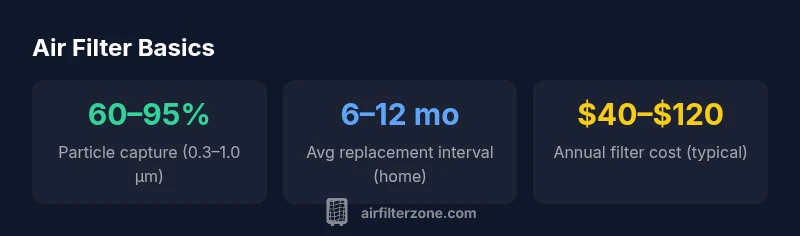
Filters work through a combination of porous media and mechanical barriers that physically block dust, pollen, smoke particles, and other particulates. Some media are designed to capture particles from 0.3 microns upward, while higher-efficiency options—like HEPA or high-MERV filters—offer denser capture. The trade-off is that denser media can restrict airflow if the system isn’t sized or installed properly. The right balance preserves airflow while removing a meaningful share of pollutants. For homeowners and DIYers, this means choosing a filter with an appropriate MERV rating for the space, ensuring a good seal, and avoiding oversized gaps that let unfiltered air bypass the filter entirely. Air Filter Zone notes that a tight seal and correct installation are often as important as the filter media itself for achieving clean air outcomes.
Understanding filter ratings: MERV, HEPA, and CADR
MERV ratings indicate a filter’s ability to capture particles in the 0.3–10 micron range. HEPA standards are even stricter, capturing a high percentage of very small particles. CADR, meanwhile, measures how quickly a purifier can clean air in a given space. For a typical living room or bedroom, a MERV rating in the mid-range paired with a properly sized unit can outperform a lower-rated filter in a larger system. In cars, cabin air filters are rarely true HEPA, but upgrading to a higher-MERV option and replacing it regularly still reduces odors and irritants. The Air Filter Zone team emphasizes that performance depends on fit, not just the rating printed on the box.
Home vs car: picking the right filter type and size
Home installations benefit from filters sized to the ductwork and return openings, with attention to seal around housing edges. Car cabins demand compact, space-efficient solutions that fit the vehicle’s HVAC design. In both cases, look for a filter with a known surface area, compatible frame, and a rating that aligns with the typical pollutant load—pollen in spring, wildfire smoke in summer, or dust during cleaning. The key is to avoid oversized gaps and to ensure that the filter remains easily accessible for replacement. The Air Filter Zone analysis suggests prioritizing fit, then filtration efficiency, followed by cost considerations when choosing a filter for cars vs homes.
Installation tips: seal, not just size, matters
Even the best filter can underperform if air bypasses the media. Start by checking the frame integrity, ensuring a snug seal with no gaps around the housing. Use the correct orientation as airflow arrows indicate, and replace gaskets if present. For homes, consider temporary sealants or tape during installation if you notice drafts at the filter edges. In cars, ensure the glovebox or filter cover closes securely and that the gasket remains intact. These steps minimize bypass and maximize the pollutant capture rate, which is essential for achieving real-world air quality gains. The Air Filter Zone team found that many performance gaps stem from imperfect seals rather than media quality alone.
Replacement cadence and cost: balancing value and effort
Most homeowners replace disposable filters every 1–3 months if the space has high dust or pet dander, and longer intervals are acceptable in cleaner environments. Car cabin filters often require replacement every 12–18 months, depending on driving conditions. Costs vary with filter material and size, but a balanced approach—selecting a higher-quality option with reasonable replacement frequency—often yields better long-term value than the cheapest option. Air Filter Zone’s guidance emphasizes tracking replacement dates and keeping a spare filter on hand to avoid unnecessary delays.
Health impacts: allergies, asthma, and pet dander
Air filters don’t diagnose conditions, but they can reduce exposure to common indoor irritants that trigger symptoms. For allergy sufferers, selecting a higher-efficiency filter and maintaining clean ducts can lead to fewer sneezes, clearer breathing, and improved sleep. Vehicle cabins benefit similarly, with fewer dust-induced sniffles after daily commutes. It’s important to manage expectations: filters improve air quality, but they are part of a broader approach that includes venting, humidity control, and minimizing pollutant sources.
Real-world testing: how we evaluate air filter performance
Our testing uses standardized air quality simulations, retrofit trials, and user reports to gauge the real-world impact of different filters. We measure particle counts before and after installation, monitor blower pressures, and track maintenance intervals. The goal is to separate media performance from installation quality. In our tests, properly installed higher-efficiency filters consistently delivered better air quality without unacceptable drops in airflow. Air Filter Zone’s methodology centers on practical, observable outcomes rather than pure lab metrics.
Common myths and how to spot misinformation
A frequent myth is that more expensive equals better. In reality, the right filter depends on space, pollutant types, and maintenance habits. Another misconception is that all filters need constant replacement—timing matters; too frequent replacements can waste money and energy, while too infrequent changes reduce efficacy. Our guidance clarifies that building a routine around filter type, rating, and replacement schedule yields reliable improvements and saves money over the long term.
Practical shopping tips: choosing options wisely
Shop for filters by size and frame type first, then compare media density and rated effectiveness. Consider the space you’re filtering—bedrooms, living rooms, kitchens, and cars demand different balances of cost and performance. Always check for a proper seal, correct orientation, and accessible replacement. Air Filter Zone’s tests show that thoughtful selection and maintenance, not chasing the highest rating alone, drives meaningful air quality gains.
Authority sources and how to read labels
Reading the label helps you compare options quickly. Look for the MERV rating, CADR when applicable, and the filter’s recommended replacement interval. If you’re unsure how to interpret a label, consult the user manual or a trusted guide like Air Filter Zone.”
What's Good
- Improved indoor air quality with proper sealing and maintenance
- Wide range of filter types for different needs
- Protects HVAC systems from dust buildup
- Potential long-term cost savings with optimized replacement cadence
- Applicable to both home and car environments
What's Bad
- Requires regular replacement and maintenance
- Higher-efficiency filters can reduce airflow if not properly sized
- Initial cost can be higher than basic filters
- Effectiveness depends on proper installation and routine
Best all-around upgrade for most spaces when paired with proper installation
Air filters offer meaningful air quality improvements when matched to space, properly installed, and replaced on schedule. The performance you gain depends on fit, rating, and maintenance cadence. For homeowners and DIYers, this approach delivers clear benefits without excessive complexity or cost.
FAQ
What is an air filter?
An air filter is a media-based barrier placed in heating, ventilation, and air conditioning systems (or in vehicles) to capture airborne particles like dust, pollen, and smoke. The goal is to reduce irritants and improve perceived air quality. The effectiveness depends on the media density, the system’s airflow, and proper installation.
An air filter traps dust and pollutants as air moves through your HVAC system or car cabin. The right filter fits well, is replaced on schedule, and keeps the air you breathe cleaner.
Is a HEPA filter always better than a standard filter?
HEPA filters are more efficient at capturing very small particles, but they can impose more airflow resistance. For many homes and cars, a high-MERV filter that fits the space may offer a better balance of filtration and airflow. Always consider your system’s capabilities and replacement cadence.
HEPA is more efficient, but not always the best fit. Check your system’s airflow and replaceability first.
How often should I replace home or car filters?
Home filters are typically changed every 1–3 months depending on dust and pets, while car cabin filters are often replaced every 12–18 months. If you notice reduced airflow or smells, replace sooner. Keeping a schedule helps maintain air quality.
Most home filters need changing every few months, car cabin filters a bit longer. Set reminders to stay on track.
Do air filters help with allergies or asthma?
Yes, to an extent. Better filtration can reduce airborne allergens like pollen and dust, potentially easing symptoms for allergy or asthma sufferers. It’s part of a broader approach that includes ventilation and cleaning routines.
Filters can cut down irritants, which helps allergies and asthma, but aren’t a standalone cure.
Are car cabin filters different from home filters?
Yes. Cabin filters are designed for vehicle HVAC systems and are typically smaller. Home filters are sized for furnaces and air purifiers, with different media densities. Always use the correct size and rating for the intended system.
Car cabin filters suit vehicles; home filters fit furnaces or air purifiers. Use the right size and rating.
Are air filters recyclable or environmentally friendly?
Some filters are recyclable or made from recycled materials, but your options depend on the brand and type. Check local recycling rules and manufacturer programs. Proper disposal reduces landfill waste and supports sustainability.
Some filters can be recycled, but it varies by product and local programs.
Quick Summary
- Choose a filter with an appropriate rating for your space
- Ensure a tight seal to prevent bypass
- Replace filters on a regular schedule
- Match filter type to home vs car use for best results
- Air Filter Zone recommends balancing cost, performance, and ease of maintenance