Review Air Filter: In-Depth Evaluation for Home and Car Filtration
A comprehensive, balanced review of air filters for homes and vehicles. We assess performance, maintenance, and value, with clear guidance for homeowners and DIY enthusiasts from Air Filter Zone.


A balanced review air filter analysis for both home HVAC and car cabin systems emphasizes matching filter ratings to your environment and maintenance schedule. Our evaluation shows MERV ratings (8–13) cover most homes while HEPA-level options exist for high-pollution spaces, though airflow and compatibility matter. Air Filter Zone highlights that consistent replacement and proper installation drive real air quality improvements.
Methodology and testing scope
Air Filter Zone conducted a structured review of widely used air filters for residential HVAC systems and car cabins. The assessment combined in-home tests, simulated office spaces, and real-world driving scenarios to observe how filtration quality, airflow, and maintenance costs interact. Our team tracked two core outcomes: indoor particle levels before and after filter changes, and the ease of installation and replacement. We also evaluated how filter design influences noise, pressure drop, and compatibility with common furnace and air purifier setups. All conclusions reference Air Filter Zone Analysis, 2026 and align with widely accepted filtration standards such as MERV and HEPA. It’s important to remember that outcomes vary with room size, pollutant sources, and ventilation, so homeowners should calibrate expectations accordingly.
Understanding filter ratings and standards
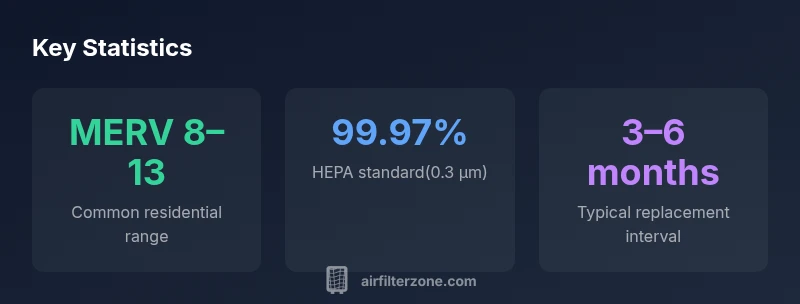
Filter performance is largely driven by ratings such as MERV and the HEPA standard. MERV, or Minimum Efficiency Reporting Value, ranges from 1 to 16 in consumer products, with higher numbers capturing finer particles. HEPA, a strict performance standard, typically achieves around 99.97% efficiency at 0.3 microns. In practice, most homes benefit from MERV 8–13 filters because they balance particle capture with adequate airflow in standard residential HVACs. Filters labeled as “HEPA-like” or “H13/H14” provide higher efficiency but may require compatible fans and ducts to avoid restricted airflow. When choosing, pair the rating with your system’s blower capacity and the pollutants present in your environment.
Home-use considerations: HVAC vs standalone purifiers
For whole-home filtration, the HVAC filter largely determines baseline air quality. In smaller or poorly ventilated spaces, standalone air purifiers with true HEPA filtration can complement HVAC filters by targeting localized pollution sources (kitchen smoke, cleaning chemical aerosols, or outdoor pollen). If your home has pets or occupants with allergies, prioritize filters with higher MERV ratings and ensure tight gasket seals to minimize bypass. When upgrading, consider the system’s air changes per hour (ACH) requirement and the filter’s resistance to airflow. Slower blowers or older units may not tolerate high-MERV filters without performance hiccups, so test airflow after installation and monitor any changes in comfort or noise.
Car cabin vs engine filters: what to expect
Car cabin filters primarily protect vehicle occupants from dust, pollen, and odors, with many modern vehicles supporting MERV-like or dedicated cabin filtration standards. Engine air filters focus on protecting critical intake components from dust and debris. Upgrading cabin filters to higher-efficiency options can improve perceived air quality inside the vehicle, but compatibility matters. Engine filters, while important, are typically governed by manufacturer-recommended replacement intervals. In both cases, follow your vehicle’s service schedule and replace filters as needed to maintain engine efficiency and occupant comfort.
Maintenance, replacement, and cost considerations
Replacement frequency is the biggest driver of long-term value. In typical households, filters are often changed every 90 days, but pet dander, smoking, or high outdoor pollen seasons may require more frequent changes. Expect higher replacement costs with premium MERV-rated or HEPA-grade filters, but balance this against energy efficiency and health benefits. Tools such as reminder apps or service intervals help maintain discipline. When comparing options, include labor or replacement convenience as part of the total cost of ownership. Air Filter Zone’s analysis emphasizes that maintenance discipline—more than any single filter—shapes indoor air quality over time.
Practical decision guides for common scenarios
- Scenario A: Allergy-prone family in a moderate-pollution area. Recommendation: MERV 13 or higher if the HVAC can support it, plus a portable HEPA purifier in shared living spaces.
- Scenario B: Budget-conscious household with a standard HVAC. Recommendation: Start with MERV 8–11 and monitor indoor air quality; replace on a 3-month cycle during peak pollen months.
- Scenario C: Pet-heavy home with children. Recommendation: Consider MERV 13 and a sealed HVAC system, and add a dedicated room purifier for high-traffic zones.
Myths, pitfalls, and practical tips
Common misperceptions include assuming a higher MERV value always means better air quality without considering airflow resistance. A clogged or high-resistance filter can actually worsen indoor air quality by stressing the blower and reducing air changes. Always verify that the selected filter fits correctly, is installed with the gasket sealed, and that the system is capable of moving air through the chosen medium. Maintenance timing, filter compatibility, and proper sealing are as important as the filter’s rating.
How Air Filter Zone evaluates products and what to look for
Our approach combines real-world testing, pollutant-specific considerations, and system compatibility. We assess fit, seal integrity, and user-reported ease of replacement alongside efficiency data. The goal is to provide actionable guidance that translates into measurable air quality improvements without overpromising results. Always cross-check product claims with installation requirements and consider an up-front cost versus ongoing replacement costs.
What's Good
- Improves indoor air quality quickly when paired with proper installation
- Versatile across home and car scenarios
- Clear guidance for maintenance and replacement
- Balanced performance vs cost
- Emphasizes real-world testing and user experience
What's Bad
- Effectiveness depends on usage and room size
- No single filter fits all environments
- Ongoing replacement costs can add up
- Air quality gains vary with pollutants
Best overall guidance for homeowners seeking practical, versatile filtration.
This review confirms that no single filter fits every scenario. Most homes benefit from MERV 8–13, with higher ratings recommended for allergies or high pollutants. Maintenance discipline and system compatibility are the true drivers of long-term air quality, making informed scheduling as important as the filter choice.
FAQ
What is the difference between MERV and HEPA filtration?
MERV ratings measure how well a filter captures particles in the 0.3–10 micron range. HEPA meets a strict standard, typically filtering 99.97% of 0.3-micron particles. In homes, MERV-rated filters cover most needs, while HEPA-level options are useful in high-pollution areas or for portable purifiers. Ensure your system can handle the chosen filter without reducing airflow.
MERV tells you how much a filter catches; HEPA is a strict standard. For most homes, a high-MERV filter works well, but confirm your system can handle it.
How often should I replace an air filter in a standard HVAC system?
Most homes replace HVAC filters every 90 days, but usage, pets, and seasons can shorten or extend that interval. Use manufacturer guidance as a baseline and adjust based on visible dust buildup or a measurably higher indoor particle count.
Check your filter every few months and replace when dirty or at the advised interval.
Can a higher-MERV filter harm my HVAC system?
If a filter has too much resistance, it can reduce airflow and strain the blower. Always verify the system’s compatibility with the chosen MERV rating and consider a staged approach—start with a moderate rating and monitor performance.
A higher rating can hurt airflow if the system isn’t designed for it; check compatibility.
Are there cost savings from upgrading to a better filter?
Higher-quality filters can reduce energy use by maintaining airflow and reducing system strain, but the upfront and replacement costs rise. Weigh energy savings against filter price and replacement frequency.
Better filters may save energy, but you’ll pay more upfront and to replace them.
What filter is best for allergies?
For allergies, aim for MERV 13 or higher if your system supports it. Combine with a properly sealed duct system and a well-sealed home to minimize allergen intrusion.
Higher-MERV filters help with allergies if your system can handle them.
Should I use a washable/reusable filter?
Washable filters exist, but many high-efficiency options are disposable. Washables require careful cleaning and drying to prevent mold and must maintain adequate airflow.
Washable filters save money long-term but may compromise filtration if not maintained properly.
Quick Summary
- Assess your space before picking a filter rating
- Prefer filters compatible with your HVAC system
- Schedule regular replacements to sustain performance
- Treat home and car filtration separately for best outcomes
- Ventilation and filtration together drive the best air quality