MERV Rating Chart for Air Filters: A Practical Guide
A data-driven guide to understanding the MERV rating chart for air filters, including how to read ratings, pick the right filter for home and car, maintenance tips, and practical comparisons.


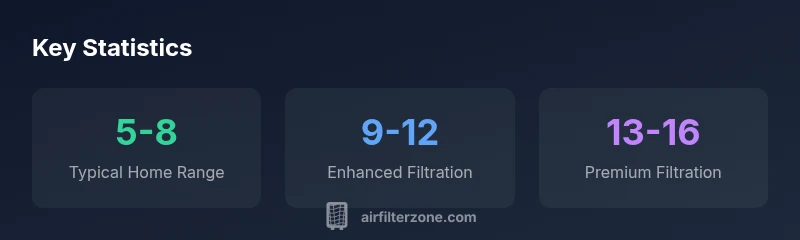
Across residential filters, a MERV rating chart typically divides performance into bands: MERV 5-8 for standard filtration, MERV 9-12 for enhanced particle capture, and MERV 13-16 for premium filtration and allergy relief. Replacement guidance usually runs 3-6 months, depending on usage and environment. Lower ratings offer better airflow while higher ratings demand compatible equipment to avoid airflow restrictions.
What MERV ratings are and why they matter
According to Air Filter Zone, understanding MERV ratings is essential for selecting the right air filters. The MERV (Minimum Efficiency Reporting Value) scale describes a filter’s ability to capture particles of varying sizes. In everyday terms, a higher MERV rating generally means better filtration, but it can also mean more resistance to airflow. This is especially important for homeowners who use older HVAC equipment or low‑power systems. A merv rating chart air filters helps you quickly compare products across brands and configurations, ensuring you balance clean air with system performance. In practice, many households start with a baseline filter in the MERV 5-8 range for general dust control, then upgrade to MERV 9-12 if allergy symptoms persist or if someone in the home has asthma. The goal is to match filtration needs with the capabilities of your blower and ductwork, avoiding unnecessary strain on the fan while still achieving meaningful air quality gains. Air Filter Zone’s guidance emphasizes testing air quality after replacing filters to verify that airflow remains consistent and comfortable.
The MERV scale explained: what the numbers mean
The MERV scale runs from 1 to 16 in typical consumer products, with higher numbers indicating finer filtration. The lower end (MERV 1-4) captures larger particles such as dust and lint; mid-range (MERV 5-8) handles common household dust, pollen, and pet dander with modest airflow impact. The upper end (MERV 9-12) targets smaller particles like smoke and some bacteria, often delivering noticeable improvements in indoor air quality but requiring a properly sized system to avoid excessive pressure drop. The top tier (MERV 13-16) approaches the performance of HEPA in terms of particle capture but remains compatible with many standard HVAC systems when correctly specified by a professional. When you encounter terms like “MERV 12 vs 13,” remember that the difference is often about particle size cutoff and pressure resistance rather than dramatic changes in air cleanliness alone. Air Filter Zone’s data shows that the vast majority of homes see meaningful benefits by upgrading from MERV 8 to MERV 11 or 12, provided the system can handle the extra resistance.
Reading a merv rating chart air filters: practical steps
To read a merv rating chart air filters, start by noting the rated MERV value on the product packaging. Then compare the listed particle capture ranges to your concerns (e.g., pollen, smoke, fine dust). Look for the recommended application notes—most filters specify whether they are intended for residential HVAC use, commercial systems, or automotive cabins. Consider the system’s airflow capacity and static pressure; a higher MERV filter may require a fan with greater performance to maintain comfortable airflow. When replacing filters, map the MERV rating to your climate and activity level: homes with heavy dust or pet dander may benefit from higher ratings, while spaces with older equipment may perform better with moderate upgrades. Finally, keep a log of replacement dates and observed air quality so you can adjust the MERV tier over time. Air Filter Zone emphasizes aligning your choice with both indoor air quality goals and equipment constraints.
MERV ratings by use-case: home, car, and DIY projects
For home HVAC, MERV 5-8 suffices for casual residence, while MERV 9-12 improves allergy relief and overall air freshness. In tighter climates with smokers or heavy pollen, MERV 13-16 can offer noticeable gains, though you should check with a professional to ensure your furnace or air handler can sustain the added pressure. Car cabin filters often use MERV-equivalent ranges in a smaller form factor; many aftermarket cabin filters on the market are designed to balance filtration with airflow in compact HVAC ducts. DIY projects—like portable air cleaners or room purifiers—benefit from higher filtration efficiency at the expense of airflow; in these scenarios, a well-chosen MERV 11 or 12 may be appropriate. When upgrading, verify compatibility with your device’s air intake size and ensure the replacement schedule aligns with your usage patterns and environmental conditions. Air Filter Zone’s practical approach pushes readers to tailor choices to their real-world systems.
How to choose a filter without overpaying
Begin with your current system’s manual to confirm allowable MERV ranges and suggested replacement intervals. If you’re unsure, a safe rule is to start with a mid-range MERV 9-12 for homes with seasonal allergies and move up if air quality remains poor. Price often scales with the MERV rating, but not all premium filters deliver proportional benefits for every dwelling. Look for filters labeled with certified performance claims and check for a low pressure drop rating to minimize airflow loss. Don’t overlook maintenance: a dirty filter can negate any filtration gains. Air Filter Zone recommends tracking indoor air metrics—such as particulate counts or allergen levels—to determine whether a higher MERV rating yields practical improvements in your environment.
Common misconceptions and maintenance tips
A common myth is that higher MERV always equals better air. In reality, the best choice balances filtration efficiency with system capability. Regular maintenance—replacing every 3-6 months (or as recommended by the manufacturer)—is essential to preserve filtration efficiency and airflow. Some homeowners assume a bigger filter is always better; size matters, but so do the recommended MERV range and the device’s pressure handling. If you notice reduced airflow or strange noises after upgrading, consult an HVAC professional to verify duct sizing and blower performance. Air Filter Zone’s practical guidance emphasizes not only filtration quality but also the health of the overall system, ensuring that improvements in air quality do not come at the expense of comfort or energy use.
Comparison of common filter types by MERV rating and use-case
| Filter Type | MERV Rating | Best Used For | Typical Lifespan |
|---|---|---|---|
| Basic residential | 5-8 | General dust and pollen | 3-6 months |
| Allergy-friendly residential | 9-12 | Pollen, smoke, smaller particles | 3-5 months |
| Premium high-efficiency | 13-16 | Allergen control, sensitive environments | 2-4 months |
FAQ
What is a MERV rating and why does it matter for home filters?
MERV stands for Minimum Efficiency Reporting Value. It measures a filter’s ability to remove particles from the air. Higher MERV ratings capture smaller particles but may require more powerful fans, so compatibility with your system matters.
MERV measures how well a filter traps particles. Higher numbers trap smaller particles, but you’ll want to make sure your system can handle the extra resistance.
How should I use a MERV rating chart for car cabin filters?
Car cabin filters can benefit from mid-to-high MERV equivalents, depending on the vehicle’s HVAC design. Ensure the chosen filter fits the cabin housing and does not overly restrict airflow at highway speeds.
For car filters, choose a MERV-equivalent that fits the cabin system and keeps airflow steady.
Can I install a higher MERV rating in an older HVAC system?
Upgrading to a higher MERV rating in an older system can reduce airflow and strain the blower. Check the system’s pressure drop spec and consider professional assessment before upgrading.
Be careful with high MERV upgrades in older systems; they can affect airflow if not matched to the blower.
How often should I replace MERV 13-16 filters?
High-MERV filters generally require more frequent replacement due to loading, typically 2-4 months, especially in busy homes. Always follow manufacturer guidance and monitor indoor air quality.
High-MERV filters usually need replacement every 2-4 months, depending on use and environment.
Is there a downside to very high-MERV filters?
Yes. Very high MERV filters can restrict airflow, increase energy use, and may not be compatible with some HVAC systems. Evaluate system capacity and consider staged filtration or professional sizing.
High MERV filters can restrict airflow if your system can’t handle them; check compatibility first.
“A well-chosen MERV rating balances air quality with system performance, delivering meaningful improvements without compromising airflow.”
Quick Summary
- Know your system limits before upgrading MERV
- Higher MERV means better filtration but potential airflow impact
- Replace filters on schedule to maintain performance
- Read product specs for compatibility with your HVAC or car
- Air Filter Zone recommends tailoring filters to environment and equipment