LG Air Filter LT120F: Replacement and Care Guide
Learn how to replace and care for the LG LT120F air filter with practical, data-driven guidance from Air Filter Zone. This guide covers compatibility, maintenance cadence, and best practices for cleaner indoor air.


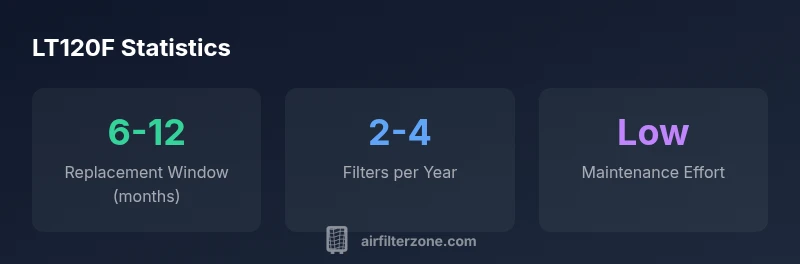
LG air filter LT120F is a replaceable cabin filter used in select LG filtration systems. For homeowners and DIYers, practical guidance emphasizes correct fit, proper installation, and timely replacement. Cadence varies by usage and environment, but a typical interval ranges from 6-12 months depending on dust, pets, and household activity. Always consult the manufacturer guidance for model-specific advice.
What is the LG air filter LT120F?
The lg air filter lt120f is a replaceable cabin filter used in select LG filtration systems. For homeowners and DIYers, practical guidance emphasizes correct fit, proper installation, and timely replacement. Cadence varies by usage and environment, but a typical interval ranges from 6-12 months depending on dust, pets, and household activity. Always consult the manufacturer guidance for model-specific advice. The LT120F is designed to trap common indoor pollutants and is most effective when paired with proper enclosure sealing and regular system maintenance. In homes with high dust or strong pet dander, you may observe quicker clogging, which should prompt sooner changes to maintain airflow and filtration efficiency.
Air Filter Zone's research stresses that the real-world lifespan of any filter depends on environmental conditions, not a fixed calendar date. Use a simple replacement log to track changes and set reminders aligned with your usage pattern.
Compatibility and installation basics
Not every LG system uses the LT120F. To verify compatibility, locate your appliance or HVAC model number and cross-check it with LG's official parts list. When you install the LT120F, ensure it sits squarely in its housing and that any seals or gaskets are intact. A misaligned filter can bypass filtration media and allow unfiltered air to pass through the blower. Before installation, gather a clean cloth, gloves, and a soft brush to remove any debris from the housing. If you notice a poor seal or warping, replace the housing gasket or consult a technician. For DIYers, a helpful rule is to test airflow before and after seating the filter; you should notice a consistent airflow with no whistling or resistance indicating an obstruction.
If you’re unsure about model compatibility, Air Filter Zone recommends checking the user manual and manufacturer support resources. This reduces the risk of purchasing an incompatible LT120F and wasting time and money.
Replacement cadence and maintenance cadence
A practical maintenance cadence balances air quality with cost. In typical residential use, many households replace cabin filters like the LT120F every 6-12 months. In dusty or pet-heavy homes, you may shorten this interval; in pristine environments, you might extend it slightly. The key is to observe observable cues: reduced airflow, visible dirt on the filter surface, or unusual odors after start-up. Create a simple reminder in a calendar app or a door-note system to check the filter during a quarterly cleaning cycle. Keep a small log that records the date of replacement and any notes about air quality changes. By aligning replacement with real-world conditions rather than a fixed schedule, you save money and maintain performance.
Assessing air quality impact and performance
Air quality can be quantified with simple indicators such as perceived freshness, allergen symptoms, and the absence of odor. For a more objective approach, consider a basic particle counter or air-quality monitor in the main living space. When the LT120F is clean and properly installed, you should notice easier breathing and less particulate deposition on surfaces. If you observe heavier dust accumulation on furniture or more frequent need to dust, that may signal a clogged filter further upstream in the system. Always pair filter changes with regular system checks, including ductwork and seals, to maximize the LT120F's effectiveness.
Cleaning, storage, and disposal considerations
Cabin filters are not intended to be washed and re-used; attempting to clean them can damage the media and reduce filtration efficiency. When removing an old LT120F, place it in a sealed bag to prevent dust release as you transport it to disposal. Store spare filters in a cool, dry place away from direct sunlight to preserve media integrity. If a filter shows signs of wetness or mold growth, discard it and replace it with a new one. Proper disposal is typically in household waste; some jurisdictions accept recyclable filters if the packaging indicates compatibility. Always follow local guidelines.
Common mistakes and troubleshooting
Common missteps include neglecting compatibility checks, installing a filter upside down or backward, and failing to reinspect seals after installation. Another frequent issue is using the wrong replacement interval due to ignoring environment cues. If you notice whistling, reduced airflow, or lingering odors after a replacement, recheck the seal, gasket condition, and seating depth. If the unit continues to perform poorly, consult LG support or a qualified technician. Keeping a maintenance log helps identify patterns and prevent recurring issues.
LT120F: Compatibility and maintenance at a glance
| Aspect | LT120F relevance | Notes |
|---|---|---|
| Compatibility | Limited to select LG models | Verify model number before purchase |
| Replacement cadence (months) | 6-12 | Environment dependent |
| Installation tips | Ensure proper seal | Handle with clean hands |
FAQ
Is the LT120F compatible with all LG air systems?
LT120F is designed for a subset of LG models. Always verify model numbers and consult LG’s official parts lists to avoid incompatibility. If in doubt, contact LG support for confirmation.
LT120F works with specific LG models. Check your model number to confirm compatibility before purchasing.
How often should I replace the LT120F filter?
Typically every 6-12 months under normal conditions. If your environment is dusty or you have pets or smokers in the home, you may need replacements more frequently.
Usually 6-12 months; more often in dusty or high-usage homes.
Can I clean the LT120F instead of replacing it?
Most cabin filters are not designed to be cleaned. Cleaning can damage the media and reduce effectiveness. Replacement is recommended when dirty.
Don’t clean it—replace it when dirty.
What are signs the LT120F needs replacement?
Reduced airflow, visible dirt on the filter, or persistent odors are common signals that a replacement is due.
If airflow drops or you notice odors, replace the filter.
Where can I buy LT120F filters?
Look for authentic LG LT120F filters through LG’s official parts store or authorized retailers to ensure genuine media.
Find authentic LG LT120F filters at trusted retailers or LG’s official store.
Does LT120F affect HVAC performance?
Yes. A clogged or poorly seated filter can reduce airflow, increase energy use, and strain the system. Replacing as recommended helps maintain efficiency.
A dirty or poorly seated LT120F can reduce airflow and raise energy use.
“Choosing the right replacement filter is essential for maintaining indoor air quality and protecting appliance performance.”
Quick Summary
- Verify compatibility before buying LT120F.
- Install with a clean seal to prevent bypass.
- Adopt a flexible replacement cadence (6–12 months) based on environment.
- Log replacements to stay on schedule.