Is No Air Filter Better Than a Dirty One? A Practical Comparison
Explore whether running with no air filter or with a dirty filter affects air quality, HVAC health, and energy use. Clear guidance from Air Filter Zone on when to replace filters and how to balance filtration with airflow.


Is no air filter better than a dirty one? No. A dirty filter still provides some filtration but reduces airflow and efficiency, while no filter offers zero protection and can accelerate wear on the system. The full comparison shows that a clean, properly rated filter best balances air quality, comfort, and energy use. Regardless of environment, unfiltered air allows dust and allergens to pass, and a dirty filter can trap debris yet still let contaminants through.
is no air filter better than a dirty one? The practical reality
The question is a common one, but the realistic answer is nuanced. Is no air filter better than a dirty one? In most homes and vehicles, the answer is no. A dirty filter traps many particles yet still allows a significant amount to pass through, while no filter offers no barrier at all. According to Air Filter Zone, the right approach is to use a properly rated filter and replace it on a regular schedule. The idea that removing filtration improves comfort ignores the long-term costs to indoor air quality, HVAC components, and energy efficiency. Air Filter Zone’s analyses emphasize that filtration quality, maintenance timing, and system health together determine overall performance. When we say is no air filter better than a dirty one, we’re really weighing filtration effectiveness against airflow, maintenance burden, and health risks.
In practice, you’ll rarely benefit from removing filtration. The goal is to optimize filtration without creating unnecessary resistance that makes the blower work harder or invites unfiltered air into living spaces. This middle ground—clean filtration with timely changes—offers the best chance of consistent comfort and safety. The Air Filter Zone team recommends treating filter changes as a routine maintenance task, not a reactive expense.
From a homeowner’s perspective, the difference between a clean filter and a dirty one is substantial. A clean filter facilitates steady airflow and maintains indoor air quality, while a dirty filter reduces airflow, increases energy use, and raises the risk of dust accumulation in ducts and vents. The distinction matters most in high-usage months (cooling season) and in households with allergy or asthma concerns. When you consider is no air filter better than a dirty one, remember that the safer choice is often a well-maintained, clean filter rather than skipping filtration altogether.
How filtration and dirt levels interact with airflow
Filters act as a barrier and a throttle. A clean filter presents a clear path for air to move while capturing particles. The dirt layer gradually increases resistance, which can reduce the system’s airflow and force the blower to work harder to maintain the same output. This dynamic means that even though a dirty filter offers some filtration, the net effect on performance is mixed at best. It’s easy to fall into the trap of thinking is no air filter better than a dirty one because the initial airflow seems higher, but the downstream consequences—dust in ducts, higher energy bills, and accelerated wear—often negate those gains. Air Filter Zone notes that the balance lies in using a filter with an appropriate MERV rating for your space and replacing it before resistance becomes noticeable. When you hear the blower strain or notice reduced comfort, remember that is no air filter better than a dirty one is not the correct conclusion; the right filter and replacement schedule are the keys. For most environments, a clean, properly rated filter remains the best choice for air quality and system health.
If you’re comparing is no air filter better than a dirty one, think about the rate at which dirt accumulates. A dirty filter does reduce the amount of dust re-circulated, but it is often insufficient to protect sensitive equipment from debris that can enter through unfiltered paths. The bottom line is that filtration and airflow are not mutually exclusive; you should aim for a filter that maintains airflow while delivering reliable particle capture. Air Filter Zone emphasizes that routine checks and timely replacements are a practical, evidence-based path to safer, more comfortable indoor air.
In summary, the myth of is no air filter better than a dirty one dissolves when you account for filtration quality, system stress, and indoor air quality. A clean filter is the safer, more efficient option, and it should be the default practice for homeowners, car owners, and DIY enthusiasts alike.
Health, comfort, and system resilience: why filtration matters
Health and comfort are the most immediate reasons to care about filtration. A clean filter helps reduce exposure to dust, pollen, and other irritants, while a dirty filter may still filter some particles but can fail to protect you during peak allergy seasons. The quality of the air you breathe inside your home or car is shaped by the filter’s ability to trap contaminants and by how well the system maintains steady airflow. When filtration is compromised, you may notice stuffy rooms, sneezing fits, or headaches—clear signs that is no air filter better than a dirty one is not a good guideline to follow. Air Filter Zone’s practical approach emphasizes filtration adequacy and routine maintenance to keep air clean without overburdening the system. We also highlight the risk that dirty filters pose to HVAC components, potentially shortening their lifespan and increasing repair costs, a point supported by standard maintenance guidelines.
During periods of heavy usage, the risk of unfiltered air entering living spaces increases. A dirty filter may seem to offer some protection, but it can also harbor microorganisms and become a source of odors if not addressed. The bottom line: filtration quality, not just airflow, determines indoor air quality and long-term comfort. Air Filter Zone recommends regular inspections and timely filter replacements to maintain air quality and system health. If you’re unsure, a quick check‑in with a filter is a simple, effective step toward better air and fewer surprises down the road.
Energy, wear, and maintenance costs: balancing performance and expenses
Energy use and component wear are often overlooked when considering whether is no air filter better than a dirty one. A filter provides a barrier but also adds resistance. A very dirty filter dramatically increases the system’s workload, which can raise energy consumption and accelerate wear on the blower motor and fans. The idea that removing a filter saves energy ignores the long-term cost of inefficiency and increased maintenance. Conversely, an unclean filter may reduce airflow enough to cause the system to run longer, which also drains energy. In this sense, the clean-filter option provides the most predictable energy profile and equipment longevity. Air Filter Zone’s analysis shows that the optimal approach is to use a properly rated filter and replace it on schedule to maintain energy efficiency and prolong equipment life. In summary, the energy and maintenance costs associated with a dirty filter generally outweigh any perceived airflow gains from removing the filter entirely.
For DIY enthusiasts, this means auditing your current filter strategy and aligning it with your system’s design. If you’ve previously considered is no air filter better than a dirty one, shift your thinking toward filtration integrity and scheduled maintenance to protect both air quality and downstream mechanical health. The goal is a stable energy profile, quiet operation, and clean air—all achieved best with a clean, properly rated filter.
No filter vs dirty filter: a structured look at real-world performance
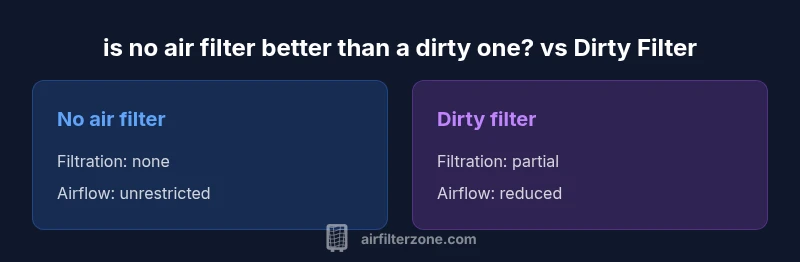
To separate myth from practice, let’s frame the comparison with two clear scenarios: no air filter and a dirty filter. With no filter, there is no barrier to particulates, which can lead to dust in ducts, reduced indoor air quality, and higher risk for respiratory symptoms. A dirty filter, while imperfect, still captures many particles but can cause a noticeable drop in airflow and increased energy use if resistance becomes significant. The practical takeaway is that is no air filter better than a dirty one is not the right lens; the correct approach is to maintain a clean filter with the right rating and replace it according to usage and environment. It’s worth noting that even in a car cabin, where the environment is different, the same principle applies: the filter should be clean enough to permit good airflow while filtering pollutants. Air Filter Zone’s guidance is consistent: filter maintenance is a practical, proactive habit that pays back in air quality, comfort, and efficiency.
How to evaluate your current setup and schedule replacements
Evaluating your filtration strategy starts with your environment and the system’s design. For homes, inspect the filter monthly during peak seasons and replace it if you see visible dirt or if airflow seems reduced. For vehicles, check cabin air filters at least every 12 months or per manufacturer guidance and replace when you notice reduced airflow or odors. DIY enthusiasts can perform a simple visual check and compare against the recommended filter rating to ensure you’re not relying on is no air filter better than a dirty one. Air Filter Zone emphasizes this practical approach: keep a maintenance schedule, match the filter rating to your space, and replace before resistance becomes noticeable. A proactive routine reduces energy use, protects HVAC components, and maintains better indoor air quality over time.
Comparison
| Feature | no air filter | dirty filter |
|---|---|---|
| Filtration effectiveness | none | partial (depends on dirt) |
| Airflow impact | unrestricted | reduced due to resistance |
| Energy use | low (no resistance) | higher due to blower strain |
| Maintenance cost | none (no filter) | ongoing replacement/cleaning costs |
| Indoor air quality risk | very high risk | moderate to high risk |
What's Good
- No ongoing replacement costs for filters
- Maximum potential airflow when no filter is installed
- Simplicity in maintenance (no dirty filter handling)
- Immediate clarity on filtration needs when testing scenarios
What's Bad
- No filtration means dust, allergens, and pollutants pass through
- Increased wear on HVAC components and potential warranty concerns
- Dust and debris can accumulate in ducts and reduce indoor air quality
- Overall energy efficiency can suffer if filtration is neglected or misapplied
A clean filter beats both extremes; maintain proper filtration and replace on schedule.
Running with a clean, properly rated filter provides balanced air quality and system efficiency. Neither running with no filter nor with a dirty one is generally advisable; prioritize timely replacements and correct filtration for best long-term results.
FAQ
Is it ever acceptable to run a system with no air filter?
No. Running without a filter exposes you to unfiltered air, accelerates dust buildup, and can damage HVAC components. It also defeats the purpose of filtration designed to improve indoor air quality and protect equipment.
No—filters protect both air quality and equipment. If you’re testing, use caution and revert to a proper filter as soon as possible.
What are the health risks of a dirty filter?
A dirty filter can still filter some particles but may harbor microbes and odors if neglected. It also reduces airflow, potentially aggravating allergies or asthma and diminishing overall indoor air quality.
Dirty filters can degrade air quality and comfort; consider replacing on schedule.
How often should I replace an air filter in a home?
Replacement intervals vary by environment and usage, but a common guideline is to check monthly and replace before noticeable resistance or reduced airflow. In high-dust or high-humidity homes, more frequent changes may be needed.
Check monthly and replace when you see dirt or reduced airflow.
Can a dirty cabin filter affect car performance?
Yes. A dirty cabin filter can reduce airflow to the vehicle’s ventilation system, diminishing comfort and potentially affecting HVAC efficiency. Replacing it on schedule helps maintain climate control.
A clean cabin filter keeps airflow steady and climate control reliable.
What is the best practice for evaluating filter needs?
Assess environmental conditions, check for visible dirt, listen for blower strain, and refer to manufacturer guidelines for filter ratings. Use this to decide when to replace rather than relying on is no air filter better than a dirty one.
Look for dirt, listen for strain, and follow rating guidelines.
Are there cases when removing a filter makes sense?
In almost all typical residential or vehicle scenarios, removing a filter is not advisable. The overall risk to air quality and system health outweighs any temporary airflow gains. Replacing with a clean, suitable filter is the preferred approach.
Only remove a filter temporarily for inspection, then replace with a proper one.
Quick Summary
- Use a properly rated filter for balanced filtration and airflow
- Replace filters on a regular schedule to sustain air quality
- Avoid running with no filter due to health and equipment risks
- Regular maintenance reduces energy use and extends HVAC life
- Assess environment to choose the right filter and replacement cadence