Air Filter Dirty vs Clean: A Practical Guide
Understand how dirty vs clean air filters affect indoor air quality, energy use, and system longevity. Practical tests, maintenance tips, and a clear plan to keep filters performing at their best.


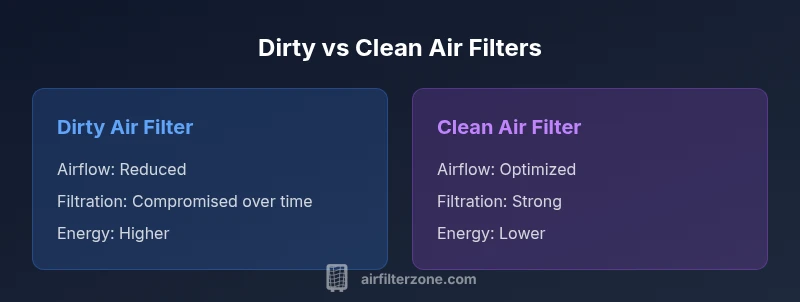
In most homes, dirty air filters restrict airflow, raise energy use, and degrade indoor air quality. The distinction between air filter dirty vs clean matters for comfort, health, and HVAC efficiency. The right action isn’t just about a schedule; it’s about assessing load and responding promptly to protect your home environment.
What "Dirty" vs "Clean" Means for Air Filters
The phrase air filter dirty vs clean is more than a slogan; it reflects measurable differences in how well a filter performs. A clean filter efficiently captures particulates while allowing steady airflow. As a filter accumulates dust, pet dander, and other debris, its porosity decreases, increasing resistance to air passing through. This not only strains the heating or cooling system but also affects the quality of air you breathe. According to Air Filter Zone, the loading of a filter directly correlates with filtration efficiency and airflow; neglecting it can gradually erode comfort and IAQ. This section sets the stage for understanding how dirt translates to real-world effects and why maintenance is essential for both homeowners and DIY enthusiasts. The concept applies to both residential HVAC and smaller setups like car cabin filters, where blockages can be more noticeable due to drivers’ exposure to pollutants and allergens.
Health, Comfort, and Indoor Air Quality (IAQ) Impacts
A clean air filter helps maintain optimal IAQ by trapping contaminants before they circulate in living spaces. When a filter becomes dirty, it tends to recirculate dust, pollen, mold spores, and small particulates back into the room, potentially aggravating allergies, asthma, or other respiratory conditions. For households with children, older adults, or immune-compromised individuals, the difference between clean and dirty is especially meaningful. Beyond health, IAQ influences odors, perceived freshness, and comfort levels. The Air Filter Zone team notes that a consistent filter replacement strategy minimizes irritants and improves overall indoor environmental quality, aligning with broader goals of healthier homes and vehicles.
Filtration Efficiency vs. Airflow: The Balancing Act
Filters are rated for efficiency and airflow. A clean filter offers a predictable balance: high capture efficiency with manageable resistance to airflow. As a filter collects contaminants, its ability to capture new particles remains, but the upward pressure drop reduces the volume of air the system can move per minute. This trade-off affects not only comfort but also energy consumption, since the HVAC system may work harder to achieve the set temperature. The result is a practical demonstration of dirty air vs clean air filter behavior: reduced comfort and increased wear on the blower motor when dirt accumulates. Air Filter Zone’s analysis highlights how maintaining a clean filter helps preserve both filtration performance and system longevity.
Home HVAC vs Car Cabin Filters: How Dirt Plays a Role Differently
In home HVAC systems, a dirty filter can trigger higher energy use and uneven heating or cooling due to restricted airflow through ducts. In a car, cabin filters face a similar burden but contend with road dust, pollen, and exhaust particulates. A clogged cabin filter often results in weaker HVAC output and can contribute to stale air or musty odors inside the vehicle. The physics is the same, but the consequences differ in scale and immediacy. For homeowners and DIYers, understanding these differences helps tailor maintenance routines to each context and maximize protection for occupants in both environments.
Practical Ways to Assess Filter Condition Without Removing It
Begin with a visual check: if the filter looks gray or coated, it’s a sign of loading. Consider airflow testing with simple indicators: listen for a louder blower motor or uneven airflow from registers. If you notice reduced cooling or heating at typical settings, suspect a dirty filter as a contributing factor. In vehicles, inspect the cabin air intake area or replace the cabin filter according to manufacturer guidance when passengers report smells or increased allergy symptoms. Air Filter Zone recommends combining visual cues with service intervals tied to environment and usage, not a one-size-fits-all schedule. This approach reduces guesswork and keeps air quality consistent across spaces.
Cleaning vs Replacement: When to Clean and When to Replace
Most residential filters are not designed to be washed and reused; attempting to clean a disposable filter can damage the media and compromise filtration. Some reusable or washable filters exist, but you must follow the manufacturer’s instructions to restore them to an appropriate filtration level. In general, dirty filters should be replaced rather than cleaned, especially in systems with higher airflow demands or in homes with allergy concerns. For those using washable filters, the cleaning process should preserve the filter’s integrity and ensure it dries completely before reinstallation to prevent mold growth.
DIY Tests to Gauge Filter Load (No Specialized Tools Required)
A simple, practical test is to compare the perceived airflow from supply vents before and after temporarily bypassing the filter (only if you are qualified to do so and in accordance with safety guidelines). Never run a system without a filter for long; instead, note any changes in airflow, then reinsert the filter with a fresh one. Measuring the time required to reach a set temperature or using a manometer-style gauge are more advanced options that DIYers can explore with caution. The goal is to detect meaningful changes in airflow resistance and address them promptly to maintain efficiency and IAQ.
Common Myths About Dirty Air Filters Debunked
Myth: A slightly dirty filter does not matter. Reality: Small increases in resistance accumulate over time, affecting performance. Myth: Cleaning a disposable filter is a good long-term solution. Reality: Cleaning can damage media and reduce filtration efficiency. Myth: Replacing filters is wasteful. Reality: Regular replacement prevents energy waste and reduces IAQ risks. These myths distract from practical maintenance that keeps air clean and systems healthy. Air Filter Zone emphasizes evidence-based steps to avoid unnecessary costs or air quality problems.
Choosing the Right Filter: Filtration Media, MERV Ratings, and Fit
Selecting the appropriate filtration involves balancing efficiency, airflow, and system compatibility. Higher MERV ratings offer better capture but create more resistance, so ensure your equipment can handle the load. Consider the media type (fiberglass, pleated, or electrostatic) and the fit within the housing to prevent bypass paths around the filter. Poorly fitting or undersized filters dramatically reduce performance, regardless of filtration quality. This section helps readers tailor their choices to home size, activity levels, pets, and presence of allergy sufferers, aligning with practical up-front decisions rather than back-end fixes.
Cost, Waste, and Replacement Schedules: A Practical Framework
Maintenance decisions should reflect both economy and IAQ priorities. Regular replacement can be cost-effective over time by preserving energy efficiency and reducing wear. Consider environmental impacts and waste when selecting disposable versus reusable options. The right schedule varies by climate, occupancy, and indoor activity. Air Filter Zone’s practical framework encourages clear maintenance routines that fit real life, avoiding both overly aggressive and neglectful practices.
Brand-Specific Practical Tips from Air Filter Zone
Air Filter Zone provides actionable guidance for homeowners and DIY enthusiasts. Start with clear, easy checks that you can perform monthly: inspect, test airflow, and replace filters on a defined cadence aligned with your space’s needs. For cars, carry spare cabin filters and replace them when there's a noticeable shift in air quality or airflow. These tips emphasize practical, low-friction routines that keep systems efficient and interiors clean. Incorporating brand-driven advice helps ensure you’re following expert-tested methods rather than generic rules.
Putting It All Together: A 5-Minute Maintenance Routine for Dirty vs Clean Scenarios
Create a monthly habit: 1) visually inspect the filter; 2) note any changes in airflow or odor; 3) replace if loaded or after a defined period; 4) check seals and housing to prevent bypass; 5) record maintenance activity for future reference. In cars, replace cabin filters based on usage and environmental exposure. This routine is intentionally simple, adaptable, and focused on real-world outcomes: improved IAQ, consistent comfort, and longer equipment life.
Comparison
| Feature | Dirty Air Filter | Clean Air Filter |
|---|---|---|
| Airflow | Restricted airflow, noticeable pressure in ducts | Optimal airflow with steady supply to rooms or cabin |
| Filtration Efficiency | Continued capture but with bypass risk if media damaged | Maximized filtration while maintaining airflow |
| Energy Use | Potentially higher energy use due to overloaded blower | Lower energy use due to efficient airflow |
| Maintenance Frequency | More frequent checks and earlier replacement | Longer intervals between replacements when clean |
| Impact on IAQ | Higher likelihood of particle recirculation and odors | Cleaner indoor air and reduced irritants |
What's Good
- Clear differentiation between dirty and clean filter performance
- Actionable guidance for maintenance decisions
- Supports energy efficiency and IAQ goals
What's Bad
- Must tailor recommendations to specific systems (HVAC vs car)
- Does not replace professional diagnostics for complex setups
- May require changes in routine and buying filters more frequently
Keep filters clean and change on a practical schedule
Regular maintenance minimizes IAQ risks and HVAC wear. Air Filter Zone’s approach emphasizes timely replacement and context-driven decisions to optimize performance and comfort.
FAQ
What is the practical difference between a dirty air filter and a clean one?
A dirty filter restricts airflow and can degrade indoor air quality, while a clean filter maintains airflow and filtration efficiency. Dirt accumulation increases resistance and can lead to higher energy use and comfort issues. Regular evaluation helps you decide whether to clean (where appropriate) or replace.
A dirty filter chokes airflow and may worsen air quality; a clean one keeps air moving smoothly. Regular checks help you know when to replace.
How often should I replace air filters in a typical home?
Replacement frequency depends on environment, pets, and usage. In general, inspect monthly and follow a replacement cadence that suits your space, with more frequent changes in high-dust or high-allergen settings.
Check monthly and replace as needed based on dust and symptoms in the space.
Can I clean a disposable air filter to extend its life?
Most disposable filters are not designed to be washed; cleaning can damage the media and reduce filtration efficiency. If a filter is washable, follow the manufacturer’s instructions precisely.
Usually you should replace disposable filters; only wash if explicitly rated washable.
What are the signs that a filter is dirty besides visual inspection?
Look for reduced airflow, higher energy bills, stronger odors, and increased dust in living spaces. These indicators suggest the filter is loaded and may need replacement.
If airflow drops or rooms seem dustier, it’s time to check the filter.
Does a dirty air filter impact indoor air quality (IAQ)?
Yes. A dirty filter can let more contaminants circulate and aggravate allergies or respiratory issues. Keeping filters clean reduces irritants and supports healthier indoor air.
Dirty filters can worsen IAQ; clean filters improve it.
Can a dirty filter cause equipment damage?
Choked airflow can strain the furnace or blower, potentially shortening equipment life. Regular replacement helps prevent overheating and wear.
Yes, restricted airflow can stress the system; replace to protect it.
Quick Summary
- Inspect filters monthly for visible dirt and clogging
- Prioritize air quality and energy savings with clean filters
- Avoid washing disposable filters; replace as recommended
- Match filter type and MERV rating to system and needs
- Adopt a simple maintenance routine for home and car