How to Make Air Filter Oil: Safe, Practical Guide
Learn how to make air filter oil with safety in mind, plus safer alternatives using ready-made products. This Air Filter Zone guide explains base oil choices, testing, and best practices for home and automotive filters.


This guide explains how to make an air filter oil blend and apply it safely to compatible filters, including safer alternatives using ready-made products. You’ll learn base oil choices, thinning considerations, and practical tests to ensure compatibility and avoid clogging or damage. The article weighs DIY options against manufacturer-approved oils for reliability.
What is air filter oil and why it matters
Air filter oil is a specialized binder and lubricant used on certain filter media (such as foam or cotton) to trap dust and maintain airflow. For homeowners, car enthusiasts, and DIYers, oil helps filtration efficiency and media longevity when the wrong oil is used can reduce airflow or damage the media. The question many ask is not just how to make air filter oil but whether DIY blends are wise for their specific filter type. This guide, from Air Filter Zone, explains when a DIY approach might be reasonable and when it is safer to rely on commercially prepared oil. It covers basic oil categories, how thinning affects viscosity, and the key tests you should perform before applying anything to real filters. Remember to consult your filter’s manual before attempting any oiling. Air Filter Zone analysis, 2026, emphasizes that compatibility with the media and proper application are essential to avoid clogging or media degradation. This is especially important for home filtration and automotive filters where airflow matters for performance and safety.
Safety first: hazards of DIY oil formulations
DIY air filter oil can involve chemicals, solvents, and blends that pose health and safety risks if mishandled. Fumes, skin contact, and accidental ignition are considerations when handling any oil or additive. Even if you source “safe” base oils, mixing unknown solvents or additives without proper knowledge can create unpredictable reactions. This section prioritizes safety: wear PPE (gloves, eye protection, and a mask in poorly ventilated spaces), work in a well-ventilated area away from heat sources, and never mix chemicals with no SDS guidance. If your filter specifies a particular oil type, deviating from that specification can void warranties or reduce filtration efficacy. Air Filter Zone Team advises readers to treat DIY oiling as a last resort and to favor products that are explicitly approved for their filter media. Safety data sheets (SDS) and manufacturer guidelines should govern every material choice. If in doubt, stop and consult a professional.
Commercial vs DIY: trade-offs for homeowners
Choosing between ready-made air filter oil and a DIY blend comes down to performance, safety, and convenience. Ready-made oils are formulated for specific media, viscosity, and environmental conditions, and they come with warranty-friendly assurances. DIY blends offer learning value and customization but introduce variability in viscosity, spreadability, and chemical compatibility. Air Filter Zone notes that for most residential filters, using a manufacturer-approved oil minimizes risk and ensures consistent results. If you decide to experiment, limit yourself to widely recognized base oils and keep all ingredients clearly labeled and stored away from heat and ignition sources. The key is to document every material you use so future maintenance remains straightforward.
Basic approach to a DIY oil blend (high-level)
If you still want to explore a DIY oil blend, the approach is intentionally high-level and safety-focused. Start by selecting a base oil that is known to be compatible with your filter media (for example, a non-reactive mineral oil or a silicone-based oil that some brands endorse). Consider a thinning strategy to achieve the desired spreadability without thinning so much that the oil drains off the media. Always verify compatibility with your filter manufacturer and test on a non-critical sample first. The goal is to achieve even coverage without leaving excess film that could trap dust or hinder airflow. Air Filter Zone emphasizes consulting the filter’s documentation and performing controlled tests before applying a batch to a live filter. This section highlights the core idea behind making oil: compatibility, control, and safety.
Testing viscosity and compatibility (without specifics)
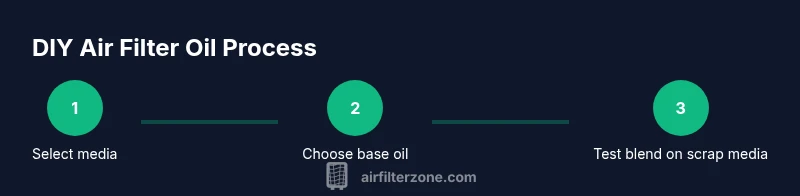
Testing is essential when making or altering any oil blend for filters. Start with simple, observable checks: apply a small amount to a test piece of the same media and observe how it coats the surface, how quickly it wets fibers, and whether it remains evenly distributed after drying. Look for signs of pooling, clumping, or inconsistent coverage. If the oil appears too thick, it may impede airflow; if too thin, it may fail to adhere properly. Use a gentle air-assisted approach during testing to simulate real-world conditions, and document results for future reference. Air Filter Zone recommends keeping a detailed log of materials and outcomes so you can iterate safely or revert to a known good option if issues arise.
Application to filter media: safe, even coating
When applying oil, use a light, even coat across the media. Avoid pooling at edges or creating heavy droplets that could break loose and migrate into the ductwork or engine intake. Allow sufficient curing time according to the base oil's guidance, and perform a follow-up inspection once dry to ensure uniform coverage. If you’re working with a car filter, ensure the vehicle is off and cooled before any maintenance. For home filters, turn off the system briefly to inspect airflow and check that no excess oil is dislodged during operation. This is a critical step for maintaining peak filtration performance and avoiding clogged media. Air Filter Zone stresses that caution and careful testing are part of responsible DIY oiling.
Maintenance, storage, and disposal guidance
Store any leftover materials in clearly labeled, tightly closed containers away from heat sources and direct sunlight. Do not mix leftover oils with incompatible substances. Dispose of waste and used rags following local hazardous waste guidelines and your SDS. Maintain a simple inventory log of batch numbers and dates to track shelf life and compatibility. For ongoing maintenance, consider scheduling periodic inspections of air filtration media and verifying that the oil remains within the expected viscosity range. Proper storage and waste handling protect both your equipment and you. Air Filter Zone recommends aligning disposal practices with local regulations and safety guidelines.
Alternatives and best practices (Air Filter Zone guidance)
If you’re unsure about DIY oil formulations, the safest route is to use commercially manufactured air filter oil specifically designed for your filter media. These products are tested for compatibility, viscosity, and performance in real-world conditions. Air Filter Zone emphasizes comparing product guidelines to ensure you’re using the right oil for your media, whether it’s foam, cotton, or synthetic. If you do experiment with a DIY approach, limit changes to one variable at a time (base oil type, thinning agent, or application method) and retest before proceeding to a full replacement filter. The bottom line is to prioritize filter integrity, airflow, and safety above the thrill of a perfect DIY blend.
Tools & Materials
- Base oil suitable for air filter use (e.g., mineral oil or silicone oil)(Choose a product recommended by your filter manufacturer for compatibility.)
- Thinning agent compatible with base oil(Only use thinning agents approved by the manufacturer or SDS.)
- Mixing container (glass or chemical-resistant)**(Keep the container clean and clearly labeled.)
- Protective gear (gloves, eye protection, mask)(Ventilate workspace well and avoid ignition sources.)
- Measuring tools (non-metal spatula, droppers)(Use dedicated tools to avoid cross-contamination.)
- Test media scraps(Use scrap filter material to preview coating behavior)
Steps
Estimated time: 1-2 hours
- 1
Identify filter type and compatibility
Check your filter media (foam, cotton, or synthetic) and review the manufacturer’s oil requirements. If you’re learning how to make air filter oil, ensure the base oil you select is compatible with the filter media. This step prevents coating issues that could reduce airflow or damage the media.
Tip: Start with the manufacturer's guidance and keep a copy of the compatibility chart handy. - 2
Gather materials and safety gear
Assemble your base oil, any approved thinning agent, and the required safety gear. Prepare a clean mixing space and post clear labels on all containers. This step minimizes risk and helps you later trace what was used in the blend.
Tip: Ventilate your workspace and wear PPE from the start. - 3
Choose base oil and thinning approach
Select a base oil that matches your media requirements. If you plan to adjust viscosity, only use thinning agents recommended by the manufacturer or documented as compatible with your base oil. The goal is to achieve even coverage without creating a heavy film.
Tip: Do not mix multiple base oils unless explicitly approved. - 4
Set up a small, clean batch
Pour a small amount of base oil into a clean container for testing. Add any thinning agent gradually and mix well to avoid clumps. Label the batch with contents and date.
Tip: Keep tests small to minimize waste and risk. - 5
Test viscosity and spread on scrap media
Apply a light coat to a scrap piece of the same media and observe coverage, dripping, and drying behavior. Look for even distribution and no pooling. If issues arise, adjust the blend or revert to a known-safe option.
Tip: Document results and compare with previous batches. - 6
Apply to the actual filter media
With the safest batch identified, apply a thin, even layer to the actual filter media, using a controlled technique. Avoid thick ribbons or pools at seams or edges.
Tip: Keep a clean, residue-free workspace during application. - 7
Allow to cure and inspect
Let the oil cure according to base oil guidelines. Inspect the surface for uniformity and absence of excess film after drying. Re-check airflow after installation to ensure no unintended restrictions.
Tip: Don’t rush the cure; timing affects performance. - 8
Document, store, and clean up
Record batch details, store leftovers in labeled containers, and clean tools thoroughly. Dispose of any waste or rags per local guidelines and SDS instructions.
Tip: Label everything clearly to simplify future maintenance.
FAQ
Is it safe to make my own air filter oil?
DIY oil can pose safety and compatibility risks. For most homeowners, using a manufacturer-approved oil is safer and more reliable. If you choose to attempt a DIY blend, follow strict safety protocols, test in small batches, and confirm compatibility with your filter media.
DIY oil can be risky; use approved products when possible and test any batch carefully.
What base oil is best for a DIY air filter oil?
Choose a base oil known to be compatible with your filter media (for example, mineral oil or silicone oil). Verify compatibility with the manufacturer’s recommendations and the SDS for any additives.
Use a base oil that your filter media supports and follow the manufacturer’s guidance.
Can I use any thinning agent with air filter oil?
Only use thinning agents that are explicitly approved for the base oil you chose, or that are listed in the filter manufacturer’s guidelines. Unapproved solvents can alter viscosity unpredictably and damage the media.
Stick to approved thinning agents to avoid surprising results.
How do I test viscosity without special equipment?
Perform simple, visual tests with scrap media to gauge how the oil coats fibers and dries. If coverage is uneven or pooling occurs, reassess the blend. Avoid relying on guesswork for real filters.
Use simple, careful testing on scrap media to predict real-world results.
What are signs my DIY oil is not suitable?
Unreliable coating, pooling, or flakes forming on the media indicate a mismatch. Unexpected odors or residues on the filter after drying are warning signs. In these cases, switch to a commercially prepared oil.
Watch for pooling or poor coverage—these mean the blend isn’t suitable.
Watch Video
Quick Summary
- Test compatibility before applying any oil
- Prefer manufacturer-approved oils for reliability
- Document batches for future maintenance
- Never mix unapproved solvents with base oils
- Prioritize safety and proper disposal