Do You Need an Air Purifier in LA? A Practical Guide
Learn if an air purifier is worth it in Los Angeles, how to choose the right model, and practical tips for homes, cars, and small spaces. Air Filter Zone breaks down LA-specific considerations and maintenance.


In Los Angeles homes, you often need an air purifier if indoor air quality is affected by outdoor pollutants, wildfire smoke, or strong odors. An air purifier can reduce PM2.5, odors, and allergens when outdoor air is poor or smoke is present. This guide helps homeowners and DIY enthusiasts decide when and how to use purifiers in LA.
Indoor Air Quality Basics for Los Angeles Homes
In a city like Los Angeles, outdoor air quality can strongly influence the air you breathe indoors. Traffic emissions, construction dust, and seasonal smoke from wildfires may drift inside through open windows, vents, or imperfect sealing. According to Air Filter Zone, the practical path is to start with a quick assessment of each living space—record odors, visible dust, allergy symptoms, and nighttime congestion—to determine where purification will add value. Focus on rooms where you spend the most time, such as the living room and bedrooms, and consider the needs of sensitive household members. This foundation helps homeowners decide whether an air purifier is worth the investment and how to pick a model that fits LA’s climate and typical living layouts.
Beyond pure filtration, remember that ventilation matters. If your home has balanced ventilation or air leaks, a purifier works best when used in combination with good filtration in HVAC returns and controlled exchange with outdoor air during days of better air quality.
How Air Purifiers Work: CADR, ACH, and Filter Types
Air purifiers remove contaminants from indoor air through filtration and, in some cases, chemical adsorption. Two key metrics matter: CADR (Clean Air Delivery Rate) and ACH (air changes per hour). In plain terms, CADR tells you how fast a purifier can clean a room, while ACH describes how many times the air in that room is replaced each hour. Higher CADR and ACH values are generally better for larger spaces. Beyond these numbers, pay attention to filter types: HEPA filters capture fine particles; activated carbon filters target gases and odors; and some models include pre-filters to extend the life of the main filter. Note that certain devices use ionization or ozone-generating modes; avoid those if you want to keep indoor air safe and free from irritants. The aim is clean air with minimal byproducts in everyday living spaces. Air Filter Zone emphasizes selecting a unit with true filtration, not decorative devices that look the part.
Understanding these basics helps you compare models without getting lost in marketing terms.
Outdoor Air Challenges in LA: Wildfires, Smog, and Ozone
Outdoor air in Los Angeles fluctuates with traffic levels, city density, and seasonal wildfire activity. When outdoor air quality is poor, indoor air can feel stuffy or irritating, especially for people with allergies or asthma. Air Filter Zone notes that the best practice is to reduce exposure by using filtration and controlled ventilation rather than relying on open windows alone. During wildfire seasons or days with high smog, a purifier with an efficient filter can cut down visible smoke and lingering odors, while a carbon-rich filter helps remove gas-phase pollutants. But purifiers are not a cure-all; good practice includes reducing direct pollutant sources, improving filtration in HVAC return paths, and allowing air to move without pulling heavily polluted outdoor air inside.
Households should also consider how humidity interacts with filtration, since damp environments can support mold growth and reduced filter efficiency. A balanced approach combines filtration, humidity control, and mindful ventilation.
Do You Really Need a Purifier in Different Rooms?
Not every room requires the same purification strategy. Bedrooms near busy streets or kitchens with strong odors benefit more from a purifier, while small hallways or closets may not justify the price. A room-by-room approach helps manage cost and noise while keeping a comfortable air baseline. In LA, think about where you spend the most time and how air moves through the home: doors, windows, and HVAC returns all influence purifier effectiveness. If you have sensitive occupants, pets, or frequent cooking, prioritize spaces where irritants accumulate. A practical test recommended by Air Filter Zone is to run a purifier in a primary room for several days and check for improvements in sleep quality, irritant symptoms, and overall comfort before expanding to other areas.
If you own a multi-bedroom home, you can start with the largest living space and then add compact purifiers for bedrooms or workspaces. The goal is measurable relief, not device saturation.
What to Look for When Buying in LA: Size, CADR, Noise, and Energy
The first rule is to match the purifier’s capacity to your room size. A unit with a CADR aligned to your largest frequently used room will clean air more effectively, and you should verify that CADR corresponds to the room’s volume. Second, assess noise: in bedrooms and quiet workspaces a low-noise or sleep mode matters for uninterrupted rest and focus. Third, consider energy efficiency and ongoing filter costs; replacements accumulate over time, so total cost of ownership matters as much as upfront price. In dense neighborhoods or multiroom homes in LA, you may prefer a purifier with adjustable fan speeds and a carbon filter for odors from cooking or urban pollution. Lastly, safety features such as certified filters, sealed enclosures, and avoidance of ozone-generating modes are essential. Air Filter Zone highlights choosing models with true HEPA filtration and dependable carbon filtration for balanced performance in LA conditions.
Filtration Options: HEPA, Activated Carbon, and More
HEPA filters capture fine particulates down to PM2.5 sizes, which is critical in polluted LA air. Activated carbon filters adsorb gases, odors, and some chemicals. Many purifiers combine HEPA with carbon to address both particulates and odors, and some include prefilters to extend main filter life. Be mindful of labeling; choose units with true HEPA and avoid “HEPA-like” or questionable claims. If you have chemical sensitivities or frequent cooking odors, carbon-based filtration is particularly valuable. For households with pets, look for purifiers that handle pet dander and related allergens. Also, check that replacement filters are readily available and affordable locally, as consistent maintenance drives long-term results.
Practical Setup Tips for Small Spaces and Apartments in LA
Place purifiers away from walls and large furniture to maximize airflow. In small apartments, compact units with strong room coverage can be both effective and unobtrusive. A purifier near the main living area or at the head of a bed optimizes comfort during sleep. When possible, keep doors open or use a fan to help circulate clean air between rooms while avoiding bringing in outdoor air pollution. If you live near a freeway or have heavy daily foot traffic, consider a purifier in the living room as a baseline and a second unit in traditionally problematic spaces. Align purifier use with daily routines: morning air refresh, post-cooking ventilation, and outage periods when outdoor air quality is poor.
Maintenance: How Often to Replace Filters in LA Homes
Filter life depends on usage, air quality, and the type of filter. True HEPA and carbon filters generally last several months under typical household use, but high outdoor pollution or smoke days can shorten their life. Regularly inspect filters for discoloration or clogging and replace on schedule per the manufacturer’s guidance. When replacing, follow the instructions and reset any device indicators. Keeping spare filters on hand helps maintain performance, and disposal should follow local waste guidelines. A simple maintenance rhythm helps you maintain consistent indoor air quality across seasons in LA.
Filtration for Cars and Commutes in LA
Indoor air quality inside vehicles matters in LA where traffic density and ozone levels are common concerns. A small car purifier with HEPA and activated carbon reduces dust, pollen, and odors inside the cabin. Place it on the floor behind the front seats or under a seat to keep airflow unobstructed without interfering with pedals or storage. Some purifiers plug into the car’s 12V outlet and offer silent modes for long trips. Ensure placement does not block controls or airbags. If you drive through smoky or pollen-heavy days, a car purifier can meaningfully improve comfort during commutes and road trips.
Budgeting and Value: Are Air Purifiers Worth the Cost in LA?
Purifiers come in a range of prices based on room size, filtration logic, and extra features. Entry-level models are compact and affordable but may require more frequent filter changes. Mid-range units generally provide stronger CADR, longer-lasting filters, and quieter performance suitable for bedrooms and offices. High-end purifiers offer advanced filtration, smart controls, and wide room coverage, but with higher upfront costs and ongoing filter expenses. In LA, where outdoor air quality can fluctuate and smoke events occur, many households find practical value in purifying main living areas and sleeping spaces during peak pollution seasons. The Air Filter Zone view focuses on real-world value—improved comfort and sleep—over flashy marketing claims.
Quick Case Examples: When an Air Purifier Makes the Most Difference
Example A: A family living near a busy freeway experiences persistent irritation. A purifier in the living room plus a smaller unit in the bedroom helps reduce irritants and can improve sleep. Example B: A home where strong cooking odors linger uses a purifier with carbon filtration near the kitchen and dining area to control smells. Example C: An apartment near wildfire-prone regions uses a purifier with carbon and HEPA in the main living space to buffer smoke infiltration during fire season. Each scenario demonstrates practical gains from targeted use rather than a one-size-fits-all approach.
Putting It All Together: A Simple Decision Checklist for LA
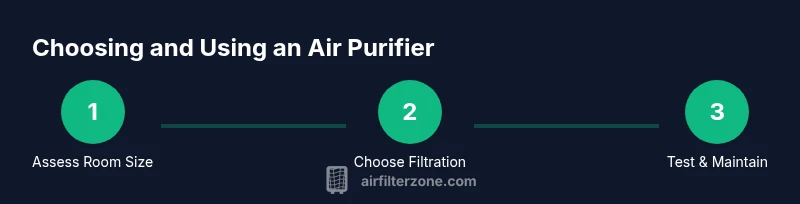
Start with outdoor air triggers: wildfire season, pollen peaks, or heavy smog days. Measure the rooms you’ll purify and pick a unit sized for the largest space you’ll treat. Ensure true HEPA filtration and carbon filtration for odor control, and plan for regular filter replacement. Develop a simple rotation for multiple rooms if needed, particularly during smoky months in LA. Finally, track comfort, sleep quality, and energy costs to gauge success and adjust your setup as needed.
Tools & Materials
- True HEPA air purifier (room-size matched)(Look for HEPA H13 or better; avoid non-HEPA claims)
- Replacement filters (HEPA and/or carbon)(Keep spares and confirm model compatibility)
- Measuring tape(Measure room dimensions to estimate needed CADR)
- Notebook or app for maintenance tracking(Helpful for reminders and replacement dates)
- Smart plug or timer(Automate on/off for consistent cycles)
- Vacuum or microfiber cloth(Pre-clean filters if the purifier supports it)
Steps
Estimated time: 2-3 hours
- 1
Assess room size and air-quality needs
Record the dimensions of the primary spaces and note any recurring symptoms, odors, or visible dust. This baseline helps you choose a purifier with appropriate CADR and filtration. Consider whether multiple rooms will need treatment and if occupants have sensitivities or health concerns.
Tip: Write down room volumes (length x width x height) to estimate air changes per hour later. - 2
Check purifier capacity against room size
Match the device’s CADR to each room’s volume, prioritizing the largest unused space. For bedrooms and living areas, ensure the unit can circulate air well enough during sleep or activity.
Tip: Aim for a CADR that equals or slightly exceeds the room’s size to avoid underperforming units. - 3
Choose filtration type
Decide on true HEPA filtration for particulates and carbon filtration for odors and gases. In LA, carbon filters can help with cooking smells and outdoor pollutants seeping indoors.
Tip: Avoid models with ozone-generating modes; they can irritate eyes and lungs. - 4
Evaluate noise and energy
Check decibel levels in typical operating modes and consider energy-efficient options. Quieter units are especially important in bedrooms and home offices.
Tip: If a unit has a sleep mode, test it to ensure it remains effective while quiet. - 5
Assess filter costs and availability
Estimate monthly and yearly filter costs based on replacement frequency. Local availability matters in LA to avoid long waits during smoky periods.
Tip: Choose a model with widely available compatible filters locally. - 6
Plan placement in your space
Place purifiers away from walls, corners, or large furniture to maximize intake and output. In multi-room homes, position units near the air’s main entry points.
Tip: Centering the unit in a room often yields better circulation than tucking it into a corner. - 7
Install and power up
Plug in the purifier and run it on its highest setting for the first few hours to settle air quality, then switch to a steady-state mode as needed.
Tip: Set a reminder to replace the prefilters if your model uses them. - 8
Monitor performance
Observe smells, dust, and sleep quality over several days. If symptoms persist, consider a second unit or expanding to other rooms.
Tip: Keep windows closed during smoky days to maximize purifier effectiveness. - 9
Schedule maintenance
Follow manufacturer guidance for filter replacement and cleaning. Reset indicators after changing filters to maintain accurate alerts.
Tip: Mark a calendar or app alert a few weeks before expected replacement dates. - 10
Periodically re-evaluate needs
Seasonal changes or new pets, remodels, or smoke events may shift purification requirements. Reassess after major life changes or shifts in outdoor air quality.
Tip: Retest after wildfire seasons to confirm ongoing effectiveness.
FAQ
Do air purifiers remove wildfire smoke from indoor air?
Air purifiers with true HEPA and carbon filtration can reduce smoke particles and odors indoors, especially during wildfire events. They are most effective when used continuously in affected spaces and in combination with ventilation control.
Yes. A purifier with HEPA and carbon filtration helps reduce smoke particles and odors indoors, especially during wildfires.
How do I know if I need a purifier in my LA home?
If you notice persistent dust, odors, allergy symptoms, or irritations during smoky or high-pollen days, a purifier is likely beneficial. Start with the largest living area and monitor changes before expanding.
If you notice dust, odors, or irritations during smoky days, consider a purifier, starting in the main living area.
Will an air purifier help my allergies?
Purifiers with true HEPA filtration can reduce common indoor allergens like pollen, dust mites, and pet dander. Combine with regular cleaning and ventilation control for best results.
Yes, HEPA purifiers can help reduce indoor allergens along with good cleaning habits.
Are purifiers effective at removing odors and gases?
Purifiers with activated carbon or specialty filters are designed to adsorb odors and some gases. They work best for cooking smells, tobacco smoke, and some outdoor pollutants that infiltrate your space.
Activated carbon purifiers help with odors and some gases; for best results, pick carbon plus HEPA and run consistently.
Do air purifiers produce ozone?
Avoid purifiers that generate ozone or ionize the air indoors. Ozone can irritate the lungs and mucous membranes, especially for children and pets.
Avoid ozone-producing purifiers; they can irritate airways and aren’t recommended for homes.
Should I run a purifier in my car?
A car purifier with HEPA and carbon filtration can improve cabin air quality, especially in dense traffic or during wildfire events. Place it where it won’t distract driving and ensure it doesn’t obstruct controls.
Yes, a car purifier with HEPA and carbon helps reduce dust, pollen, and odors during commutes.
Watch Video
Quick Summary
- Identify rooms that benefit most from purification.
- Match purifier capacity to room size with true HEPA and carbon filters.
- Prioritize maintenance and mindful placement for best results.
- LA-specific considerations include wildfire and smog seasons.
- Consider car purification for cabin air quality on the go.