Best way to filter air in your home: Layered air filtration guide
Learn a practical, layered approach to filter air in your home with HVAC upgrades, portable purifiers, humidity control, and maintenance schedules. This Air Filter Zone guide offers actionable steps to improve indoor air quality for households.


To filter air in your home effectively, use a layered approach: upgrade your central filter to a high-MERV rating (MERV 13+), add portable HEPA purifiers in key rooms, and schedule regular maintenance. This combination reduces particulates, allergens, and odors while preserving airflow. According to Air Filter Zone, this layered strategy delivers the most reliable results.
Understanding Indoor Air Quality: What to Filter and Why
Indoor air is a complex mix of particulates, gases, and humidity levels. Common pollutants include dust, pollen, pet dander, smoke particles, and volatile organic compounds (VOCs) from household products. Poor air quality can worsen allergies, asthma, and sleep quality, especially in tightly sealed homes. A layered filtration strategy targets multiple pollutant types, reduces sources of irritation, and maintains comfortable humidity levels. By combining high-efficiency filtration with air-cleaning devices and source control, you can notice improvements in breathability, nose and throat comfort, and overall well-being. This approach aligns with Air Filter Zone recommendations for practical, real-world results.
The Three Layers of Effective Filtration
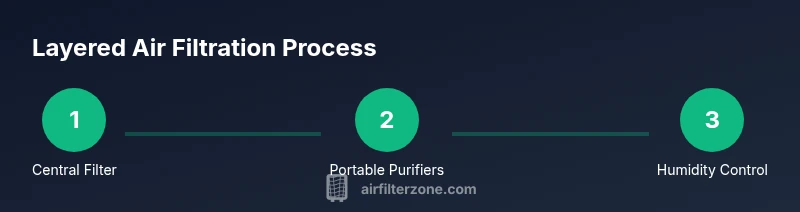
Modern home air filtration works best when you combine three layers: (1) centralized filtration in your HVAC system, (2) portable air cleaners in high-traffic rooms, and (3) source control and humidity management. The HVAC filter reduces periodic dust and pollen as air circulates through your home. Portable purifiers target rooms with higher activity, cooking odors, or pets. Humidity control helps suppress mold growth and dust mites, which thrive in too-humid environments. Each layer complements the others, creating cleaner air overall and reducing reliance on a single device.
Choosing the Right HVAC Filter: MERV, CADR, and Sizing
Selecting the right filter for your HVAC system is critical. A higher MERV rating improves filtration efficiency but can increase airflow resistance, so confirm your blower can handle it. For many homes, MERV 13 provides a robust balance of filtration and airflow; higher ratings (MERV 14-16) are suitable for well-maintained systems with good airflow. CADR (clean air delivery rate) is more relevant for portable purifiers and helps you match purifier size to room volume. Always check the filter dimensions and ensure compatibility with your furnace or air handler. Regularly replacing filters according to the manufacturer’s schedule is essential to preserve efficiency and air quality.
Portable Purifiers: Placement, CADR, and Maintenance
Portable HEPA purifiers can fill gaps left by central filtration, especially in bedrooms and living rooms. Place purifiers in rooms where people spend the most time or near known pollutant sources like kitchens or pet areas. Choose units with a CADR appropriate for the room size (CADR should be at least two-thirds of the room’s square footage in cfm). Maintain them by replacing filters on schedule and cleaning exterior grilles monthly. Using multiple purifiers in a home with open floor plans often yields better results than a single large unit.
Humidity, VOCs, and Odors: Don’t Overlook the Environment
Humidity levels around 40-60% help limit dust mites and mold growth. Use a humidifier or dehumidifier to maintain this range, depending on your climate and season. VOCs can accumulate from cleaning products, paints, and furnishings; minimize VOC sources by choosing low-VOC products and ensuring good ventilation during and after use. Activated carbon in some purifiers or standalone carbon filters can help adsorb odors and chemicals, providing a noticeable improvement in freshness.
A Practical Home Setup: A Balanced Plan for a 1,800–2,000 Sq Ft Home
In a typical home, upgrade the central filter to MERV 13+ and install a well-maintained furnace filter. Add a pair of portable purifiers in common areas (living room and hallway near bedrooms) and one in the kitchen area if cooking odors are persistent. Keep humidity between 40-60% with a humidifier or dehumidifier as needed. Maintain a filter-change schedule (every 3 months for central filters; 6–12 months for some carbon prefilters) and verify purifier performance every two weeks during the first month after setup. This balanced approach minimizes exposure to particulates and odors while keeping energy use reasonable.
Maintenance Calendar: Keeping Air Clean Over Time
A proactive maintenance routine is essential. Replace central HVAC filters every 90 days (or sooner with heavy use or pets). Clean purifier prefilters monthly and replace HEPA filters per manufacturer guidance. Check humidity and adjust devices to maintain target levels. Keep a simple log of replacements and cleanings to track progress over seasons. A consistent calendar helps sustain the benefits of your layered filtration system.
Tools & Materials
- High-MERV HVAC filter (MERV 13+)(Check your system's blower compatibility; measure filter slot before purchasing)
- Portable HEPA air purifiers(Choose models with CADR appropriate for each room; aim for at least 2/3 room size in cfm)
- Air quality monitor (optional but recommended)(Helps establish a baseline and track progress)
- Humidifier or dehumidifier(Maintain 40–60% relative humidity for comfort and mold prevention)
- Vacuum with HEPA attachment(Used to remove dust from vents and surfaces for lower particulate load)
- Maintenance log(Notebook or app to document filter changes and measurements)
Steps
Estimated time: 2-4 hours for initial setup; ongoing monthly maintenance and monitoring
- 1
Assess current air quality and filtration baseline
Use a consumer air quality monitor to gauge baseline PM2.5, CO2, and humidity levels. This establishes your starting point and helps tailor the layered plan. If you don’t have a monitor, note symptoms and visible dust in rooms as a rough indicator.
Tip: Place the monitor in the living room and a bedroom to compare spaces with different activity levels. - 2
Check HVAC compatibility for a higher-MERV filter
Confirm your blower can handle a MERV 13+ filter without excessive pressure drop. If your current system is older or has a tight coil, consult a technician before upgrading. Use the filter size printed on your current filter.
Tip: Ask for a MERV rating that balances filtration and airflow; some systems tolerate up to MERV 16 with proper maintenance. - 3
Install or upgrade the central HVAC filter
Install the recommended high-MERV filter and ensure a secure seal around the edges. Label the date for replacement and set a reminder. After installation, run the fan on high for 15–30 minutes to flush particulates.
Tip: Double-check the airflow direction arrows on the filter align with the system’s airflow. - 4
Choose and place portable purifiers
Select purifiers with appropriate CADR for each room. Place them in rooms where occupants spend most time and near pollutant sources (kitchen, pet areas). Keep at least a couple of feet from walls for optimal intake.
Tip: Avoid corners or clutter that block airflow; use one purifier per 200–400 sq ft as a starting rule. - 5
Control humidity and VOC sources
Set humidifier/dehumidifier to maintain 40–60% RH. Reduce VOCs by using low-VOC paints, cleaning products, and ensuring good ventilation during activities like painting or solvent use.
Tip: Ventilate during cooking and cleaning to prevent transient spikes in pollutants. - 6
Establish a maintenance schedule
Create a calendar for quarterly central filter changes and monthly purifier checks. Record replacements in a log to monitor trends over seasons. Reassess room CADR needs if air quality does not improve as expected.
Tip: Set digital reminders a week before each filter change to avoid gaps. - 7
Test progress and adjust
Recheck PM2.5, CO2, and humidity after two weeks. If targets aren’t met, adjust purifier placement or upgrade to a higher-CADR unit. Consider adding more purifiers in high-traffic zones if needed.
Tip: Small adjustments can yield noticeable improvements; don’t over-purge one space.
FAQ
What is the most effective filter rating for a typical home?
For many homes, a MERV 13 filter provides strong filtration while maintaining airflow. If your system supports it and you’re addressing severe allergies or smoke, a higher rating (MERV 14-16) can help, but always verify compatibility with your HVAC.
For most homes, start with a MERV 13. If you have heavy allergies or smoke exposure and your system allows it, consider higher ratings, but check compatibility first.
How often should I replace central filters?
Replace central HVAC filters every 90 days under normal use; more frequently if you have pets, high dust, or during allergy seasons. Use manufacturer guidelines as the baseline.
Typically every 90 days, or sooner if you have pets or a dusty environment. Check your filter and system guidelines.
Do portable air purifiers remove all odors and VOCs?
Portable purifiers with activated carbon or specialty chemisorption filters help reduce odors and some VOCs, but complete removal depends on pollutant type and source. Combine with ventilation and source control for best results.
They help reduce odors and VOCs, but aren’t perfect—use with ventilation and low-VOC products for best results.
Should I seal rooms when using purifiers?
Keep doors open to promote cross-ventilation in addition to purifier use. Sealing rooms can trap pollutants if the purifier isn’t sized for the space.
Open doors help purifiers circulate air; sealing rooms can trap pollutants if purifiers aren’t properly sized.
Is it worth investing in multiple purifiers for a home with an open floor plan?
Yes, placing 2–3 purifiers in strategic zones (living area, bedroom cluster) can significantly improve air quality in open layouts compared to a single unit.
Yes—use a few purifiers placed in high-traffic zones for the best coverage.
How can I tell if my air quality is improving?
Monitor PM2.5 and humidity levels, plus symptoms like fewer allergy flare-ups. A consistent drop in particulate readings and stable humidity typically indicates improvement.
Look for lower PM2.5 and stable humidity, plus fewer allergy symptoms.
Watch Video
Quick Summary
- Adopt a layered filtration strategy for best results
- Upgrade central filters and supplement with portable purifiers
- Manage humidity and VOC sources to reduce mold and odors
- Maintain a strict replacement and maintenance schedule
- Measure progress to fine-tune placement and device choices