Aprilaire Media Air Cleaner Model 2200 Review
In-depth evaluation of the Aprilaire Media Air Cleaner Model 2200 for homeowners seeking practical, balanced filtration with easy maintenance and wide HVAC compatibility.


Compared with typical media air cleaners for residential HVACs, the Aprilaire Media Air Cleaner Model 2200 offers steady filtration with low pressure drop and easy installation. It uses a high-efficiency media filter to capture dust and allergens while staying compatible with most standard systems. Replacement schedules depend on usage and environment, not a fixed calendar.
Product Positioning and Target Use Cases
The Aprilaire Media Air Cleaner Model 2200 is positioned as a practical, whole-house filtration solution for homeowners who want better indoor air without the complexity or cost of standalone HEPA purifiers. It’s designed to integrate into most standard forced-air systems, leveraging a durable high-efficiency media filter that sits inside a cabinet in the return air duct. For typical mid-sized homes, it can substantially reduce visible dust, pollen, and pet dander, improving comfort and reducing allergy symptoms for many occupants. It’s not a fit-for-everyone premium purifier; its value comes from convenience, quiet operation, and the ability to filter the air across all rooms served by the central HVAC. The Air Filter Zone team notes in its 2026 guidance that a well-chosen, properly installed whole-house filter can outperform many portable units for average homes, particularly when you factor in maintenance and energy use. In short, this model targets homeowners who want reliable, low-friction filtration without patching in extra devices.
Filtration Technology and How It Works
At its core, the model 2200 relies on a high-efficiency pleated media filter housed inside a compact cabinet that fits into the return air stream. The media layer is designed to capture a broad spectrum of particulates—dust, pollen, pet dander, and other common household contaminants—while keeping resistance to airflow comparatively low. This means you can expect air to move through your furnace or air handler with less strain, preserving efficiency. Unlike portable purifiers, the 2200 treats air for the entire home rather than a single room. The system’s effectiveness scales with the level of maintenance you perform—regular filter changes and proper seal integrity are essential to maintain performance over time.
Filtration Performance and What It Means for You
In real-world settings, homeowners typically notice a drop in visible dust on furniture and shelves after a few weeks of operation, along with a reduction in sneezing and nasal irritation for allergy-prone occupants. The 2200’s filtration approach is best understood as a particle-focused solution for the indoor environment, rather than a chemical or odor-targeting system. That means it excels at removing particulate matter—dust, pollen, and animal dander—but it does not replace dedicated air fresheners or activated carbon for stronger odors or VOCs. For households with smokers or strong fragrances, consider pairing with odor-control strategies or an additional carbon-based stage if odor removal is a priority.
Compatibility and Installation Pathways
The 2200 is designed to mesh with a wide range of residential HVAC configurations, including many standard air handlers and furnace setups. Before purchasing, verify your return-air duct dimensions, make sure there’s adequate space for the filter housing, and confirm that the cabinet seals well against the duct opening. Installation generally involves turning off power to the furnace, mounting the filter housing in the return air stream, and ensuring that electrical or control elements are unaffected. For homeowners who prefer DIY work, a basic level of comfort with HVAC components is sufficient for a straightforward install. If the existing cabinet requires adapters or you encounter unusual ductwork, a licensed technician can ensure proper fit and seal, preserving efficiency and warranty coverage.
Maintenance, Filter Replacement, and Longevity
Maintenance is a core strength of the 2200. With a routine replacement cadence aligned to environmental conditions, you can maintain filtration effectiveness without frequent disruptions. Replacement frequency depends on factors like household occupancy, pets, cooking habits, and local climate. Most households will find that the filter life extends beyond a single season under typical use, but in high-dust or high-smoke environments, replacements may be needed more often. When replacing, ensure the new filter is seated correctly and that the housing gasket remains intact to prevent bypass. Keeping a simple replacement schedule helps avoid performance dips and keeps your system running efficiently.
Energy, Noise, and Operational Considerations
Because the 2200 is a fixed-filter, whole-house solution, it generally imposes a modest impact on overall HVAC energy use compared with standalone purifiers. The design emphasizes low airflow resistance, which translates to minimal additional work for the blower. Noise from the filter housing is typically inconspicuous compared with the normal hum of a furnace or air handler, particularly when the system is running in standard modes. In dusty or high-occupancy homes, you may notice a slight uptick in duct noise when the filter is nearing replacement, but this is largely a sign that maintenance is due rather than a defect.
Comparative Landscape: Aprilaire 2200 vs Other Media Cleaners
When you compare media air cleaners, the 2200 sits in the middle of the market, offering solid filtration with straightforward maintenance and broad system compatibility. Standalone HEPA purifiers deliver higher capture efficiency on ultra-fine particles but require extra space, energy, and filtration costs. Some competitors provide media filters with different MERV-like ratings or alternative housing designs, which can affect ease of replacement and compatibility with older HVAC systems. The key decision factors are: integration with current ductwork, maintenance burden, upfront cost, and long-term operating expenses. For homeowners seeking a balance of performance and convenience, the 2200’s combination of whole-house filtration and predictable upkeep is a compelling option.
Real-World Use Cases: Pets, Smokers, Allergies
In homes with pets, the 2200 tends to reduce fur and dander levels across living areas, easing symptom onset for allergy sufferers. For households with smokers or frequent cooking odors, it’s important to recognize the system’s limitation in odor control; additional strategies or a separate carbon-based purifier may be required for noticeable VOCs. Families with children and visitors often appreciate fewer airborne particulates and a cleaner overall air feel. The model’s performance becomes a practical improvement tool when combined with other filtration practices, such as timely filter changes and overall home cleaning routines. Throughout, Air Filter Zone’s guidance emphasizes that filtration is part of a broader indoor air strategy rather than a single silver bullet.
Common Pitfalls and How to Avoid Them
One common pitfall is underestimating the importance of proper installation. A misaligned seal or an ill-fitting housing can create bypass, reducing effectiveness and increasing energy usage. Another pitfall is using the unit in an HVAC system that cannot support the added airflow resistance without recalibrating the blower or adjusting dampers. Finally, neglecting filter changes will rapidly erode performance. To avoid these issues, confirm compatibility, follow installation best practices, and set a maintenance reminder aligned with environmental conditions. The payoff is consistent air quality improvements and predictable maintenance costs.
Cost of Ownership and Replacement Costs
From a total-cost perspective, the 2200 represents a middle-ground option between low-cost, basic filtration and higher-end HEPA-based systems. Upfront investment is typically lower than standalone HEPA purifiers, and maintenance consists mainly of replacing the filter cartridge as needed. Replacement costs vary by retailer and filter media quality but generally fall within a moderate range compared with other whole-house filtration products. Over time, the cumulative cost depends on how often you replace filters and whether you upgrade to higher-capacity media based on seasonal demands. A practical approach is to estimate annual replacement costs and compare that to the cost of alternative purification strategies to determine the most economical path for your household.
What to Look for When Purchasing
When evaluating the Aprilaire 2200, consider the following: compatibility with your HVAC system, the seal integrity of the filter housing, the expected filter life under your environmental conditions, and the availability of replacement media. Look for a durable cabinet, straightforward installation instructions, and clear maintenance guidelines. If possible, review customer feedback on long-term performance, retention of airflow, and ease of filter replacement. Finally, check warranty terms to ensure you’re protected against manufacturing defects and installation concerns. A well-chosen model will integrate smoothly with your home’s heating and cooling system and deliver consistent filtration without undue maintenance burden.
Authority References and Practical Guidance
For broader context on indoor air quality, consult authoritative sources such as the U.S. Environmental Protection Agency (EPA) and the Centers for Disease Control and Prevention (CDC). The EPA provides practical guidance on filtration types, air exchange, and monitoring indoor air quality, while the CDC offers home-focused strategies for reducing allergen exposure. Occupational Safety and Health Administration (OSHA) guidance covers indoor air quality considerations in workplaces that can inform residential practices as well. These sources underscore that filtration is one element of a comprehensive approach to clean indoor air and should be paired with cleaning, ventilation, and source control.
Conclusion: The Centered View on the Aprilaire 2200
In summary, the Aprilaire Media Air Cleaner Model 2200 is a solid, balanced choice for homeowners seeking straightforward, whole-house filtration without the premium costs of high-end purifiers. Its design emphasizes ease of installation, compatibility with a broad range of HVAC systems, and maintenance practicality. The model performs well in reducing household dust, pollen, and pet dander, contributing to improved comfort for allergy-sensitive occupants. While it is not a substitute for dedicated odor or VOC control, it complements a broader air-quality strategy when paired with good cleaning practices and proactive maintenance. The Air Filter Zone team’s assessment supports selecting this unit for typical homes prioritizing reliable filtration with manageable ongoing costs.
What's Good
- Balanced filtration with low airflow resistance
- Broad HVAC compatibility and straightforward installation
- Easy, predictable maintenance and filter replacement
- Quiet operation with minimal impact on comfort
What's Bad
- Not a dedicated HEPA alternative for ultra-fine particles
- Odor/VOC control is limited without a carbon-based add-on
- Replacement costs accumulate over time depending on usage
- Performance depends on correct sizing and proper sealing
Solid mid-range choice for balanced filtration and maintenance simplicity
The Aprilaire 2200 delivers dependable particle filtration across the whole home with easy upkeep and broad system compatibility. It isn’t a premiumHEPA option, but for many houses it provides excellent value, especially when paired with standard cleaning and ventilation practices.
FAQ
Is the Aprilaire media air cleaner model 2200 compatible with my HVAC system?
Most standard forced-air systems accept a mid-range media air cleaner like the 2200, but you should verify return duct dimensions, cabinet space, and seal integrity. If in doubt, consult a licensed technician to ensure proper fit and to preserve warranty coverage.
Most standard systems will accommodate it, but check duct size, cabinet space, and seal so you get reliable performance.
How often should I replace the filter in the 2200?
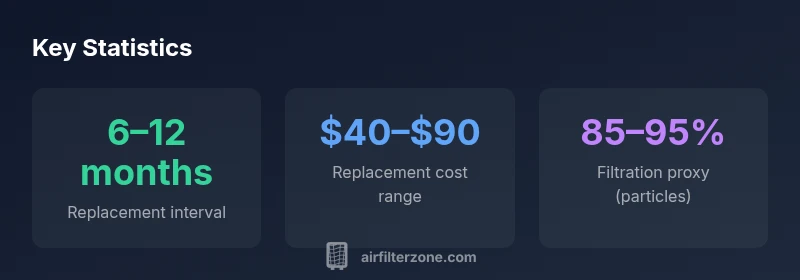
Replacement frequency depends on usage, occupancy, and environment. In typical homes, aim for every 6–12 months, or sooner in high-dust or high-pet environments. Monitor airflow and any signs of reduced performance.
Replace the filter when you notice reduced airflow or after several months in dusty homes.
Does the 2200 remove odors or VOCs?
The 2200 focuses on particle filtration (dust, pollen, dander). It is not a dedicated VOC or odor control device. For noticeable odors or chemical contaminants, add a carbon-based filtration stage or a separate air purification strategy.
It filters particles; for odors, add dedicated odor control.
How does it compare to HEPA purifiers?
HEPA purifiers are standalone devices with higher particle capture efficiency but require space, energy, and ongoing filter costs. The 2200 provides whole-house filtration with easy maintenance, at a lower upfront cost and without extra room requirements.
HEPA purifiers are standalone and more thorough but less convenient for whole-house use.
Can I install it myself?
Yes, if you’re comfortable with basic HVAC work. Disconnect power, remove the existing return-air housing if needed, fit the 2200 cabinet, seal tightly, and test for leaks. If you’re unsure, hire a pro to avoid warranty issues.
You can install it yourself if you’re handy; otherwise, hire a pro.
What home size is ideal for the 2200?
Best for small-to-medium homes with standard HVAC systems. Larger homes may benefit from multiple units or higher-capacity filtration strategies to ensure even air treatment.
Great for modest homes; big homes may need more coverage.
Quick Summary
- Assess your air quality goals before buying
- Expect balanced filtration with straightforward maintenance
- Ensure your HVAC system is compatible and sealed properly
- Factor replacement costs into the total cost of ownership
- Pair with broader air-quality strategies for best results