Air Purifier After Renovation: A Practical Guide
Learn how to use an air purifier after renovation to remove dust, VOCs, and odors. Step-by-step setup, placement tips, maintenance routines, and safety considerations for homeowners and DIYers.


After renovation, an air purifier helps restore clean air by capturing dust and VOCs. Start with a true HEPA unit, place it in a central living area, and run it on a suitable setting for 24–48 hours or longer as needed. Pair purification with ventilation and source control for best results. This guide walks you through sizing, placement, and routines.
Why renovation affects indoor air quality
Renovation projects generate a lot of dust, fine particulate matter, and chemicals from paints, adhesives, and solvents. Even after work is complete, tiny particles linger in upholstery, carpets, and HVAC ducts. An air purifier after renovation can dramatically reduce airborne contaminants, helping you and your family breathe easier while the space finishes settling. According to Air Filter Zone, post-renovation air quality improves when purification is combined with proper ventilation and source control.
Key pollutants after renovation
Dust is the most visible issue, but fine particles and chemical vapors from paints, sealants, and solvents can linger. VOCs migrate from cured finishes, adhesives, and primers, creating odors and potential irritation. Microbial growth is possible in damp conditions, while resuspended dust from foot traffic can keep particulates in circulation. An air purifier after renovation targets these pollutants with layered filtration, reducing exposure for residents and pets.
Benefits of using an air purifier after renovation
Using an air purifier after renovation can accelerate the return to comfortable indoor air. A purifier with a true HEPA filter captures most of the airborne dust, while activated carbon and other media help adsorb VOCs and odors. Continuous operation can lower irritants in the air that aggravate allergies or asthma and may shorten the time needed to reoccupy spaces like living rooms and bedrooms. Air Filter Zone analysis shows a noticeable reduction in airborne contaminants when using a purifier after renovation, especially when combined with ventilation and surface cleaning.
Types of air purifiers and what to look for
There are several purifier styles, but the most effective for post-renovation air is a true HEPA model with a sealed casing and a replaceable filter system. Look for a unit that explicitly lists true HEPA and a verified CADR related to your room size. Some models pair HEPA with activated carbon to tackle VOCs; others offer multi-stage filtration with UV-C or ionization, which may have safety considerations. Prioritize units with easy filter replacement and clear maintenance schedules, and avoid devices that claim unrealistically high filtration without proven tests. In short, plan for a purifier that can handle both dust and odors.
How to position and size an air purifier in your space
Size matters. Start by estimating the room’s usable area and selecting a purifier with a suitable clean air delivery rate (CADR) for that space. Place the unit in a central location away from walls and furniture so the air can circulate freely. If you have an open-plan living area, consider running multiple purifiers to create clean air zones. Keep doors open when practical during the initial cleanup to allow cross-ventilation. Remember that the purifier is part of a broader strategy that includes cleaning, sealing, and ventilation.
Pre-treatment steps before purifier use
Before switching on the purifier, perform a thorough cleaning of surfaces and floors to reduce dust resuspension. Vacuum with a HEPA-filtered vacuum, then wipe down surfaces with a damp microfiber cloth. Seal off the renovation zone with tapes or temporary barriers to prevent dust from migrating to other rooms. Close doors and windows if outdoors fumes or pollen are present, and turn off any HVAC zones that draw air from the renovation area to minimize cross-contamination.
Cleaning and maintenance routines
Establish a consistent cleaning cadence during the purifications window. Dust and vacuum frequently, especially in high-traffic zones, and replace pre-filters as recommended by the manufacturer to maintain airflow. When the main filter reaches recommended life, swap it with an official replacement and reset the purifier's counter. If you notice a drop in airflow, check for obstructions around the intake and clean the exterior housing as needed. A simple routine now saves more aggressive cleanup later.
Safety considerations and limitations
Air purifiers are helpful, but they do not replace good building practices. Do not rely on purifiers to handle all mold growth, moisture control, or water intrusion; address these root causes directly. Keep caution with devices that generate ozone or aggressive ionization, especially around children and pets. Ensure the purifier is used in a well-ventilated area and never run electrical devices near water. For best results, integrate purification with cleaning, sealing, and ventilation as part of a comprehensive post-renovation plan. The Air Filter Zone team recommends continuous purification for several days after renovation is complete, particularly in newly painted rooms, to maximize comfort and air safety.
Tools & Materials
- air purifier (true HEPA)(Choose a unit with sealed casing and easy filter access)
- replacement filters(Have spares for rapid changes)
- vacuum with HEPA filter(Used for initial dust reduction)
- microfiber cloths(For dusting and wiping surfaces)
- painter's tape(Seal off renovation zones if needed)
- mask respirator(Protect yourself during dusty tasks)
- gloves(Hand protection during cleanup)
- air quality monitor (optional)(Track VOCs/PM levels for progress)
Steps
Estimated time: 45-90 minutes
- 1
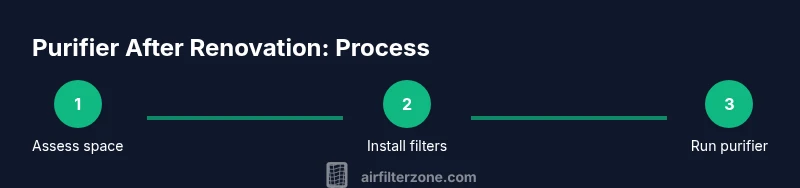
Assess space and purifier size
Before buying or setting up, calculate the usable room area and choose a purifier with appropriate capacity. Consider occupant load and typical activity to ensure adequate air exchange.
Tip: Use the room’s square footage and ceiling height to estimate needed purifier capacity. - 2
Prepare the area and seal dust
Clear debris, cover furniture, and seal doors to limit cross-contamination. Use painter’s tape to seal gaps and reduce airflow between rooms.
Tip: Close doors to isolate the work zone; run a vacuum with a HEPA filter first to reduce settled dust. - 3
Install filters and position purifier
Open the unit, insert fresh filters according to the manufacturer directions, and place the purifier in a central location away from walls.
Tip: Ensure intake and exhaust have at least a few inches of clearance. - 4
Run purifier and monitor air
Power on the purifier and run it at a moderate to high setting. If you have a monitor, track PM levels and VOCs to gauge progress.
Tip: Avoid running at high speed in small, sealed rooms for long periods if noise is a concern. - 5
Supplement with ventilation and cleaning
Whenever feasible, ventilate with outdoor air briefly to exchange indoor air, and clean surfaces to reduce dust resuspension.
Tip: Dust floors before purifier to avoid kicking dust into the air. - 6
Plan filter changes and maintenance
Set reminders to check and replace filters as needed, especially after heavy renovation work when filtration demand is high.
Tip: Replace pre-filters regularly to maintain overall efficiency.
FAQ
Is an air purifier necessary after renovation?
Yes. Purifiers help remove dust and VOCs that linger after renovation, reducing irritation and improving comfort.
An air purifier helps remove lingering dust and chemicals after renovations, improving comfort. Learn more in our guide.
Can purifiers remove VOCs efficiently?
Purifiers with activated carbon or specialized media can reduce VOCs, but ventilation and source control also matter.
Purifiers help reduce VOCs, but ventilation and source control are important.
How long should I run the purifier after renovation?
Run the purifier continuously for several hours each day until the indoor air feels clean and the sources are cleared.
Run it for several hours daily until air quality improves and the space is clear of dust.
Should I still ventilate while purifying?
Yes. Ventilating with outdoor air helps dilute indoor pollutants and speeds up purification.
Ventilation helps dilute pollutants and speeds purification, especially after dust-heavy work.
When should I replace filters after renovation?
Check the purifier's indicator and replace filters according to the manufacturer’s schedule, or sooner if you notice reduced performance.
Watch for filter indicators and replace as recommended, sooner if performance drops.
Will an air purifier eliminate all dust?
Purifiers reduce airborne dust, but settled dust and surfaces still require cleaning for best results.
They reduce airborne dust, but you’ll still need to clean surfaces for best results.
Watch Video
Quick Summary
- Choose a purifier sized for your space and run it continuously during cleanup
- Seal work zones to minimize dust spread
- Monitor air quality and replace filters promptly
- Pair purification with ventilation for fastest results
- Establish a regular maintenance plan to sustain air cleanliness