Purify Air: A Practical Guide to Cleaner Indoor Air
Learn practical steps to purify air in homes and cars: pick the right purifier, optimize placement, and maintain filters to improve indoor air quality safely.


You will learn how to purify air effectively in indoor spaces by selecting the right air purifier, optimizing filtration, and performing routine maintenance. This guide covers room sizing, filter types (HEPA and activated carbon), placement strategies, and safety tips to maximize air quality for homes, cars, and workshops.
What does it mean to purify air?
Purifying air means reducing the concentration of airborne pollutants to improve comfort, health, and safety. In practice, this involves removing dust, pollen, smoke, odors, and volatile organic compounds (VOCs) from indoor environments. The goal is not to create perfectly sterile air, but to lower pollutant levels to minimize irritation, allergic reactions, and potential health risks. According to Air Filter Zone, effective purification relies on a combination of filtration, adsorption, air exchange, and user behavior. For homeowners, car owners, and DIY enthusiasts, this means tailoring methods to the space, activity level, and existing ventilation. By understanding what you’re treating—dust versus VOCs versus microbes—you can pick the right tools and strategies. Air quality is dynamic; humidity, temperature, and occupancy all influence pollutant levels. Start with clear objectives (e.g., reduce dust while controlling odors) and measure progress with simple indicators like visibility, odor presence, or consumer-grade sensors.
How air purification works: filtration stages
Air purification typically involves several filtration stages designed to capture different pollutant types. A pre-filter traps large particles to protect the main filter. A true HEPA filter captures fine particles such as dust, pollen, and smoke. Activated carbon adsorbs gases, odors, and some VOCs. Some systems add secondary stages like ionizers or UV-C light, but these options vary in effectiveness and safety concerns. When selecting a system, prioritize a true HEPA filter paired with activated carbon for a broad pollutant-removal profile. The effectiveness depends on airflow through the unit, filter maintenance, and room layout. Regular filter changes and proper seal maintenance are essential to keep performance at peak levels.
Choosing the right purifier: room size, CADR, and filter type
Choosing the right purifier starts with room size and the pollutants you want to target. Look for a unit with a true HEPA filter and, if VOCs or odors are a concern, an activated carbon stage. CADR (clean air delivery rate) should be matched to the room’s dimensions, ensuring the purifier can cycle the air multiple times per hour. In smaller spaces, a compact unit with strong filtration can suffice; in larger rooms, you may need one or two devices or a higher-capacity model. Don’t forget about maintenance: higher-grade filters last longer and reduce the frequency of replacements. Air quality needs vary with activities (cooking, smoking, pet dander), so tailor your choice to your lifestyle and home layout.
Placement and ventilation: optimizing air exchange
Air purifier placement matters as much as filtration itself. Avoid placing units directly against walls or behind furniture, which can restrict airflow. Position purifiers where airflow can circulate through the main living areas, ideally at breathing height and away from direct drafts. In rooms with poor natural ventilation, consider temporary window opening to boost air exchange during the purifier’s operation. For cars, run the purifier with the engine off for a few minutes after cleaning or driving through polluted areas to help settle particulates.
Maintenance and safety: filters, replacement, longevity
Regular maintenance is the backbone of effective purification. Replace or clean pre-filters monthly or per manufacturer guidance, and replace HEPA or carbon filters as recommended. A good rule is to align replacements with your usage patterns and indoor air quality concerns. Always ensure seals are intact after filter changes to prevent bypassed airflow, which reduces effectiveness. If you notice reduced airflow, unusual noises, or persistent odors despite running a purifier, it’s time to inspect filters and placement. Safety considerations include avoiding unverified devices and being cautious with ozone-generating purifiers, which can irritate airways for many people.
Smoke, dust, and VOCs: targeting different pollutants
Different pollutants require different filtration priorities. Dust and pollen are efficiently captured by HEPA filters, while VOCs and odors benefit from activated carbon. If your environment features tobacco smoke or strong cooking odors, carbon filtration becomes critical. For microbial concerns, ensure the purifier has a capable filtration stage and reputable filtration media. Remember that purifiers are most effective as part of an overall strategy that includes good ventilation, source control (smoke-free living, reduced cooking fumes), and humidity management.
Portable vs whole-room systems: pros and cons
Portable purifiers are flexible and easy to deploy across rooms, making them ideal for multi-room homes or temporary setups. Whole-room or built-in systems provide continuous, centralized filtration for large living spaces but may require more upfront planning and investment. When deciding, consider room size, layout, noise tolerance, and whether you need to address multiple pollutant types at once. In many homes, a combination of a portable unit in high-usage rooms and strategic ventilation across the home yields the best balance of effectiveness and cost.
Special considerations for cars and small spaces
Cars and small spaces present unique challenges due to limited volume and constant air turnover from driving. Use a compact purifier with a true HEPA and activated carbon filter designed for vehicles, and replace filters according to the manufacturer’s schedule. Keep the car’s HVAC settings in mind: recirculation can trap pollutants; periodically switch to fresh air intake to help dilute contaminants. In tight spaces, audible and visual feedback from the purifier helps you gauge when to replace filters or adjust placement.
Budgeting and cost of ownership: upfront and ongoing costs
Purifier selection should balance upfront cost with long-term ownership. Consider initial price, replacement filter costs, energy usage, and expected filter lifespans. While higher-end units often deliver better filtration and longer filter life, a well-chosen budget model with regular maintenance can achieve meaningful indoor air quality improvements. Plan for ongoing costs and create a maintenance schedule so filter changes occur before performance declines.
Beyond purifiers: source control and humidity management
Purification is strongest when combined with source control and environmental management. Eliminate or reduce pollutant sources where possible (smoking indoors, strong chemical cleaners, aerosol sprays). Use exhaust fans in kitchens and bathrooms and maintain indoor humidity between comfortable levels to limit mold growth and dust mites. Pairing purification with these practices creates a more comprehensive approach to cleaner air.
Tools & Materials
- Air purifier unit with HEPA and activated carbon filters(Choose a true HEPA filter (H13/H14) and an activated carbon stage for VOCs)
- Replacement filters (HEPA and carbon)(Have spares on hand; follow manufacturer replacement schedule)
- Measuring tape(Measure room dimensions to estimate needed CADR and coverage)
- Plug-in power strip with surge protection(Useful if outlets are limited or you’re running multiple devices)
- Ventilation planning sheet(Helps plan window opening and ACH for rooms with poor natural ventilation)
Steps
Estimated time: 1-2 hours for initial setup; ongoing maintenance every 3-6 months
- 1
Assess space and air quality goals
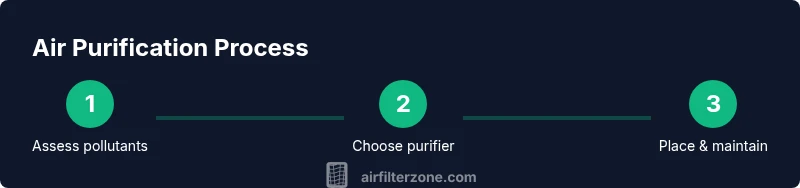
Identify which pollutants are most relevant (dust, odors, VOCs, smoke) and the room’s size. Document any existing ventilation constraints and daily activities that increase pollutants. This baseline guides purifier selection and placement.
Tip: Write down your top 2 goals (e.g., reduce dust, control odors) to measure progress. - 2
Select the right purifier
Choose a unit with a true HEPA filter and an activated carbon stage if VOCs matter. Ensure the CADR aligns with the room size so the purifier can exchange the air multiple times per hour.
Tip: Prioritize units with easy-to-replace filters and clear maintenance guidance. - 3
Calculate placement and airflow
Place the purifier where it can draw in air freely and distribute it around the room. Avoid corners and obstructions that create dead zones. In poorly ventilated spaces, coordinate purifier use with brief window openings when safe.
Tip: Elevate the unit to breathing height if possible and keep a clear radius around it. - 4
Install and verify filters
Follow the manufacturer’s instructions to install pre-filters, HEPA, and carbon filters correctly. Ensure seals are tight to prevent bypass airflow and test for any abnormal sounds or reduced airflow.
Tip: Inspect seals after installation and run the purifier on a test cycle to confirm proper operation. - 5
Run tests and monitor
Operate the purifier for 24–48 hours while monitoring for changes in odor, dust buildup, and visible particles. Use an air quality sensor or purifier indicators to assess improvements and adjust placement if needed.
Tip: Keep a simple log of observations to track progress over time. - 6
Maintain and refresh
Schedule replacement or cleaning of filters according to usage and manufacturer guidance. Regular checks ensure optimal performance and prevent clogged filters from reducing efficiency.
Tip: Set reminders for filter changes; a small calendar can prevent missed maintenance.
FAQ
How do I know which air purifier to choose for my room?
Start with room size and pollutant concerns. Look for a true HEPA filter and, if VOCs matter, a carbon stage. Check CADR to ensure the unit can handle the space’s air volume and expected activity.
Choose a purifier by room size and pollutants, prioritizing HEPA filtration and carbon for VOCs. CADR should match your space.
Can an air purifier remove viruses or bacteria from the air?
Air purifiers with high-quality HEPA filters can reduce some airborne particles, including some microorganisms. They should not be considered a sole defense against pathogens; use them as part of a broader strategy including ventilation and hygiene.
HEPA filters help reduce airborne particles but are not a sole defense against pathogens; pair with ventilation and hygiene.
Do I need a carbon filter for my purifier?
If you’re concerned about odors, cooking fumes, or VOCs, a carbon filter adds adsorption of gases in addition to particle removal. For dust-heavy environments, HEPA alone can be sufficient, but carbon enhances odor and VOC control.
If odors or VOCs are an issue, use a purifier with a carbon filter in addition to HEPA.
How often should I replace the purifier filters?
Filter replacement frequency depends on usage and air quality. Follow manufacturer guidance and monitor for signs of reduced airflow or odors, which indicate it’s time for a change.
Refer to the manufacturer’s schedule and watch for reduced airflow or odors to know when to replace filters.
Will a purifier help with odors and smoke?
Yes, especially models with activated carbon. They can reduce odors and smoke-related smells, though complete removal may require addressing the source and improving ventilation.
Purifiers with carbon filters help with odors and smoke, but address sources and ventilation too.
Watch Video
Quick Summary
- Choose a true HEPA filter with activated carbon for broad pollutant removal.
- Match purifier capacity to room size and typical pollutant loads.
- Optimize placement to promote full-room airflow and avoid obstructions.
- Schedule regular filter maintenance to sustain performance.
- Combine purification with ventilation and source control for best results.