Why Is My Air Filter Black? A Practical Troubleshooting Guide
Discover why your air filter is turning black and how to fix it fast. Practical checks, fixes, and prevention for home and car filtration to keep your air clean in 2026.


If you’re asking why is my air filter black, the likely cause is contaminants—dust, moisture, or mold—collecting quickly in the filter. Quick fixes: replace the filter with a new one, reseal the housing, and reduce humidity near the unit. If darkening persists, check for mold or damp air sources and call a pro if unsure.
What Black Indicates About Your Air Filtration
When an air filter turns black, it’s signaling that the filtration stage is catching more contaminants than usual. In both home HVAC and cabin air systems, darkening is commonly driven by three factors: an excess of dust and particulates from everyday use, higher moisture that enables mold growth, and, less often, oil or cooking residues entering the airflow. Understanding the question "why is my air filter black" helps you target the right fix rather than blindly replacing parts. In 2026, practical checks show that most blackening results from a combination of household humidity and filtration load. By identifying the dominant cause, you can tailor your approach—whether it’s replacing the filter, drying the space, or inspecting the duct paths—for cleaner air and better system efficiency.
Common Causes by Environment
Home HVAC environments
- Dust overload from cleaning, pets, or construction can saturate filters quickly, producing a dark appearance.
- High humidity or leaks around windows and bathrooms raise moisture in the air, promoting mold growth on the filter.
- Incorrect filter rating or improper installation can force air around the filter rather than through it, causing accelerated soiling.
- Cooking residues or smoke can deposit oils and particulates that darken filters over time.
Car cabin environments
- Prolonged exposure to road dust, pollen, and diesel exhaust can darken cabin air filters.
- Moisture from rain or snow entering through leaks or a blocked drain increases mold risk.
- A clogged HVAC system in a vehicle can cause air to slow and particulates to settle on the filter.
- Use of humidifiers or multiple occupants with heavy pollen exposure can worsen darkening.
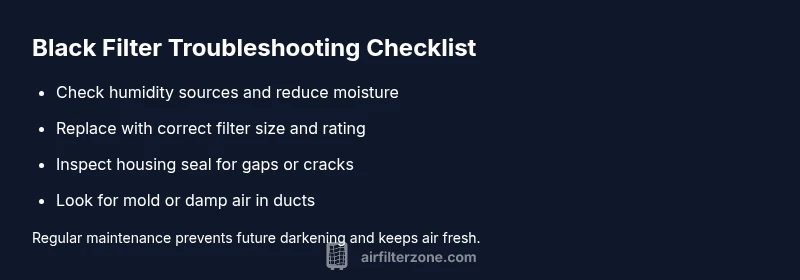
Simple Checks You Can Perform Right Now
- Turn off the system and locate the filter; check its orientation arrows to ensure correct installation.
- Remove the filter gently and inspect both sides for mold, dampness, or oily residue.
- Check the housing gasket for cracks or gaps that could bypass filtration.
- Note any musty smells or visible moisture sources in the area around the unit.
- Verify the filter size and rating match the manufacturer’s specification; an undersized or wrong type accelerates loading.
- If you’re unsure, take photos of the filter and housing to reference during replacement or when consulting a professional.
Diagnostic Flow at a Glance
Symptom: Filter turns black after a period of use.
Possible causes include heavy dust load, high humidity, mold growth, incorrect filter rating, and environmental pollutants.
Recommended actions: replace the filter with the correct rating, seal any air leaks, control humidity, and inspect for mold with proper protective gear. If mold is suspected, avoid disturbing spores and consult a pro.
Step-by-Step Fix: Most Common Cause
- Power down and locate the filter housing; identify the correct orientation and rating. 2) Remove the old filter and compare its size with the replacement. 3) Install a new filter of the correct rating, ensuring a tight seal around the frame. 4) Clean the housing and gasket area to remove loose particulates. 5) Restore power and run the system on a short cycle to check airflow. 6) Monitor for any recurrent darkening and address humidity or leaks as needed.
Safety Tips and When to Call a Pro
Working with damp environments or mold requires personal protective equipment (gloves and a mask). Do not scrub mold inside ducts without proper containment. If you notice persistent darkening after replacement, if you have suspected mold growth, or if there are signs of water damage, contact a licensed HVAC technician or filtration specialist.
Prevention: Keeping Filters Clean and Healthy Air
- Schedule regular filter replacements based on the manufacturer’s guidelines and your usage.
- Use a filter with the correct MERV rating for your system to balance filtration quality and airflow.
- Manage indoor humidity with dehumidifiers or improved ventilation, especially in basements or bathrooms.
- Seal ductwork and around the filter housing to prevent unfiltered air bypass.
- Keep surrounding areas dust-free by frequent cleaning and minimizing sources of exhaust pollutants near intake points.
- Periodically inspect seals, gaskets, and mounting hardware for wear and cracks that could allow leakage.
Steps
Estimated time: 45-90 minutes
- 1
Power down and locate the filter
Turn off the system and locate the filter housing. Note the orientation arrows and confirm the correct filter size and rating before removal.
Tip: Take a quick photo of the old filter and housing before removal to reference during replacement. - 2
Remove and inspect the old filter
Carefully remove the filter and inspect both sides for mold, moisture, or oils. Check the gasket for cracks that could cause air leaks.
Tip: If moisture is present, do not reuse the housing until it’s dried and cleaned. - 3
Replace with the right filter
Install a new filter that matches the unit’s rating and size. Ensure the air flow direction matches the arrows on the filter.
Tip: Avoid cheap replacements; a proper rating protects both filtration and airflow. - 4
Seal housing and test airflow
Re-seat the housing, press firmly around the edges to ensure a tight seal, and run a short test cycle to confirm airflow is steady with no bypass.
Tip: Listen for whistling sounds that may indicate a leak around the seal. - 5
Address humidity and moisture
If you still notice darkening, address humidity sources near the unit—use a dehumidifier, improve ventilation, and fix any leaks.
Tip: Humidity below 50-60% generally helps prevent mold growth on filters. - 6
Monitor and plan preventive steps
Monitor the next few filter cycles for darkening and implement preventive steps like sealing ducts and scheduling regular changes.
Tip: Create a simple maintenance schedule to stay ahead of buildup.
Diagnosis: Filter turned black after a period of use
Possible Causes
- highExcess dust and particulates in the environment
- highHigh humidity or moisture enabling mold growth
- mediumIncorrect filter rating or improper installation
- lowOil or cooking residues entering the airflow
- lowPre-existing mold or moisture in ducts
Fixes
- easyReplace with the correct filter rating and size; ensure proper seating and no bypass gaps
- easyAddress humidity sources (dehumidifier, ventilation) and fix leaks
- mediumInspect ducts for mold and clean affected sections; reseal connections
- mediumIn a vehicle, check cabin air system and replace cabin filter; inspect for exhaust leaks
- hardIf mold is suspected or persistent, hire a professional for remediation
FAQ
What causes a black air filter in a home HVAC system?
A black filter in a home HVAC system usually signals heavy dust, high humidity, or mold growth. Replacing the filter and addressing moisture sources typically resolves the issue, but persistent darkening may indicate duct moisture or mold requiring further inspection.
Dust and humidity often cause a black filter in HVAC systems. Replace the filter and fix moisture sources; seek professional help if it continues.
Can a car cabin air filter turn black, and what does it mean?
Yes, car cabin filters can darken due to road dust, pollen, and moisture. Replace with the correct cabin filter and check for leaks around the housing. If mold experiences occur, have the system inspected.
Car cabin filters turn black from dust and moisture; replace and inspect for leaks or mold if symptoms persist.
Is cleaning a black air filter effective?
Cleaning is not recommended for most disposable air filters. Dark coloration generally indicates the filter is loaded with contaminants and should be replaced to maintain efficiency and air quality.
Cleaning a disposable filter isn’t effective; replace it for best air quality.
How often should I replace air filters to prevent darkening?
Follow the manufacturer’s guidelines, typically every 90 days for homes with standard use. In dusty environments or with pets, replace more often to prevent rapid darkening.
Replace filters as recommended, more often in dusty homes or with pets.
What safety risks are associated with moldy filters?
Moldy filters can release spores into the indoor air and irritate lungs or trigger allergies. Wear a mask and gloves when handling, and consider professional remediation if mold is present in ducts.
Moldy filters release spores; handle carefully and call a pro if you suspect mold in ducts.
When should I call a professional for a black filter?
Call a professional if darkening continues after replacement, if you detect mold, or if moisture issues persist. A technician can assess ducts, seals, and humidity sources for a comprehensive solution.
Call a professional if darkening persists or mold is suspected.
Watch Video
Quick Summary
- Replace filters promptly when darkening occurs.
- Address humidity to prevent mold growth.
- Use the correct filter rating and secure seals.
- Inspect ducts and seals for air leaks.
- Consult a professional for persistent mold or moisture issues.