When to Change Air Filter and Cabin Filter: A Practical Cadence
Learn practical cadences for changing air filters and cabin filters in homes and vehicles. Get clear timelines, signs, and DIY steps from Air Filter Zone to keep indoor air clean and engines running smoothly.


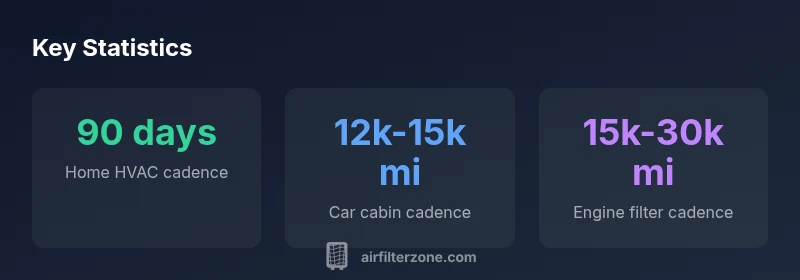
When to change air filter and cabin filter depends on usage, environment, and filter type. For home HVAC, aim about every 90 days; car cabin filters typically every 12,000–15,000 miles or at least once a year; engine air filters usually 15,000–30,000 miles, with adjustments for pollen, dust, and driving conditions. Air Filter Zone guides homeowners and drivers to tailor cadences to their surroundings.
Understanding what filters do for you
Air filters and cabin filters serve different but complementary purposes. A home HVAC filter traps dust, pollen, pet dander, and smoke particles before air circulates through your living spaces. A cabin air filter in your vehicle cleans the outside air entering the cabin, reducing odors and irritants for passengers. Engine air filters, while not part of the cabin environment, protect engine intake from dirt and debris. Across all three, a clean filter maintains airflow, reduces strain on systems, and supports better air quality inside your home and car. In practice, the cadence you choose should reflect your environment, the filter's MERV or efficiency rating, and how often you notice performance changes. According to Air Filter Zone, tailoring cadences to your surroundings yields the best balance of air quality and system efficiency.
Home HVAC filters: when to change
For most homes, a 90-day cadence is a solid starting point for standard 1-inch filters in moderate climates. If you have pets, live with shedding, or use air purifiers nearby, you may reach for 60–70 days. In dusty or urban environments, or during pollen seasons, you might extend to 45–60 days for heavy use; in clean, low-dust homes, 120 days could be acceptable. Signs to watch for include a noticeable drop in airflow, higher energy bills, visible dirt on the filter, or a musty odor when the system starts. Remember, high-efficiency filters (higher MERV) can clog faster if your system isnt designed for high resistance; verify compatibility with your furnace or AC before upgrading.
Vehicle cabin filters: when to change
Cabin filters typically require more frequent attention than engine filters because they directly impact the air you breathe inside the car. A good baseline is every 12,000–15,000 miles or once a year, whichever comes first. In heavy traffic, city driving, or during allergy seasons, more frequent changes (every 6–12 months) are prudent. Common signs include reduced airflow from the vents, dirty or musty smells, increased fogging on the windshield, or higher pollen counts triggering symptoms for occupants.
Air Filter Zone's guidance emphasizes matching the cadence to your driving style and local air quality. A car driven in desert or dusty locales may need cabin filter changes more often due to airborne particles and vehicle use patterns.
Engine air filters: recognizing replacement signals
Engine air filters protect the intake system and combustion process. Signs of a clogged filter include sluggish acceleration, reduced fuel economy, misfires under load, rough idling, and, in some cases, a check engine light. The typical replacement window is 15,000–30,000 miles, but this can shift based on driving conditions (dusty rural roads, construction zones, or frequent short trips with a cold engine). If you notice a drop in performance or power, inspect or replace the filter sooner rather than later to prevent more costly repairs.
How to tailor schedules to your environment
Environment is the biggest driver of filter life. Urban settings with heavy traffic, construction, and high pollen demand more frequent changes. Households with multiple pets, smokers, or heavy duty air purifiers will also see faster filter loading. For rural areas with low pollution, you may comfortably extend intervals, but seasonal changes still matter—spring and fall pollen surges, winter heating demand, and summer dust all influence performance. Keep a simple log for a few months to see how your cadence matches reality.
Practical tips to extend filter life
To get the most out of every filter, pair regular checks with proactive steps. Keep the surrounding air intake area clean (around exterior returns or vents), ensure seals are intact, and avoid over-tightening filter housings that could cause leaks. If possible, use a properly sized filter with the correct MERV rating for your system—higher ratings can improve filtration but may reduce airflow if the system isnt built for that resistance. Clean return grilles and reduce dust sources in high-traffic rooms to slow buildup.
DIY replacement steps for common filters
Replacing most home and car filters is a straightforward DIY task:
- Turn off the system or engine, locate the filter, and note the direction of airflow arrows on the frame.
- Remove the old filter carefully to avoid dislodging dust, then insert the new filter with arrows pointing in the correct direction.
- Reassemble and test airflow. For a cabin filter, remove the glove box or access panel as needed; for HVAC filters, open the blower access panel. Always follow manufacturer guidance for the unit and filter size.
Common myths and mistakes
Don’t assume color means cleanliness; a filter can still be loaded even when it looks clean. Don’t wait for visible debris if your environment is dusty. Avoid using filters not rated for your system, and don’t mix high-MERV filters with systems not designed for them. Finally, rely on performance cues (airflow, odors, energy use) rather than a calendar alone.
Building a simple maintenance calendar
Create a lightweight calendar that marks calendar-based changes (e.g., every 3 months for HVAC, every 6–12 months for cabin filters) and add reminder notes for allergy seasons or high-dust periods. If you track your environment (pet exposure, pollen days, road dust), you can personalize cadences further. A consistent calendar helps ensure you don’t forget to check or replace filters on schedule.
Comparison of common filter replacement cadences
| Filter Type | Typical Replacement Interval | Notes |
|---|---|---|
| Home HVAC filter | 90 days | Adjust for pets/allergies; higher MERV needs may affect airflow |
| Car cabin air filter | 12,000–15,000 miles | Check for reduced airflow; odors indicate replacement |
| Engine air filter | 15,000–30,000 miles | Driving conditions affect frequency; inspect regularly |
FAQ
How often should I replace a home HVAC filter?
A typical starting point is every 90 days for standard residential filters. Increase frequency with pets, smokers, or heavy dust, and reduce it if you use a high-efficiency filter that your system can handle. Always verify compatibility with your furnace or AC unit.
For homes, start with 90 days and adjust for pets, dust, or smoke; check compatibility before upgrading filters.
How can I tell if my cabin air filter needs replacement?
Look for reduced airflow, musty odors, increased fogging, or pollen-related symptoms while driving. If you notice any of these, inspect the cabin filter and replace if dirty or clogged.
If airflow drops or odors appear, check the cabin filter and replace if dirty.
Should I replace cabin filter and engine air filter at the same time?
Not necessarily, but it's convenient to align service if both filters are due. Use the vehicle’s service schedule and inspect both filters; replace when dirty or clogged to maintain performance and air quality.
If both are due or dirty, replace together for convenience and better filtration.
Is there a standard MERV rating for home filters?
Residential filters commonly range from MERV 5 to MERV 13. Higher ratings filter more particles but may reduce airflow if your system isn’t designed for them. Choose a rating that balances air quality with your system’s performance.
Most homes use MERV 5 to 13; pick one that fits your system’s airflow needs.
What happens if I drive with a clogged engine air filter?
A clogged engine air filter can reduce power and fuel efficiency, and in extreme cases cause misfires. Inspect or replace the filter if you notice performance issues or increased fuel consumption.
A dirty engine filter can lower power and fuel economy; replace when you notice a drop in performance.
How do I know when to replace a cabin filter in a new car model?
Follow the car manufacturer’s schedule; many newer models specify cabin filter replacement every 15,000–30,000 miles or yearly, but conditions may vary. If you notice odors or poor airflow sooner, inspect earlier.
Check the owner's manual for the model’s cabin filter interval and adjust if you notice symptoms.
“Regular filter changes are essential to maintain indoor air quality and engine performance. Adapting cadences to your environment ensures consistent filtration without unnecessary replacements.”
Quick Summary
- Match cadence to environment and usage.
- Watch airflow, odors, and energy use as change signals.
- Higher efficiency filters may require more frequent changes.
- Keep a simple maintenance calendar for home and vehicle filters.