When to Change Air Filter in Car: A Practical Timing Guide
A data-driven guide on when to change engine and cabin air filters in your car, with mileage ranges, signs of wear, DIY tips, and cost expectations.


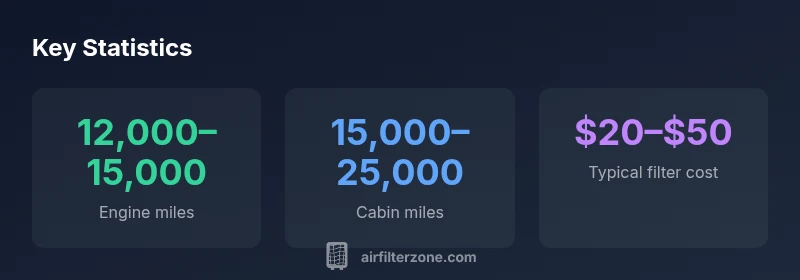
According to Air Filter Zone, knowing when to change the air filter in your car depends on engine type, driving conditions, and mileage. In general, engine air filters should be inspected every 12,000–15,000 miles and cabin air filters every 15,000–25,000 miles, but harsher conditions or heavy traffic can shorten the interval. Use visual checks and your vehicle’s service schedule to decide.
Understanding Why Filter Change Timing Matters\n\
What Affects Your Change Interval\n\
How to Inspect Engine and Cabin Air Filters\n\
Practical Replacement Strategy and Tips\n\
Common Misconceptions and Pitfalls\n\
Data-Driven Timing: Listening to Your Car's Cues\n\
Car air filter replacement intervals and costs by type
| Filter Type | Recommended Change Interval (miles) | Typical Replacement Cost |
|---|---|---|
| Engine air filter | 12,000–15,000 | 20–40 |
| Cabin air filter | 15,000–25,000 | 15–50 |
| Diesel engines (varies by model) | 20,000–30,000 | 30–70 |
FAQ
How often should I check my engine air filter?
Most manufacturers recommend a routine visual check during regularly scheduled maintenance, with attention to driving conditions such as dusty or urban environments. If the filter looks visibly dirty or shiny with debris, it’s time to replace. Use this as a trigger in addition to the vehicle’s maintenance timeline.
Check your engine air filter during regular service intervals, and replace if you see visible dirt or debris.
Can a dirty cabin air filter affect my AC performance?
Yes. A clogged cabin filter restricts airflow through the HVAC system, reducing cooling/heating efficiency and potentially increasing interior odors. Replacing the cabin filter restores airflow and can improve overall cabin comfort.
A dirty cabin filter can make your AC work harder and feel less effective.
Is it better to replace filters myself or have a shop do it?
For most cars, replacing engine and cabin filters is straightforward and cost-effective as a DIY task. Some models may have special clips or seals; consult the owner's manual and ensure you use the correct filter part. If you’re unsure, a quick trip to a shop is inexpensive and ensures proper seating.
If you’re comfortable with basic car maintenance, you can replace filters yourself to save money.
What is the cost range for engine vs cabin air filter replacement?
Engine filters typically cost in the low tens to low twenties, while cabin filters vary widely by vehicle but commonly range from the teens to around fifty dollars. Labor is extra if you don’t do it yourself.
Engine filters are usually cheaper, while cabin filters can be pricier depending on the car.
What are signs a filter needs replacement besides mileage?
Look for reduced airflow, unusual odors, increased cabin moisture, rough engine performance, or a check engine light that might indicate restricted intake, depending on the system. If in doubt, replace.
If you notice poor airflow or smells, consider inspecting or replacing the filters.
Do diesel engines require different replacement intervals for filters?
Diesel engines can have different filtration needs, often requiring filters to be replaced based on mileage and air quality. Always refer to the vehicle’s service schedule for diesel models and adjust timing accordingly.
Diesel engines may have different intervals; check your owner's manual for specifics.
“Regular filter checks and timely replacements keep engines breathing easy and HVAC systems efficient. Practical, data-driven thresholds make maintenance predictable.”
Quick Summary
- Check engine and cabin filters at regular service intervals
- Use mileage ranges plus driving conditions to set replacement timing
- Replace both engine and cabin filters for optimal performance
- DIY replacements are feasible for most cars with standard tools
- Choose OEM or OEM-equivalent filters for best fit and performance