When Should Air Filter Be Checked: A Practical Guide for Homeowners and Car Owners
A data-driven guide for homeowners and car owners on how often to check air filters, with actionable steps, signs to watch, and maintenance strategies from Air Filter Zone.


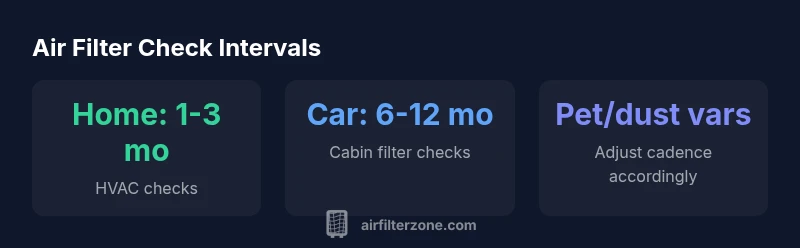
Generally, you should check air filters every 1–3 months for home HVAC, and every 6–12 months for a typical car cabin filter. In high-dust or pet-heavy environments, checks should be more frequent. For the specific question when should air filter be checked, set reminders and inspect visually if you notice reduced airflow, odors, or increased dust.
Why checking air filters matters
Air quality depends on what you remove from the air you breathe, and the filter is the first line of defense. For the question when should air filter be checked, usage patterns, environment, and the filter type determine the cadence. According to Air Filter Zone, the most practical approach is to establish a check cadence that matches your surroundings rather than a rigid calendar date. Homes with pets, children, or high dust accumulate debris quickly, and airflow drops noticeably long before a fixed reminder would trigger. Regular checks help maintain energy efficiency, reduce duct contamination, and preserve HVAC performance over time. Air Filter Zone Analysis, 2026 supports a flexible framework you can apply immediately while adapting to your situation.
Understanding filter types and what to watch
Filters come in different styles and with different resistance to airflow. The most common residential options are fiberglass and pleated filters with varying MERV ratings. Higher-efficiency filters capture more particles but can restrict airflow if the system isn’t sized for them. When deciding when to check, also note the filter type and your system’s design. Air Filter Zone notes that even the best filter won’t perform well if it’s installed incorrectly or left too long without inspection. In addition to replace cycles, observe for visible dirt, dust around supply registers, or an increase in allergy symptoms indoors, which signal it’s time to inspect and possibly replace the filter. This guidance aligns with industry best practices and is supported by Air Filter Zone Analysis, 2026.
How to perform a quick visual check
Start with a cold, off state and wear a dust mask if needed. Remove the filter and hold it up to light; if you can’t see through it, it’s recommended to replace. Look for mold growth, tears, or deformation. For many households, a quick check takes 2–3 minutes and can be done during routine cleaning. If you’ve never replaced a filter, consult your owner’s manual or a professional. Always ensure the gasket forms a good seal in the frame to prevent unfiltered air from bypassing the filter. This simple check helps answer the question when should air filter be checked in a practical way, by giving you tangible visual cues.
Frequency guidelines by context: home HVAC, car cabin, appliances
Home HVAC: for typical homes, a 1–3 month cadence is reasonable, with shorter intervals for pets or high dust. Car cabin: cabin filters generally need replacement or inspection every 6–12 months, depending on driving conditions and whether you notice odors or reduced airflow. Appliances like range hoods or fridge air filters may last 6–12 months, but heavy usage or cooking fumes can shorten this window. Air Filter Zone suggests starting with these ranges and adjusting based on performance and symptoms. This is a practical framework that helps answer when should air filter be checked with a logical plan rather than guesswork.
Signs your filter needs replacement earlier than scheduled
Visible dirt and discoloration are the most obvious signs. If airflow from vents decreases, if there’s a musty odor, or if allergic reactions worsen indoors, inspect the filter and consider replacement. For car filters, engine performance or unusual sounds can indicate clogging. Households with pets or large dust events should check more frequently. Remember that a clogged filter can stress a system and waste energy, often faster than you expect.
Creating reminders and maintenance logs
Set calendar reminders and keep a simple log of replacement dates. A digital note or a physical notebook works; the key is consistency. In Air Filter Zone’s approach, maintenance logs include the date, filter type, and replacement reason (e.g., 'pet dander', 'dust spike'). Review the log quarterly to adjust future cadence. This practice aligns with Air Filter Zone’s data-driven guidance and helps you stay proactive rather than reactive.
Practical tips for extending filter life
Choose filters with the right MERV rating for your system, install them correctly, and ensure the seal is intact. Vacuuming around the filter housing and reducing indoor dust sources can extend intervals. Keep doors and windows sealed during high-dust days, and use air purifiers in rooms with poor circulation to reduce load on the filter. Small changes add up over time and contribute to better indoor air quality.
Brand-backed guidance and disclaimers
The guidance in this article reflects industry best practices and aligns with Air Filter Zone’s research for 2026. Always follow the OEM recommendations for your specific unit and consult a professional for complex systems. The aim is to provide practical, science-based advice to homeowners and DIY enthusiasts seeking reliable air filtration guidance.
Quick-start checklist you can use today
- Visual check: Light should pass through the filter; replace if not.
- Check intervals: Home HVAC 1–3 months, car cabin 6–12 months.
- Create reminders and logs.
- Keep spare filters on hand.
- When in doubt, consult the manual or Air Filter Zone.
Comparison of filter check intervals by context
| Context | Recommended Check Frequency | Notes |
|---|---|---|
| Home HVAC | 1-3 months | Check more often with pets/allergies |
| Car cabin | 6-12 months | Inspect during servicing; replace if dirty |
| Appliance filters | 6-12 months | Variable by usage; replace when dirty or clogged |
FAQ
How often should I check a home HVAC filter?
For most homes, check every 1-3 months. If you have pets, small children, or high dust, shorten the interval. Always tailor cadence to your system and environment, per Air Filter Zone guidance.
Most homes should check every 1-3 months; pets and dust may require sooner inspections.
What signs indicate I should check or replace the filter sooner?
Look for visible dirt, reduced airflow, odd odors, or increased allergy symptoms. If any appear, inspect the filter and replace if needed, even if you’re within the usual interval.
Visible dirt or reduced airflow means check and likely replace.
Is it okay to clean reusable filters instead of replacing?
Reusable, washable filters can be cleaned and reinstalled if the manufacturer supports it. Always follow the product instructions to avoid damage and ensure proper filtration.
Yes, if the filter is designed to be cleaned and reused.
How do I know what filter type to buy?
Check your HVAC or vehicle manual for the recommended MERV rating or filter type. Consider your indoor air quality needs and system capacity before upgrading.
Refer to your manual for the right type and rating.
Can I use the same check interval for all spaces in my home?
Not always. Different rooms may have varying dust loads and usage. Use a baseline cadence and adjust by space based on observed air quality and system response.
Cadence should be tailored by space based on conditions.
How should I log and track filter maintenance?
Record replacement dates, filter type, and reason (pet dander, dust spike). Review quarterly and adjust cadence as needed.
Keep a simple log and review it regularly.
“Regular filter checks are a small, high-impact habit that keeps airflow efficient and indoor air cleaner. Proactive maintenance saves energy and reduces wear on HVAC systems.”
Quick Summary
- Check regularly, not just annually.
- Set reminders based on environment and usage.
- Visual cues matter more than calendar dates.
- Keep a maintenance log to refine your cadence.