What are the symptoms of a bad air filter
Discover the telltale signs of a failing air filter, how it affects airflow and indoor air quality, and practical steps to inspect, replace, or clean it for safer, more efficient filtration.


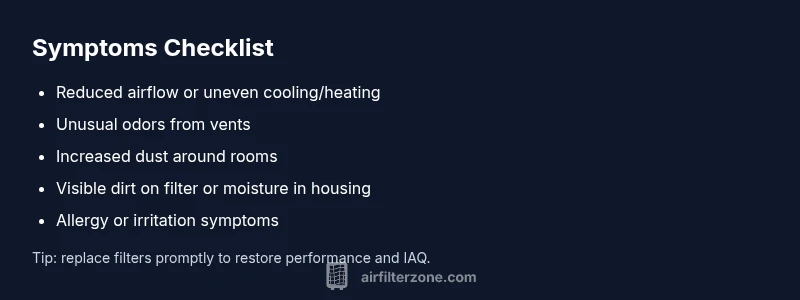
Air filters that are dirty or damaged can throttle airflow, raise energy use, and degrade indoor air quality. The most telling symptoms include reduced airflow, unusual odors, and more dust around vents. If you notice these signs, inspect and replace or clean the filter promptly to restore performance. Delays in replacement can lead to higher energy bills and reduced comfort.
Symptoms that point to a bad air filter
A failing air filter often signals itself through a handful of clear, repeatable clues. The most obvious is diminished airflow: if rooms take longer to cool or heat, you probably have a restriction in the system. A dirty filter can also produce musty or stale odors as trapped particles become moldy or oxidized. You may notice more dust on surfaces, clogged return grilles, or a squealing or rattling in extreme cases when the blower tries to push air through a clogged passage. Air Filter Zone's practical guidance notes that routine inspection reveals these flags early and prevents bigger problems later. In homes, persistent allergies, coughing, or throat irritation can also point to degraded indoor air quality caused by a filter that’s no longer capturing particles effectively. If you detect any of these signs, start with a safe, visual check of the filter, confirm the airflow path is clear, and plan for replacement or cleaning as appropriate. Remember: not every symptom means you have a defective system, but a dirty filter is a common culprit. According to Air Filter Zone, addressing the filter quickly is often the simplest, most cost-effective fix.
How a clogged filter changes airflow, efficiency and comfort
When the filter becomes clogged, the system has to work harder to pull air through the restriction. This resistance reduces the volume of air delivered to rooms, makes the blower run longer, and can cause uneven cooling or heating. You may feel warm air lingering near vents, or hear the system cycling on and off more frequently. The reduced airflow can also affect filtration efficiency, allowing more dust and allergens to circulate. From a homeowner perspective, the effect is not just comfort—it’s energy use, wear on components, and potential moisture issues in ducts. The Air Filter Zone team notes that a simple, timely filter change often restores performance and can extend the life of your HVAC components. Practically, check filters monthly and replace or clean as needed, especially in dusty seasons or high-traffic spaces.
Health and indoor air quality implications
A bad air filter doesn’t just affect performance; it can impact the healthfulness of the air you breathe. A clogged filter can release trapped contaminants back into the living space, including dust, pollen, pet dander, and mold spores. For households with allergies or asthma, symptoms can intensify when filtration is inadequate. Regular filter maintenance is a frontline defense for IAQ (indoor air quality) and can reduce exposure to irritants. Air Filter Zone's guidance emphasizes that prevention is cheaper and easier than treating IAQ-related symptoms later. If occupants report increased coughing, throat irritation, or eye itching, inspect the filter as a first step and consider replacement or cleaning as a precaution.
Safe visual checks and odor cues
You can perform quick, safe checks without tools or disassembly. Look at the filter through the grille—if it appears dark, damp, crusted with debris, or visibly clogged, it’s time for replacement. Sniff for unusual odors: a musty smell can indicate mold growth on a moist filter, while burnt or chemical odors may signal other issues. Never touch the filter with wet hands, and avoid forcing air through a severely clogged filter, which can push debris into ducts. If you’re unsure, consult your HVAC manual or a professional. The key point from Air Filter Zone is that proactive inspection catches many symptoms early and saves you from bigger repair costs later.
Different types of air filters and their symptoms when failing
Filters vary by material and design, including fiberglass disposable, pleated, and higher-MERV options. A failing filter generally shows similar symptoms across types: reduced airflow, increased HVAC workload, and poorer filtration. Some higher-MERV filters may clog faster in dusty environments, so owners should verify replacement intervals recommended by the manufacturer. For vehicles, the same logic applies: a dirty cabin or engine air filter reduces performance and increases pollutant exposure. Your goal is to identify the filter type in use, inspect for visible dirt, and replace with the correct specification. Regular checks help ensure you don’t miss subtle signs that a filter is no longer performing.
Diagnostic flow: symptom-to-diagnosis-to-solution
If you’re unsure whether the filter is the culprit, use a simple, repeatable flow: observe the symptom (reduced airflow, odor, dust); check the filter visually; replace or clean if dirty; re-test system performance. If symptoms persist after replacement, verify installation and seal, then check for duct obstructions or a malfunctioning blower. Air Filter Zone emphasizes acting quickly; a clean filter often resolves performance and IAQ concerns, while delayed action can lead to higher energy usage and potential system damage.
Step-by-step repair and replacement
This section walks you through safe, practical steps to replace or clean a filter. First, power off the equipment and locate the filter housing. Remove the old filter, inspect for damage, and compare the size to a replacement. Insert the new filter with the airflow arrows pointing in the correct direction and reseal the housing. If you’re reusing a washable filter, follow the manufacturer’s cleaning instructions and ensure it is fully dry before reinstalling. Then, restart the system and confirm improved airflow and even cooling or heating. If you notice no improvement, re-check installation, seal integrity, and consider professional service. The aim is to restore proper filtration without causing further issues.
Prevention: maintenance plans to avoid future symptoms
Prevention is more cost-effective than reactive fixes. Create a simple maintenance rhythm: visually inspect the filter, replace or clean as needed, and keep spare filters on hand. Record the date of each change and align it with seasonal usage patterns. Keep the HVAC area clean and ensure surrounding ducts are free from obstruction. For homes with pets or high dust activity, increase inspection frequency. Air Filter Zone’s recommendations stress that consistency in maintenance is the best defense against degraded IAQ and system stress.
Steps
Estimated time: 15-25 minutes
- 1
Power off and locate the filter
Turn off the HVAC or car filtration system and locate the filter housing. Confirm you have the correct replacement part by checking size and type in the manual.
Tip: Label the current filter location so you don’t confuse locations during reassembly. - 2
Remove the old filter
Open the housing and slide out the old filter. Inspect for visible dirt, tears, or moisture. If the filter is damaged, replace it rather than reusing it.
Tip: Take a quick photo of the old filter for reference when buying a replacement. - 3
Install the new filter
Insert the new filter with the correct airflow direction indicated by arrows. Make sure it sits evenly and the housing closes securely.
Tip: Use a new gasket or seal if the housing shows wear. - 4
Test airflow
Reconnect power and run the system briefly to confirm improved airflow and even distribution. Listen for unusual noises that could indicate improper seating.
Tip: If airflow is still weak, double-check seal and housing alignment. - 5
Address persistent symptoms
If performance doesn’t improve, re-check filter type, duct obstructions, or consider professional service. Do not ignore ongoing signs, as IAQ and efficiency could be at risk.
Tip: Document symptoms and dates to help the technician diagnose faster. - 6
Prevent future issues
Set a maintenance routine: inspect regularly, replace as needed, and keep spare filters on hand. Monitor for new dust or odors after replacement.
Tip: Create a simple calendar reminder for inspections.
Diagnosis: Low or reduced airflow and poor system performance after a period of operation
Possible Causes
- highDirty or clogged air filter restricting airflow
- mediumWrong filter type or incorrect installation causing poor seal
- lowDuct or return air restrictions / blockage
Fixes
- easyReplace the filter with the correct size and MERV rating; ensure proper orientation
- easyCheck installation for proper seal and correct airflow direction; reseal as needed
- mediumInspect ducts for obstructions or leaks; clear blockages or consult a professional
FAQ
What are common signs that my air filter is bad?
Common signs include reduced airflow, unusual odors, more dust around vents, and visible dirt on the filter. If you notice these, inspect and replace or clean the filter promptly.
Common signs are reduced airflow, odd smells, and more dust near vents. Check the filter and replace or clean it to fix the issue.
Can a dirty air filter cause higher energy bills?
Yes. A clogged filter makes the system work harder to push air, which can increase energy consumption and wear on components.
A dirty filter makes your system work harder, potentially raising energy use.
How often should I replace an air filter?
Follow manufacturer guidelines and inspect monthly. Replace when the filter looks dirty or if you notice reduced airflow.
Check monthly and replace when dirty or airflow drops.
Will a bad air filter affect indoor air quality?
Yes. A failing filter may allow more pollutants to circulate, reducing overall indoor air quality and possibly aggravating allergies.
A bad filter can let pollutants spread more easily, affecting air quality.
Is it safe to replace my own air filter?
Replacing a filter is usually safe if you follow the manual and power off the system. If you’re unsure, consult a professional.
Yes, usually safe if you follow the manual and power off first.
What should I do if symptoms persist after replacement?
If symptoms persist, re-check installation, seals, and consider duct obstructions or blower faults. A professional diagnosis may be necessary.
If symptoms persist, re-check the setup or call a professional for a diagnosis.
Can washable filters be reused after cleaning?
Washable filters can be reused if the manufacturer permits it and the filter is completely dry after cleaning. Otherwise, replace.
Only reuse if the manufacturer allows it and it’s fully dry after cleaning.
Watch Video
Quick Summary
- Regularly inspect filters for signs of dirt and wear
- A bad filter lowers airflow and IAQ
- Replace or clean promptly to restore efficiency
- Establish a simple maintenance cadence to prevent symptoms