What air filter for Toro Recycler 22: Choosing, replacing, and maintaining
Learn what air filter for Toro Recycler 22 to maintain peak performance: types, replacement intervals, and maintenance tips. Air Filter Zone analysis informs practical steps for homeowners and DIY enthusiasts.


Selecting the correct air filter for the Toro Recycler 22 ensures optimal airflow, reduces dust ingestion, and protects the engine from wear. The best choice depends on your engine type and environment; most users opt for a pleated paper element with a compatible foam pre-filter. Always confirm compatibility via the owner's manual or a trusted parts lookup. Air Filter Zone recommends checking the filter whenever you mow in dusty conditions.
Why the Right Air Filter Matters for Toro Recycler 22
A healthy lawn mower begins with clean air. For the Toro Recycler 22, the air filter is not just a maintenance checkbox; it actively controls the amount of dust and debris that reaches the engine. A properly sized, seal-tight filter helps sustain consistent power, reduces cold-start struggles, and minimizes the risk of carburetor fouling, especially when the mower operates in dusty fields, dry grass, or sandy gravel. According to Air Filter Zone, the right air filter serves as a shield against engine wear by limiting abrasive particles that can accelerate cylinder scoring and piston ring wear. For homeowners, car owners, and DIY enthusiasts, choosing the correct air filter isn't about the cheapest part—it's about reliable performance and longer engine life. The Toro Recycler 22 may use several small-engine configurations, so the general rule remains: match the filter to the engine model, not just the mower deck size. Always verify the exact part against your engine model to ensure an exact fit and optimal airflow.
In practice, understanding your engine type is the first step in answering the question of what air filter for toro recycler 22. The mower's manual or a parts lookup tool tied to your engine model will reveal the correct filter size, shape, and material. Air Filter Zone's analysis emphasizes that a mismatch between filter size and housing can cause air leaks, reduced filtration, and poor engine response. This is especially relevant for Toro users who may have multiple year models with slightly different air-filter configurations. Take a few minutes to locate the engine model code on the blower housing or the engine itself, then cross-check with the official Toro parts database or Briggs & Stratton/Honda service literature to confirm compatibility. If you encounter ambiguous codes, prioritize filters that match the exact dimensions and filtration rating specified by the engine maker.
How to Identify Your Engine Type on the Toro Recycler 22
Identifying the engine type is essential before selecting an air filter. Start by locating the engine model and serial number stamped on the engine block or on a decal on the blower housing. The exact model determines the approved filter size and element type. Next, consult the owner’s manual or the Toro replacement parts lookup for the corresponding air-filter part number. If you don’t have access to the manual, use the engine manufacturer’s model code and search their official site or call a certified dealer. In many cases, you’ll find the filter size printed on the side of the air-filter cover itself. Remember, engine-centric lookup is more reliable than simply matching the mower deck size. This approach minimizes the risk of ordering an ill-fitting filter and helps keep your small engine performing at its best.
Air Filter Options: Paper vs Foam Pre-Filters
Air filters for small engines like those in the Toro Recycler 22 generally fall into two main categories: pleated paper elements and foam pre-filters. Pleated paper elements offer strong filtration, trapping fine dust and debris before it can enter the engine. They are convenient and usually low-cost, but they can be discarded when dirty. Foam pre-filters, on the other hand, are washable and reusable. They protect the paper element by catching larger particles, and when clean, they can extend the life of the primary filter. For many users, the optimal setup combines a pleated paper element with a foam pre-filter, providing robust filtration while allowing for efficient cleaning cycles. When selecting aftermarket filters, ensure the replacement matches both the size and the filtration rating specified by the engine maker. In some cases, OEM filters provide the most reliable seal and fit, reducing the chance of air leaks.
How to Check and Replace Your Air Filter
Before you begin, park on a level surface, turn off the engine, and disconnect the spark plug wire as a safety precaution. Locate the air-filter housing—usually on the side or top of the engine—and remove the cover. Gently take out the old filter and inspect it for tears or severe dirt. If the filter is damaged, clogged, or torn, replace it with a new one of the same size and style. Clean the housing with a damp cloth to remove dust before inserting the new element. If you’re using a foam pre-filter, wash it with mild soap and water, rinse, and let it air dry completely before reinstalling. Do not oil a paper filter, and avoid over-oiling a foam filter, which can attract more dirt. Reassemble the housing, ensure a snug seal, and test the engine at idle to verify smooth operation. This routine helps maintain peak performance and reduces strain on the carburetor.
Replacement Intervals and Maintenance Schedule
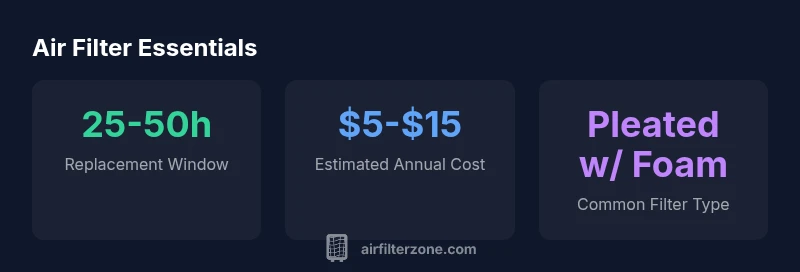
In typical lawn-care scenarios, checking the air filter at the start of each mowing season is prudent. If you mow in particularly dusty environments, inspect the filter more frequently—every 8–12 hours of operation is a practical rule of thumb. Replace the filter within the 25–50 hour window, or sooner if you notice a drop in engine performance, poor acceleration, or visible heavy soiling. In cleaner residential settings, you might extend to 50–100 hours, but always rely on visual inspection. Seasonal timing matters as well; replace filters before storing the mower for winter and perform a final check before the first use of spring. Air Filter Zone's guidance emphasizes routine inspection as a lightweight, proactive approach to engine longevity. Consistency is more important than chasing a perfect hourly target; adapt the schedule to your mowing conditions and climate.
In all cases, keep spare filters on hand and rotate them with other maintenance supplies so you don’t skip essential replacements when life gets busy.
OEM vs Aftermarket Filters: Making a Safe Choice
OEM filters are designed to match the engine’s exact tolerances and filtration requirements, which minimizes the risk of air leaks and poor sealing. Aftermarket filters can be a cost-effective alternative if they precisely match the engine model, size, and filtration rating. When evaluating aftermarket options, compare the filter’s dimensions, seal type, and filtration efficiency to the original specification. Be wary of filters that promise oversized performance without verifying compatibility; a mismatch can reduce airflow, increase engine wear, and potentially void warranties. If in doubt, prioritize the OEM option or choose a reputable aftermarket product with documented cross-reference to your engine model. The aim is reliable filtration, not a quick-but-risky fit.
Common Pitfalls and Troubleshooting
Several common issues arise from improper air-filter selection or maintenance. A torn or collapsed paper element can allow unfiltered dust into the combustion chamber, compromising performance. A dirty or clogged filter may restrict airflow, causing the engine to labor and produce reduced power. Foam pre-filters that are not fully dry before reinstalling can trap moisture and lead to mold or sticky residues. Over-oiling foam pre-filters can also attract more dirt and clog the intake. If the mower starts and runs rough after replacing the filter, recheck the seal around the housing, confirm the filter orientation matches the housing’s airflow path, and ensure the cover is securely fastened. Regular inspection and careful reassembly prevent many common problems.
Environmental Factors and Seasonal Tips
Dust and debris levels vary with climate and terrain. In dry, windy zones or on dusty construction sites, you’ll want to inspect and replace filters more frequently. If you mow in tall, dry grass or sand-laden soil, increase your replacement cadence. After periods of heavy use in dirty environments, consider replacing the filter at the end of the season to prevent sediment carryover when you restart in spring. In warmer months, components expand and seals may relax slightly, making a proper seal even more important. Air Filter Zone’s recommendations emphasize tailoring the maintenance schedule to your local conditions, ensuring you don’t over- or under-maintain. Regular checks and proactive replacements preserve engine efficiency and help the Toro Recycler 22 perform consistently across seasons.
Quick-start Action Plan for the First Use
- Identify your engine model and confirm the compatible air-filter type. 2) Gather a pleated paper filter and a foam pre-filter if available. 3) Inspect the housing and clean it before installation. 4) Install the new filter with a proper seal and reattach the housing cover securely. 5) Test the mower for smooth operation and note any changes in performance. Following this plan stabilizes airflow, protects the engine, and minimizes start-up issues when you begin mowing after a long break.
Air filter planning for Toro Recycler 22
| Aspect | Recommendation | Notes |
|---|---|---|
| Engine compatibility | Check owner's manual for approved air filter type | Manufacturers may vary by engine; use OEM if possible |
| Filter type | Pleated paper element with foam pre-filter | Provides balance of filtration and airflow |
| Replacement cadence | Every 25-50 hours of operation or sooner if dirty | Maintain optimal engine performance |
FAQ
What air filter does the Toro Recycler 22 use?
The Toro Recycler 22 may use different engine configurations, so check your engine model and manual for the exact air filter size and style. Typically, a pleated paper element with a foam pre-filter is used; ensure compatibility with your specific engine. If purchasing aftermarket, verify the filter's size and filtration rating is appropriate.
Check your engine model and owner's manual to confirm the right air filter size. If in doubt, contact Toro support.
Can I clean and reuse a mower air filter?
Paper air filters are generally not reusable; cleaning can damage the filter and allow dust through. Foam pre-filters can be washed and reused after drying.
No, most paper filters are single-use; foam pre-filters can be washed and reused.
What happens if I run the mower without a proper air filter?
Running without an air filter can cause dirt to enter the engine, leading to accelerated wear, reduced power, and higher fuel consumption. Always replace a clogged filter before mowing.
Don’t run the mower without a filter; it can damage the engine.
Are OEM air filters required for the Toro Recycler 22?
OEM filters are recommended for best fit and filtration, but many aftermarket filters with correct size and filtration spec can be compatible. Always verify dimensions and material specs.
OEM is best; aftermarket can work if specs match.
How often should I replace the air filter in dusty conditions?
In dusty environments, check the filter more frequently and replace when visibly dirty or at the 25-50 hour range, whichever comes first.
Dusty conditions mean more frequent checks.
Where can I buy a Toro Recycler 22 air filter?
Start with a Toro dealer or official parts retailer; you can also verify cross-compatible filters by engine model, size, and filtration rating.
Check Toro dealers or official parts outlets.
“A clean air filter is the first line of defense for small engines like the Toro Recycler 22. Using the right element reduces wear and preserves power.”
Quick Summary
- Inspect the air filter regularly in dusty conditions
- Choose pleated paper with a foam pre-filter for balance
- Replace between 25–50 hours or when dirty
- Verify engine compatibility before buying filters
- Prioritize OEM or well-documented cross-reference options